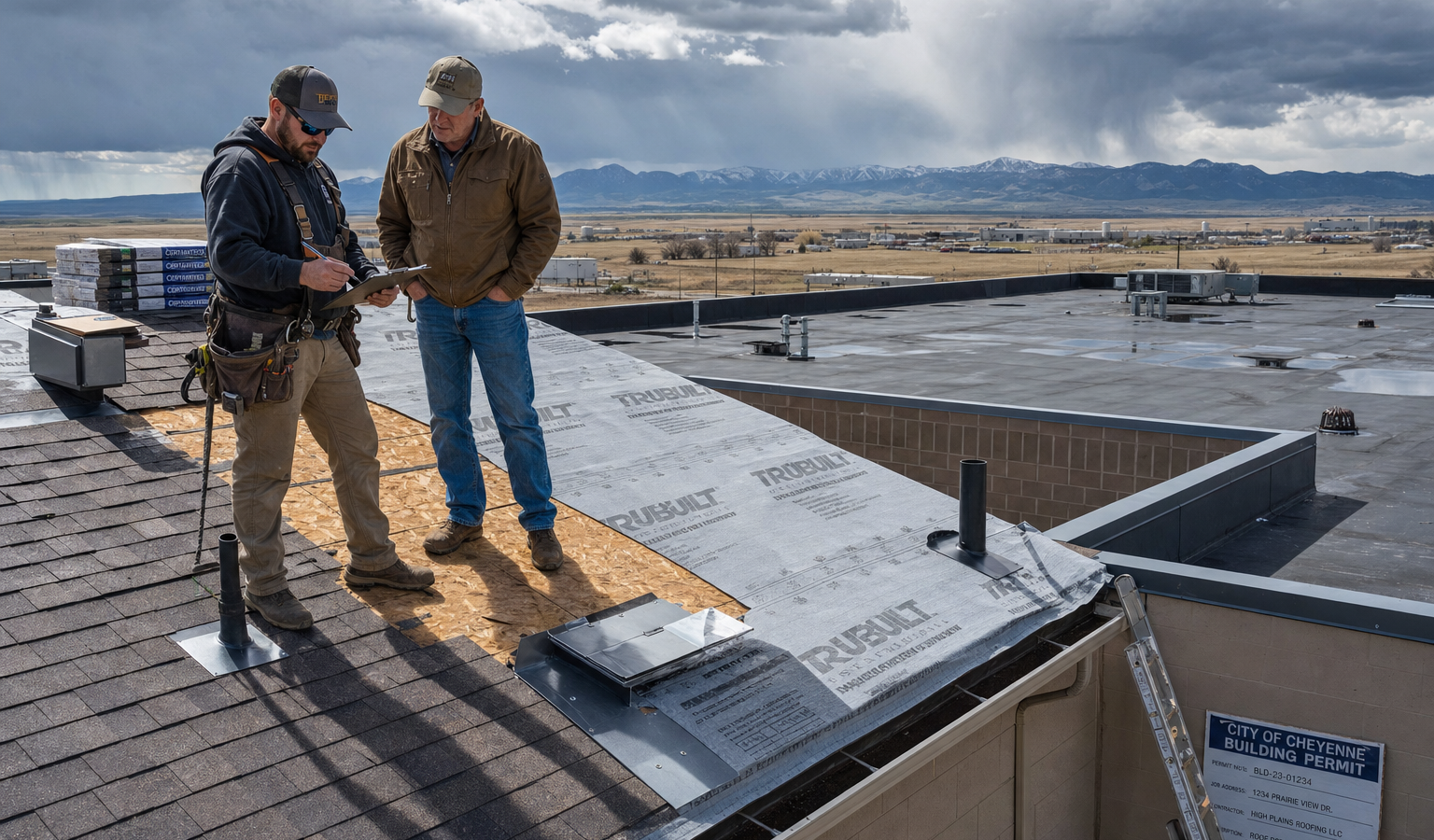
If you own a home, multifamily building, office, or retail property, understanding Wyoming roof rehabilitation requirements helps you avoid permit issues, failed inspections, insurance headaches, and premature roof problems. In practical terms, roof rehabilitation means more than patching a leak—it can involve code-driven repairs, decking replacement, drainage corrections, flashing updates, and in some cases a full roof replacement when damage or age has gone too far.
What “roof rehabilitation” usually means in Wyoming
Property owners often use repair, rehabilitation, and replacement interchangeably, but they do not always mean the same thing.
In most situations, roof rehabilitation refers to work that restores a roof system to safe, serviceable condition without necessarily rebuilding every component from scratch. Depending on the roof type and the level of damage, that can include:
- Replacing damaged shingles or membrane sections
- Repairing leaks around flashing, vents, skylights, or wall transitions
- Replacing rotten or water-damaged decking
- Correcting underlayment problems
- Addressing storm-related hail damage or wind uplift damage
- Improving drainage on low-slope or commercial roofs
- Replacing gutters, downspouts, soffit, fascia, or related exterior components
- Bringing parts of the roof assembly into compliance with current code where required
For some properties, rehabilitation is a smart, cost-effective way to extend roof life. For others, the amount of damage makes spot repairs a temporary fix, and a full roof replacement is the better long-term decision.
Why requirements matter before work begins
In Wyoming, roof work is not just a matter of hiring a crew and starting tear-off. Local building requirements, manufacturer installation rules, insurance documentation, and the actual condition of the roof all affect what can and should be done.
That matters because:
- A repair that ignores code requirements may not pass inspection
- Improperly documented storm damage can weaken an insurance claim
- Covering over damaged decking can trap hidden moisture problems
- Incompatible materials can shorten the life of the roof system
- Commercial roof rehabilitation often involves drainage, insulation, and edge-metal details that cannot be skipped
This is especially important in places like Cheyenne, Laramie, and Pine Bluffs, where roofs are exposed to hail, strong winds, freeze-thaw cycles, snow loads, and intense UV exposure.
Local codes and permits: what property owners should expect
Wyoming does not operate under one single roofing rulebook applied identically in every town. In practice, city and county requirements can vary, so the first step is always to confirm what the local jurisdiction requires for your property.
Permit requirements may depend on the scope
Whether a permit is required often depends on the extent of the work, the occupancy type, and the municipality. Minor repairs may be treated differently than structural rehabilitation or a full re-roof.
You may need to verify:
- Whether the job is classified as repair, re-roof, or structural work
- Whether decking replacement triggers additional review
- Whether commercial properties require more formal plan review
- Whether wind or snow-load considerations affect assembly details
- Whether edge metal, drainage, or insulation upgrades are required by current code
A reputable contractor should help clarify the expected scope and whether permits are part of the process, but property owners should still understand that local approval requirements can affect schedule and cost.
Code compliance can apply to more than shingles
Many owners assume code issues only matter when replacing shingles. In reality, rehabilitation work may involve compliance items such as:
- Flashing details at penetrations and walls
- Ice and water protection in vulnerable areas
- Ventilation requirements on residential attic systems
- Fastener patterns in high-wind areas
- Fire classification of the roofing assembly
- Drainage design for low-slope commercial roofs
- Replacement of deteriorated sheathing or structural components
If the existing roof was installed years ago, parts of the assembly may no longer meet current standards. That does not always mean every component must be rebuilt, but it does mean the scope should be evaluated carefully.
When rehabilitation is allowed—and when replacement makes more sense
A common question is whether Wyoming property owners can simply rehabilitate a failing roof instead of replacing it. The answer depends on the roof’s condition, not just the owner’s preference.
Rehabilitation is usually appropriate when:
- Damage is limited to specific sections
- The roof system is still structurally sound
- Leaks are tied to isolated flashing or membrane failures
- Hail damage is moderate rather than system-wide
- The remaining roof life justifies targeted investment
Replacement is often the better option when:
- Damage is widespread across multiple slopes or sections
- Decking is soft, rotten, or repeatedly wet
- There are ongoing leak patterns in several locations
- Prior repairs have created a patchwork roof with weak transitions
- Storm damage affects the roof beyond what spot repair can reasonably restore
- The roof is near the end of its service life
This is where a professional inspection matters. A surface-level look from the ground is not enough to distinguish a repairable roof from one that is effectively spent. For storm-related issues, a documented inspection is even more important, especially if an insurance claim may be involved.
If your concern is hail or wind damage, our hail damage inspection services are designed to document conditions clearly and thoroughly.
Insurance and storm damage documentation
In Wyoming and across the Front Range, storm events can leave visible and hidden roof damage. Property owners often know they have dents on gutters or downspouts but are unsure whether the roof itself qualifies for repair or replacement.
That uncertainty is one reason roof rehabilitation requirements matter. Insurance carriers typically expect a clear explanation of:
- What caused the damage
- Which roof components were affected
- Whether the damage is functional, cosmetic, or both
- Whether repairs are feasible or whether replacement is more appropriate
- What related items, such as gutters, flashing, or siding, were impacted
As HAAG Certified Master Inspectors, we focus on documenting roof conditions in a way carriers expect to see, especially after hail and wind events. Good documentation does not guarantee claim approval, but it does help reduce confusion and support a fact-based review.
Residential vs. commercial roof rehabilitation
The requirements and risks are not the same for every property type.
Residential roof rehabilitation considerations
For homes and multifamily residential properties, the main issues usually include:
- Shingle condition and matching concerns
- Underlayment and decking integrity
- Attic ventilation
- Flashing at chimneys, valleys, skylights, and sidewalls
- Gutter tie-in and water management
- Hail damage on roofing, soft metals, and siding
Homeowners often want the smallest possible fix. Sometimes that is appropriate. But if a roof has broad storm impact or layered age-related deterioration, small repairs may only delay a larger roof replacement.
If you are evaluating options for a house or duplex, our residential roofing services cover repair, replacement, gutters, siding, and storm inspection support.
Commercial roof rehabilitation considerations
Commercial roofs require a different level of evaluation because water intrusion, drainage, rooftop equipment, and occupant impact can make even a “small” problem more serious.
Common issues include:
- Ponding water or poor slope
- Membrane punctures, splits, or seam failure
- Saturated insulation below the surface
- Parapet and coping problems
- Roof penetrations for HVAC and mechanical systems
- Edge-metal attachment and wind resistance
- Tenant disruption or operational scheduling concerns
On commercial buildings, rehabilitation may involve restoring portions of the system while preserving serviceable sections. But if moisture has spread within the assembly, a more comprehensive replacement scope may be necessary.
For offices, retail centers, HOAs, industrial properties, and multifamily commercial projects, see our commercial roofing services.
Questions to ask before approving roof rehabilitation work
Before you sign off on a roofing proposal, ask a few direct questions:
Scope and code questions
- Is this classified as a repair, rehabilitation, or full replacement?
- Will permits or inspections be required locally?
- Are any code upgrades expected as part of the work?
- Will damaged decking or structural issues be addressed if discovered during tear-off?
Material and installation questions
- Are the proposed materials compatible with the existing roof system?
- How will flashing, underlayment, and edge details be handled?
- If matching is an issue, what are the realistic options?
- On a commercial roof, how will drainage and penetrations be addressed?
Insurance and documentation questions
- Is the damage likely storm-related, wear-related, or a mix of both?
- Will the contractor provide photo documentation and condition notes?
- If an insurance claim is involved, can the roof condition be clearly explained?
These questions help property owners compare bids more intelligently. The cheapest proposal is not always the least expensive outcome if it leaves code issues, hidden moisture, or weak repair transitions behind.
A practical process for Wyoming property owners
If you suspect your roof needs rehabilitation, this is the safest order of operations:
- Schedule a professional inspection. Determine whether the issue is isolated, storm-related, or system-wide.
- Document current conditions. Photos, notes, and damage mapping matter for planning and insurance.
- Confirm local permit expectations. Requirements can differ by jurisdiction.
- Review whether repair or replacement makes more sense. Consider remaining roof life, not just immediate leak control.
- Get a written scope. Make sure it addresses flashing, decking, drainage, and related exterior items where needed.
- Understand cost ranges before proceeding. You can review general roofing pricing information and repair pricing guidance to prepare for the conversation.
The bottom line
Wyoming roof rehabilitation requirements are really about one thing: making sure the roof is restored in a way that is safe, code-aware, and durable for Wyoming weather. That means looking beyond the visible leak or missing shingle and evaluating the full roof assembly, the cause of damage, local permit requirements, and whether the roof still has enough life left to justify rehabilitation.
A careful inspection upfront usually saves time, money, and frustration later.
Next step
If you own property in Cheyenne, Laramie, Pine Bluffs, or nearby Colorado and Wyoming communities, AC INC. Roofing can help you evaluate whether roof rehabilitation is appropriate or whether a full replacement is the better path. Contact us for a free inspection or estimate through our contact page.