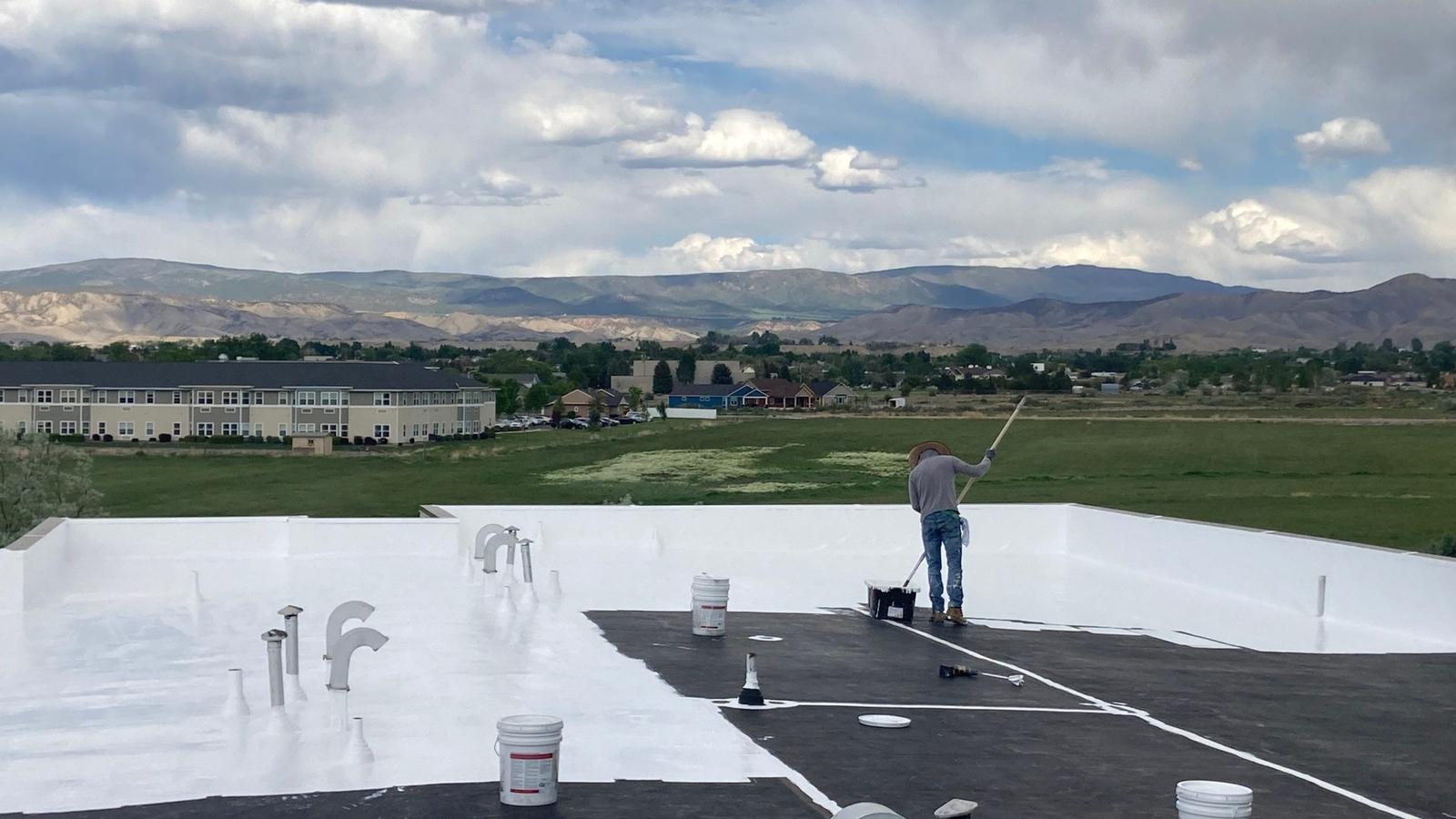
Wyoming commercial roof rehabilitation requirements for multi-family properties usually come down to four things: code compliance, accurate damage assessment, tenant-safe project planning, and clear documentation for repairs or insurance claims. If you own or manage apartments, townhome complexes, or mixed-use multi-family buildings in Cheyenne, Laramie, Pine Bluffs, or nearby areas, a roof rehab project matters because partial fixes done the wrong way can create bigger costs, delay occupancy, and complicate claims after hail or wind damage.
What roof rehabilitation means for multi-family properties
Roof rehabilitation is not always the same as a full roof replacement. In many cases, it means restoring an existing commercial roofing system so it performs reliably again without tearing off everything down to the deck. For multi-family properties, rehab work can include:
- Replacing damaged membrane sections
- Removing and replacing wet insulation
- Improving drainage
- Reflashing penetrations, edges, and transitions
- Reinforcing seams or fasteners
- Coating eligible roof systems
- Replacing damaged shingles or underlayment on steep-slope sections
- Correcting storm-related damage to gutters, siding, and rooftop accessories
On apartment and condo buildings, the roof system is often more complex than it looks from the ground. A single property may include low-slope membrane sections, steep-slope shingle areas, covered walkways, and detached garages. That is why rehabilitation requirements should be based on inspection findings, building use, and applicable code, not guesswork.
The main requirements that typically drive a rehab project
Wyoming properties do not all follow one identical roofing standard, but most multi-family roof rehab projects are shaped by local building requirements, manufacturer specifications, and insurance documentation expectations.
1. A documented inspection
Before any rehab scope is written, the roof needs a detailed inspection. For storm-affected properties, that means identifying:
- Hail damage to membranes, shingles, metal, soft metals, and rooftop equipment
- Wind damage at edges, corners, ridges, and flashing details
- Ponding or poor drainage on low-slope areas
- Wet insulation or hidden moisture intrusion
- Deck deterioration
- Open laps, membrane shrinkage, punctures, or seam failure
- Damage to gutters, downspouts, fascia, and siding
This step matters because multi-family properties often have damage in scattered areas across multiple buildings. Good documentation helps property managers prioritize repairs and support an insurance claim when storm damage is involved. Our team often helps owners through this process with hail-damage inspections and documentation.
2. Compliance with current code where triggered
A roof rehab is not just about replacing what was there before. Depending on the extent of work, parts of the project may need to comply with current code requirements. That can affect:
- Underlayment and ice barrier details
- Flashing methods
- Drainage improvements
- Fastener patterns and wind uplift requirements
- Fire classification of the roof assembly
- Insulation levels where reroofing exposes the system
- Edge metal attachment and perimeter securement
For multi-family buildings, this becomes especially important because occupancy type, roof height, and building configuration can affect the required assembly. Even when a project is described as a repair or rehabilitation, code officials may still require specific upgrades in the area being worked on.
3. Manufacturer-approved installation methods
If the roof system is still under manufacturer coverage, or if you want the rehabilitated system to perform as intended, repair and rehab work should follow approved methods for that specific roof type. Common multi-family roof systems in Wyoming include:
- Asphalt shingles on steep-slope apartment buildings
- TPO or EPDM membranes on low-slope buildings and breezeways
- Modified bitumen on older properties
- Standing seam or exposed-fastener metal on accessory structures
Mixing materials or using shortcut repair methods can create leaks and may make later replacement more difficult. Rehab plans should match the existing assembly or clearly define where a transition to a new assembly will occur.
4. Safe tenant and site management
On occupied multi-family properties, rehabilitation work has to be planned around residents, vehicles, walkways, and building access. Requirements are not only about the roof system itself. Property managers should expect a contractor to address:
- Work-zone separation
- Dumpster and material staging
- Access to upper units and common areas
- Noise timing and resident communication
- Protection for landscaping, HVAC units, and parked vehicles
- Daily cleanup and magnetic nail sweeping on steep-slope projects
A good rehab scope should reduce disruption while still allowing the crew to complete the work efficiently.
When rehab makes sense instead of full replacement
Not every damaged multi-family roof needs full replacement right away. Rehabilitation is often appropriate when:
- Damage is limited to certain slopes, elevations, or buildings
- The roof deck is still sound
- Moisture intrusion is localized
- The existing roof system has service life left
- Budget or phasing requires a staged approach
- Insurance covers repairable storm damage rather than total replacement
That said, repeated patching on an aging roof can become more expensive than a planned replacement. If a property has widespread hail damage, extensive wet insulation, chronic leaks, or multiple failed details, a full replacement may be the better long-term decision.
If you are comparing options, it helps to review likely scope differences and budget ranges before committing. You can start with our pricing information or roof repair pricing page.
Common problem areas on Wyoming multi-family roofs
Wyoming weather creates a specific set of roof rehab issues, especially on larger occupied properties.
Hail and wind exposure
Cheyenne and surrounding areas can see storms that damage membranes, bruise shingles, loosen flashing, and dent soft metals. On multi-family properties, the challenge is that damage is often uneven. One elevation may be hit harder than another, and detached structures may show different conditions than the main buildings.
Drainage and ponding
Low-slope sections over corridors, leasing offices, or upper-floor units often develop drainage issues over time. Rehab may need to include tapering, drain improvements, or localized insulation replacement to correct water retention.
Flashing transitions
Multi-family buildings have many transition points:
- Wall-to-roof intersections
- Chimneys and vents
- HVAC curbs
- Parapets
- Balconies and overhangs
- Step and counter flashing on steep-slope areas
These areas are common leak sources and should be part of the rehab scope, not treated as afterthoughts.
Repeated repairs hiding deeper problems
Properties that have changed hands or been maintained by several vendors often show signs of patch-after-patch work. Surface repairs may hide saturated insulation, failed fasteners, poor tie-ins, or storm damage that was never fully documented.
What property managers should gather before starting
A smoother rehab project usually starts with better records. Before meeting with a roofing contractor, gather:
- Building addresses and roof section maps if available
- Dates of known leaks or prior storm events
- Maintenance records and prior invoices
- Photos from residents or staff
- Warranty documents if they exist
- Insurance claim information, adjuster notes, and carrier correspondence
- Occupancy concerns, access restrictions, and quiet hours
This information helps the contractor build a practical scope and can reduce back-and-forth during inspection or claim review.
How insurance affects roof rehabilitation
For many Wyoming multi-family owners, rehab begins after hail or wind damage. Insurance carriers typically expect clear, itemized documentation showing what was damaged, where it was damaged, and why the proposed repair or replacement is appropriate.
That usually includes:
- Photo documentation by roof area and building
- Test squares or sample areas where relevant
- Notes on code-triggered items
- Evidence of collateral damage to soft metals and accessories
- Moisture findings if interior or insulation damage is involved
- A repairability analysis when partial rehab is proposed
This is where inspection quality matters. Vague reports often lead to delays, supplement requests, or disputes about whether damage is cosmetic, functional, repairable, or widespread enough to require broader replacement.
Choosing a contractor for multi-family rehab
Not every roofer who handles single-family homes is set up for occupied commercial or multi-family rehabilitation. Ask whether the contractor can:
- Inspect both steep-slope and low-slope systems
- Document hail and wind damage thoroughly
- Coordinate with property management and residents
- Phase work by building or elevation
- Address related exterior items like gutters and siding
- Provide repair, rehab, and replacement options instead of one default recommendation
AC INC. Roofing works with both residential properties and commercial roofing systems, which is especially helpful on multi-family sites that combine features of both.
A practical rehab process for Wyoming properties
A strong roof rehab project usually follows this sequence:
- Inspect every roof section, not just the area with the latest leak.
- Document storm, wear, drainage, and flashing conditions.
- Identify what is repairable, what needs rehabilitation, and what may require replacement.
- Check for code-triggered items and assembly compatibility.
- Build a scope that fits occupancy needs and site logistics.
- Coordinate insurance documentation if storm damage is part of the loss.
- Schedule work with resident communication and safety measures in place.
- Perform a final walkthrough and keep records for future maintenance.
Next step
If you manage a multi-family property in Cheyenne, Laramie, Pine Bluffs, or nearby Wyoming communities, the best next step is a professional roof inspection before small issues spread across more units. AC INC. Roofing provides free inspections and estimates for storm damage, repairs, rehabilitation, and replacement. Contact us through our contact page to schedule an evaluation.