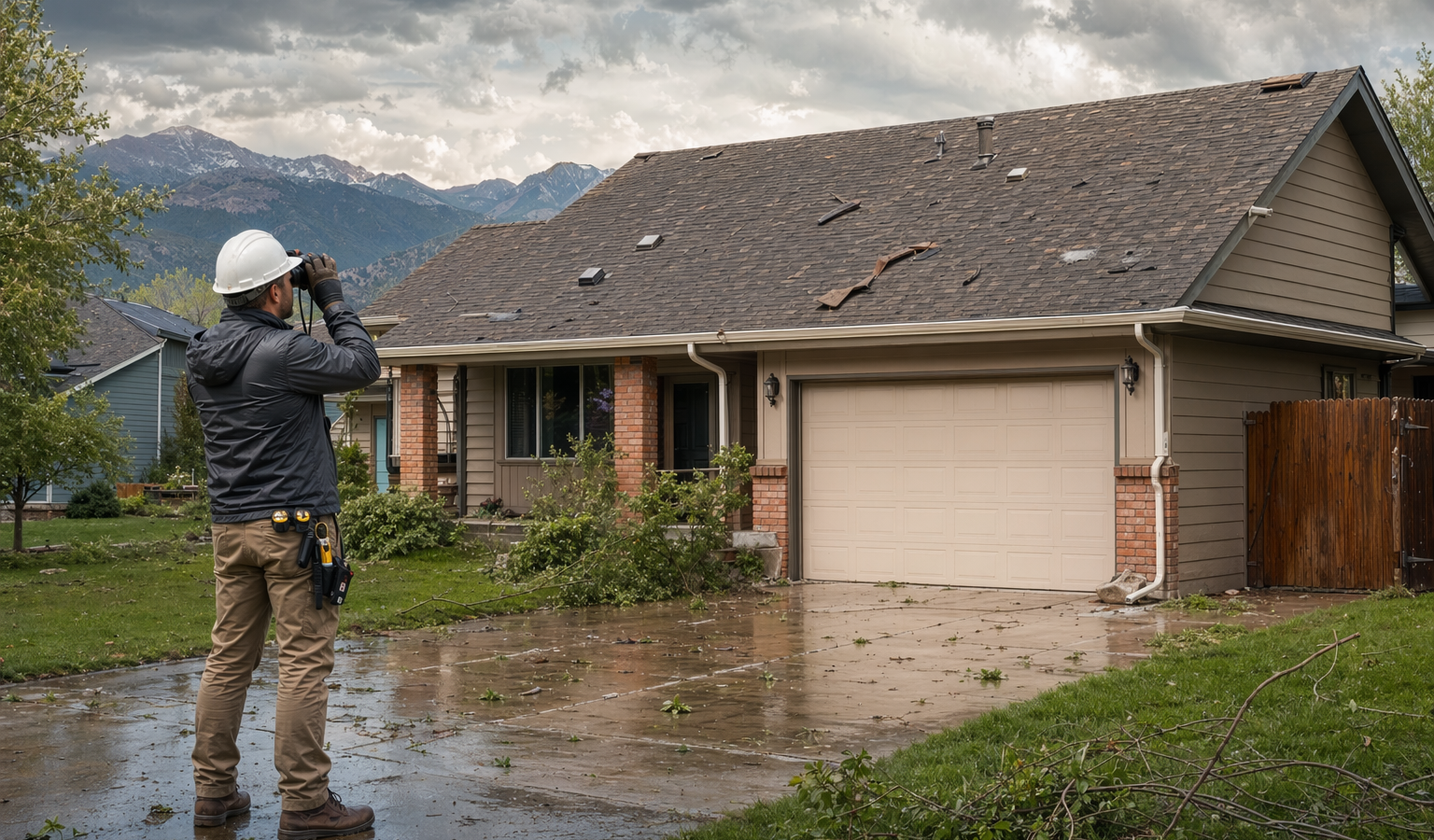
Along Colorado’s Front Range, fierce Chinook winds and seasonal hail can stress even well-built roofs. Knowing the difference between wind and hail damage helps you act quickly, protect your property, and streamline insurance claims. Here’s a practical guide from AC INC. Roofing (Advanced Consulting, Inc.)—a licensed, insured, 5.0‑star–rated contractor serving the Denver metro, the Front Range, and Cheyenne, WY.
Wind vs. Hail: How to Tell the Difference
Signs of wind damage (common on asphalt shingle roofs)
- Missing shingles or tabs, especially along eaves, rakes, and ridgelines
- Creased shingles where the wind lifted and bent the shingle along the exposure line
- Lifted or unsealed shingles (broken seal strips) that may not re-seal reliably
- Displaced ridge caps or hip shingles
- Bent or loosened flashing at edges, chimneys, or walls
- Debris patterns and directional damage (e.g., one slope affected more than others)
Signs of hail damage (asphalt shingles)
- Circular impact marks, bruising, or soft spots that feel spongy under gentle pressure
- Granule loss exposing black asphalt mat; granules may accumulate in gutters/downspouts
- Fractured shingles or broken matting that can lead to premature leaks
- Dings or dents on soft metals (gutters, downspouts, vents, fascia), window screens, and AC fins
What to look for on metal, tile, and low-slope roofs
- Metal roofing: Dents from hail on panels or ridge caps; displaced fasteners or seam separation from wind uplift
- Concrete/clay tile: Cracked or displaced tiles and loose ridge caps (wind); localized tile fractures or spalls (hail)
- TPO/EPDM/Modified Bitumen: Membrane uplift or billowing at perimeters, punctures from wind‑borne debris, hail “spidering” or substrate damage, and flashing separations at curbs and walls
Why it matters to act quickly
- Hidden leaks can develop weeks after a storm, causing sheathing rot, insulation damage, and interior staining
- Unsealed shingles and compromised membranes are highly susceptible to the next wind event or snow load
- Prompt documentation helps preserve insurance claim timelines and coverage
What to do right after a storm
- Stay safe—avoid climbing on the roof. Use binoculars from the ground if possible
- Walk the property: check for shingle pieces, granules in gutters, dented metal, and damaged siding
- Note wind direction and time of the storm; take photos of visible damage from the ground
- Schedule a professional assessment: AC INC. Roofing provides free roof inspections by HAAG‑certified inspectors and thorough documentation for claims
- Mitigate interior leaks if present (contain water, protect contents) and keep receipts for your insurer
Repair, replacement, or rejuvenation?
- Localized wind damage: Targeted repairs may suffice if the roof system and seal strips are still serviceable
- Creased or widely unsealed shingles: Often indicates compromised wind resistance; a replacement may be more reliable
- Hail impacts with fractured matting: Replacement is typically recommended to prevent premature failure
- Aging shingles without storm damage: Roof rejuvenation can be a smart, lower‑cost option to extend service life of asphalt shingles
AC INC. Roofing installs premium materials tailored to Colorado’s climate, including impact‑resistant shingles, metal and tile systems, and low‑slope options like TPO, EPDM, and Modified Bitumen. We also offer fluid‑applied coatings that can enhance waterproofing and extend the life of certain commercial roofs.
Build wind and hail resilience on the Front Range
- Choose impact‑resistant shingles and robust underlayments for hail‑prone neighborhoods
- Fortify edges: Many wind failures start at perimeters and ridge lines—proper flashing and fastening matter
- Maintain trees and remove overhanging limbs to reduce debris impacts in wind events
- Ensure proper attic ventilation and insulation to reduce ice-damming stresses and uplift risks
AC INC. Roofing is Fortified Roofing Solutions certified—systems designed to withstand 130 mph winds, EF‑2 tornadoes, and 2″ hail. As an Atlas Pro+ Platinum Certified contractor, we can offer Atlas warranty options up to 50 years on eligible systems, and as a GAF Certified contractor, System Plus warranties are available. We’re also Directorii‑certified, which means your project is backed by a customer guarantee up to $20,000.
Navigating insurance claims with confidence
Storm damage claims can be complex. Our Master HAAG‑certified team leads Colorado in storm‑damage evaluation and can help you:
– Document roof and exterior damage with photos, elevations, and slope-specific notes
– Communicate technical findings to adjusters
– Review scopes of loss and recommend code‑compliant repairs or replacements
We focus on integrity, reliability, and clear documentation so you can make informed decisions.
Why homeowners and property managers choose AC INC. Roofing
- Licensed and insured; 5.0‑star Google rating with excellent reviews
- Master HAAG Certification—the first company in Colorado to reach Master level
- Atlas Pro+ Platinum and GAF Certified contractor status for strong warranty options
- Memberships: RSRA (invitation‑only), CRA, NRCA, and APA
- Full lineup of services: inspections, repairs, replacements, roof rejuvenation, storm damage restoration and insurance support, plus siding, gutters, and concrete & asphalt sealing
Service area and free inspections
From our Denver office at 6145 Broadway, Suite 25, Denver, CO 80216, we serve the Denver metro, the Front Range, and Cheyenne, Wyoming. If you suspect wind or hail damage—or want a preventative checkup before hail season—our HAAG‑certified inspectors are ready to help at no cost.