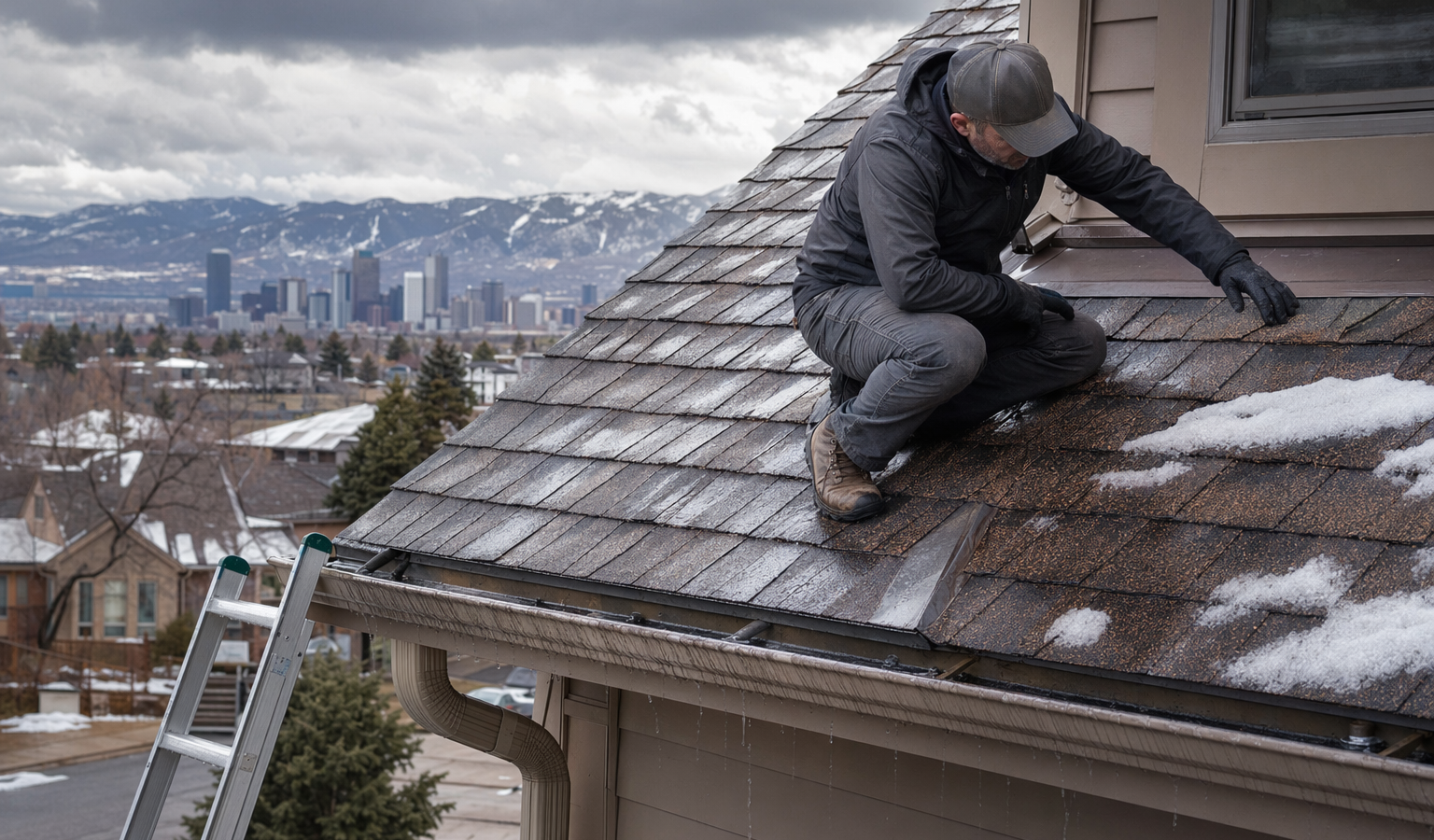
When snow finally melts along Colorado’s Front Range, your roof tells the story of winter: freeze–thaw cycles, high winds, heavy snow loads, and UV swings. Spring is the smartest time to read that story—and act—before hail season arrives. Whether you manage commercial properties or own a home in the Denver metro or Cheyenne area, a thorough spring roof inspection can save you money, extend roof life, and simplify potential insurance claims.
Why spring is the best time in Colorado
- Catch winter damage before late-spring and summer hail. Minor issues (lifted shingles, cracked flashings, seam separations) become leaks when severe weather hits.
- Establish a documented baseline. Photo-rich, HAAG-certified reports provide “before/after” evidence if a storm claim becomes necessary later.
- Plan maintenance with better weather windows. Crews can complete repairs, rejuvenation, or coatings more efficiently in spring conditions.
- Protect interiors before spring rains. Small penetrations or failed sealants can quickly turn into ceiling stains, mold, and drywall damage.
- Budget predictably. Property managers can prioritize preventative maintenance and capital planning ahead of peak season.
What a professional spring roof inspection includes
At AC INC. Roofing, our HAAG-certified inspectors evaluate the entire roof system, not just the shingles or membrane.
For residential steep-slope roofs (asphalt, impact-resistant shingles, metal, tile):
– Shingles/tiles/panels: granule loss, hail impacts, cracking, corrosion, fastener back-out, wind uplift, nail pops
– Flashings and transitions: chimneys, skylights, sidewalls/headwalls, valleys, vents, and pipe boots
– Roof edges and eaves: ice-dam evidence, drip edge condition, soffit/ fascia impacts
– Attic and ventilation (when accessible): moisture staining, inadequate airflow, insulation contact and condensation
– Gutters and downspouts: clogs, pull-away from fascia, slope and discharge issues
For commercial and low-slope roofs (TPO, EPDM, Modified Bitumen, coated systems):
– Field membrane: punctures, blisters, shrinkage, cold welds, seam failures, coating wear
– Drainage: ponding water, clogged scuppers/drains, inadequate crickets
– Perimeters and penetrations: counterflashings, edge metal, equipment curbs, pitch pans, rooftop unit vibration damage
– Accessory details: walk pads, sealants, and previous repair quality
You’ll receive clear documentation, photos, and prioritized recommendations—so you can decide what to repair now, what to monitor, and where replacement planning makes sense.
Common winter-to-spring issues on the Front Range
- Freeze–thaw fatigue: cyclic expansion can crack sealants, open flashing laps, and loosen fasteners
- Ice-dam evidence: shingle edge deformation, fascia staining, and soffit ventilation problems
- Chinook wind uplift: lifted shingle tabs, exposed fasteners on metal, displaced tiles
- UV and thermal cycling: accelerated aging of asphalt shingles, brittle pipe boots, and membrane surface checking
- Snow load impacts: sagging gutters, misaligned downspouts, broken brackets
Catching these early protects your roof before Colorado’s hail and wind ramp up.
Insurance and documentation advantages
AC INC. Roofing specializes in storm-damage evaluation and insurance advocacy. Our Master HAAG Certification (Colorado’s first company to reach Master level) means your inspection is performed to a rigorous, forensic standard recognized across the insurance industry. We provide thorough documentation to help support legitimate claims and streamline the process with your carrier when severe weather strikes.
Pro tip: A spring inspection creates a firm pre-storm baseline. If hail hits in June, you’ll have credible before-and-after evidence to validate scope and materials with your adjuster.
Maintenance and repair options after inspection
Depending on findings, we may recommend:
– Targeted repairs: shingle/Tile replacements, flashing tune-ups, pipe boot swaps, sealant renewal
– Gutter service: re-hanging, resealing joints, improving drainage
– Roof rejuvenation: a cost-effective option to restore flexibility and extend the service life of qualifying asphalt shingle roofs
– Fluid-applied coatings: for approved commercial roofs to improve waterproofing and extend life
– Replacement planning: when systems near end-of-life, we’ll discuss impact-resistant shingles, metal or tile options, or appropriate low-slope systems (TPO, EPDM, Modified Bitumen)
We use premium materials, including Atlas shingle systems and impact-resistant shingles, and we’re an Atlas Pro+ Platinum Certified contractor (offering warranties up to 50 years) and a GAF Certified contractor (System Plus warranties available). We’ll align materials with your goals for performance, longevity, and budget.
Why choose AC INC. Roofing this spring
- Master HAAG Certified inspection team
- Atlas Pro+ Platinum and GAF Certified contractor status
- Directorii-certified, backed by up to a $20,000 customer guarantee
- Fortified Roofing Solutions certified to help you select systems designed to withstand up to 130 mph winds, EF-2 tornadoes, and 2″ hail
- Licensed and insured, with a 5.0-star Google rating
- Free roof inspections by HAAG-certified inspectors
- Local expertise across Denver, the Front Range, and Cheyenne, WY
Our core values—integrity, reliability, and exceptional service—guide every inspection, repair, and replacement we perform.
Timing and scheduling tips
- Best window: March through May, after most freeze–thaw cycles and before peak hail season
- After any major storm: schedule a follow-up to document changes and prevent small issues from escalating
- For property managers: build spring inspections into portfolio maintenance calendars to reduce emergency calls later
Quick, safe checks you can do from the ground
- Scan for missing, curled, or displaced shingles and visible flashing gaps
- Look for gutter sagging, staining, or overflow signs
- Check the attic for moisture stains or musty odors after a rain
Safety first: Don’t climb onto the roof—Colorado winds and steep pitches can make footing treacherous. Leave rooftop access to trained professionals.
Frequently asked questions
- How often should I get my roof inspected? At least annually and after any severe wind or hail event.
- Will an inspection impact my warranty? Routine maintenance helps preserve performance; consult your specific manufacturer warranty for terms.
- What happens if damage is found? We’ll provide photos, a written scope, and options for repair, rejuvenation, coating, or replacement. If a claim is warranted, we can assist with documentation and coordination.
Proudly serving the Front Range
AC INC. Roofing is based at 6145 Broadway, Suite 25, Denver, CO 80216, and serves homeowners, HOAs, and commercial property managers across the Denver metro, Front Range, and Cheyenne, Wyoming.
Get ahead of hail season with a thorough, HAAG-certified spring roof inspection. It’s the simplest way to protect your property and your peace of mind.