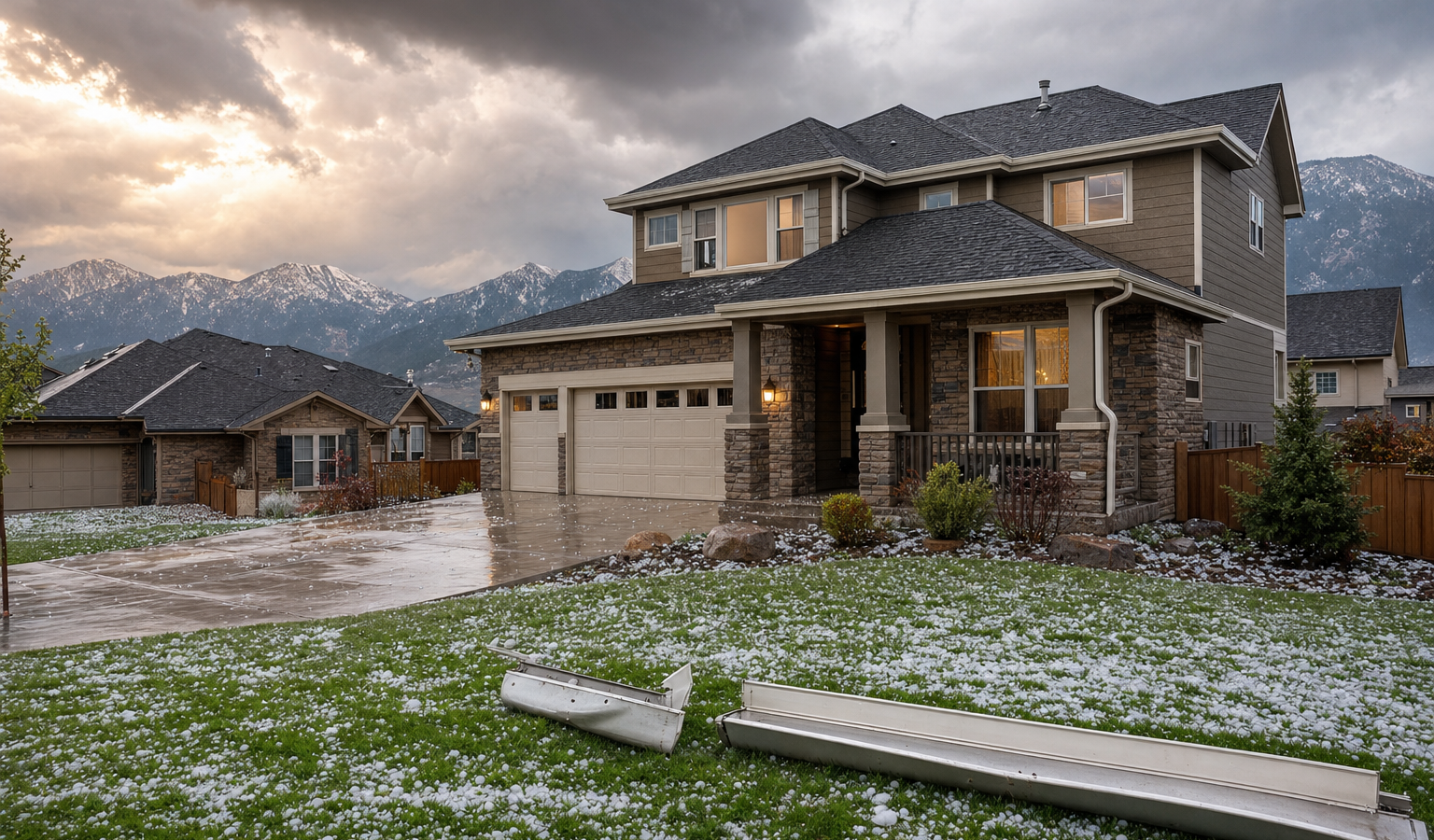
Colorado’s Hail Alley is one of the most active storm corridors in the country, which is why impact-resistant roofing is often a smart investment for homeowners and property managers along the Front Range. When hailstorms hit, standard shingles can crack, bruise, or lose granules, leading to leaks, shorter roof life, and insurance claim headaches. Impact-resistant materials are designed to better handle repeated hail exposure, reduce damage, and help protect the roof system when severe weather rolls through.
What Hail Alley Means for Colorado Roofs
“Hail Alley” generally refers to the part of the Great Plains and Front Range where hailstorms are frequent and sometimes severe. For property owners in Colorado, that means roofing decisions are not just about appearance or initial cost. They are about how well the roof will perform after the next storm.
Along the Front Range, roofs are routinely exposed to a mix of weather stressors:
- Large hail and wind-driven rain
- Rapid temperature swings
- Strong UV exposure at elevation
- Heavy snow followed by freeze-thaw cycles
- Repeated storm seasons over the life of the roof
A roof in this environment takes more abuse than a roof in a milder climate. That is why materials that hold up better under impact can make a real difference over time.
What Impact-Resistant Roofing Actually Is
Impact-resistant roofing refers to roofing products that are engineered to better withstand hail strikes and other impacts. In residential roofing, this often means upgraded asphalt shingles, though other systems can also offer stronger impact performance depending on the building type and design.
These products are typically manufactured with added flexibility, reinforced backing, polymer modification, or other design features that help them absorb the force of a hailstone rather than fracture under it.
That does not mean they are hail-proof.
A severe enough storm can damage almost any roofing material. The real benefit is that impact-resistant roofing is generally less likely to suffer the kind of damage that leads to premature roof replacement, water intrusion, or extensive repair work after a moderate to strong hail event.
Why It Makes Sense in Colorado
1. Hail damage is common, not rare
In many parts of Colorado, hail is a routine risk rather than a once-in-a-decade event. If your property is in a storm-prone corridor, it is reasonable to expect that the roof may face multiple hail events during its service life.
Choosing a roof system with better impact performance can help reduce:
- Cracked or fractured shingles
- Granule loss that exposes asphalt to UV damage
- Bruising that weakens the shingle mat
- Damage that shortens the roof’s usable life
- The frequency of storm-related repairs
For many owners, the question is less “Will hail happen?” and more “How much damage will the next storm cause?”
2. It may lower long-term ownership costs
Impact-resistant roofing usually costs more upfront than standard materials, but it can make financial sense when you look at the full life of the roof.
Potential long-term advantages include:
- Fewer repair calls after smaller hailstorms
- Less cumulative storm wear over time
- Better chance of extending the serviceable life of the roof
- Reduced disruption for tenants, residents, or business operations
- Possible insurance benefits, depending on carrier and policy
The value is not just in avoiding one major event. It is often in reducing repeated smaller losses that add up over the years.
If you are comparing options, it helps to look beyond material cost alone and consider expected maintenance, repair frequency, and storm exposure. Our team can help property owners think through that tradeoff during a roofing estimate.
3. Insurance documentation is easier when the roof condition is clear
One overlooked advantage of a higher-performing roofing system is that post-storm inspections are often more straightforward when the roof is in better overall condition before the storm. That does not guarantee claim approval, but it can reduce confusion between new hail damage and older wear-related issues.
When hail does occur, proper inspection matters. A HAAG-trained inspector looks for functional storm damage, not just cosmetic marks. That includes documenting:
- Impact points and shingle fractures
- Granule displacement patterns
- Soft-metal damage on vents, gutters, and accessories
- Collateral indicators around the property
- Whether the damage affects the roof’s ability to shed water
If you suspect storm damage, a professional hail damage inspection is the right first step.
4. It can be a better fit for high-exposure homes
Not every property has the same risk profile. Some homes and buildings are more exposed because of:
- Open terrain with limited windbreaks
- Roof orientation that takes the brunt of prevailing storms
- Higher elevations
- Older roof systems already weakened by UV and age
- Neighborhoods with frequent recent claim activity
In these cases, impact-resistant roofing may be especially worth considering at the time of replacement.
Residential and Commercial Benefits
The reasons for choosing impact-resistant roofing are similar for homes and commercial buildings, but the priorities are not always the same.
For homeowners
Most homeowners are trying to avoid the cycle of storm, inspection, repair, and another storm a year or two later. A more durable roofing product can help protect:
- The home interior from leaks
- Attics and insulation from moisture intrusion
- Siding, gutters, and other exterior components
- Resale appeal when buyers ask about the roof’s condition
If your roof is already nearing the end of its life, upgrading during a residential roof replacement may be more practical than continuing to patch recurring hail damage.
For commercial properties
Commercial owners and managers often focus on continuity, budgeting, and liability. A roof that performs better in hail can help reduce:
- Emergency leak calls
- Interior disruption to tenants or operations
- Repeat repair costs across larger roof areas
- Documentation problems after multi-building storm events
For flat or low-slope systems, product selection should be matched to the building’s use, drainage, and traffic demands. Our commercial roofing services can help evaluate the best fit for each property.
What Impact-Resistant Roofing Does Not Do
It is important to set realistic expectations. Impact-resistant roofing is a strong upgrade, but it is not a cure-all.
It does not:
- Prevent all hail damage in every storm
- Eliminate the need for inspections after severe weather
- Fix underlying ventilation, decking, or installation issues
- Replace routine maintenance
- Guarantee an insurance outcome
A roof system is only as strong as its overall design and installation. Underlayment, flashing, ventilation, roof age, and workmanship still matter.
When It Is Worth the Upgrade
Impact-resistant roofing is usually worth serious consideration if:
- Your current roof has a history of hail-related repairs
- You are replacing a roof in a hail-prone area of Colorado
- Your neighborhood sees frequent storm activity
- You plan to stay in the property long enough to benefit from durability
- You want to reduce the odds of repeated claim and repair cycles
- You manage a building where downtime is costly
It may be less compelling if the property is being sold immediately or if the roof is in a lower-risk location, but even then, the local storm pattern should be part of the decision.
How to Evaluate Your Options
If you are considering impact-resistant roofing, do not choose based on marketing language alone. Ask for a roof inspection and product discussion that looks at the actual property.
A useful evaluation should include:
- The age and condition of the existing roof
- Whether there is current hail or wind damage
- Slope, layout, and vulnerable roof features
- The property’s storm exposure
- Material options appropriate for the home or building
- Repair versus replacement economics
If your roof has only limited damage, a targeted roof repair estimate may still be the right move. If the system is aging or repeatedly storm-damaged, replacement with a more durable product may provide better long-term value.
Why Inspection Quality Matters in Hail Country
In Hail Alley, one of the biggest mistakes property owners make is assuming every roofer evaluates storm damage the same way. They do not.
A rushed inspection may miss functional damage, overstate cosmetic marks, or fail to document what an insurance carrier will need to review. That can delay decisions and create frustration.
At AC INC. Roofing, our HAAG Certified Master Inspectors document storm-related roof damage with a methodical approach shaped by real hail and insurance-claim conditions across Colorado and Wyoming. Whether the issue is clear hail impact, aging shingles, or a mix of both, accurate inspection is what leads to the right recommendation.
Next step
If your property is in Colorado’s Hail Alley and you are weighing repair versus replacement, we can help you evaluate whether impact-resistant roofing makes sense for your roof, budget, and storm exposure. Request a free inspection or estimate through our contact page.