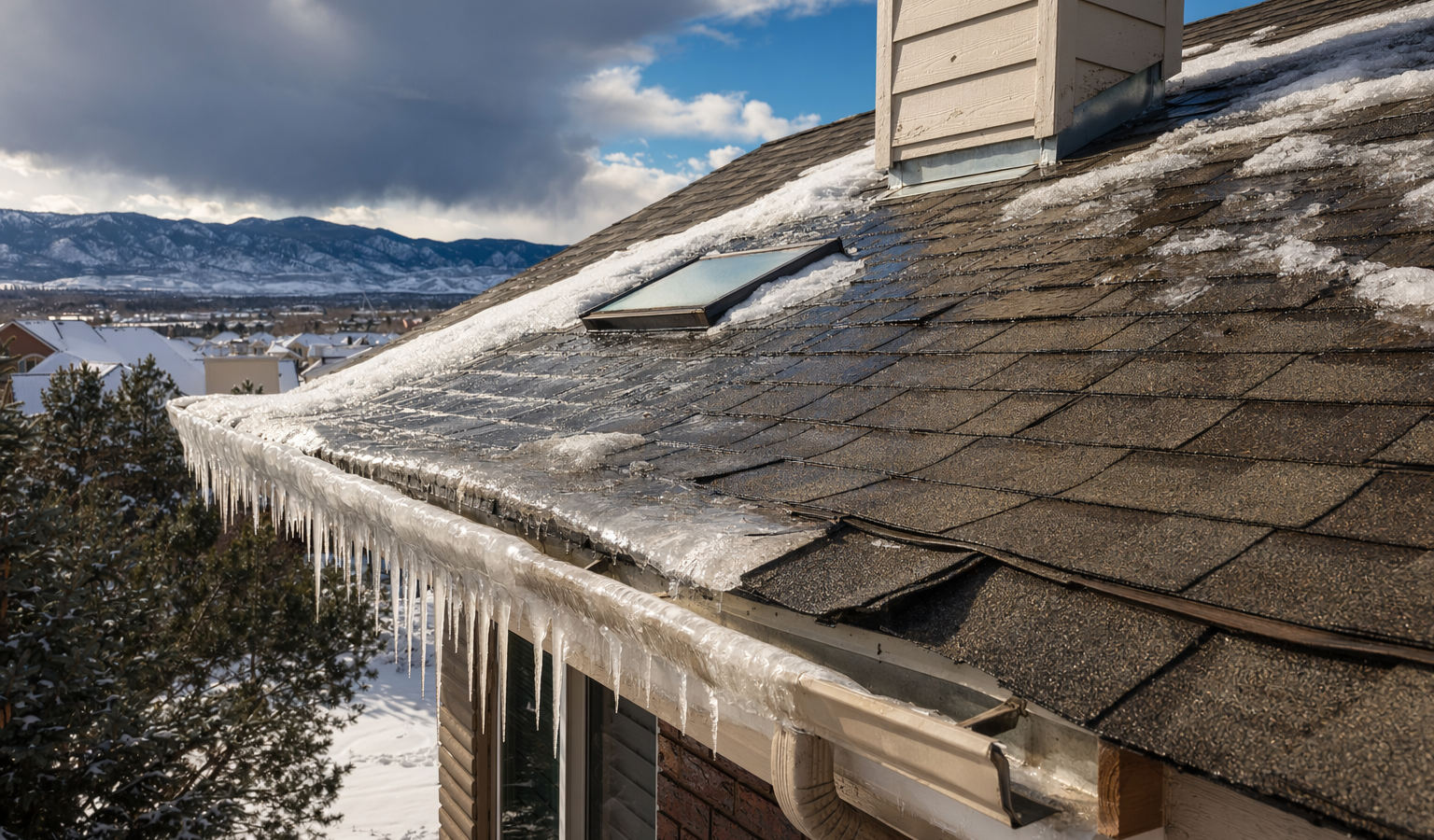
Along the Front Range, it’s common to wake up to single digits and see 50°+ by afternoon—sometimes in the same 24 hours. Those rapid swings, plus high-altitude UV, put your roof through constant freeze-thaw stress. Understanding what’s happening up there helps you prevent leaks, protect warranties, and extend roof life.
AC INC. Roofing (Advanced Consulting, Inc.) is a licensed, insured, and 5.0‑star rated contractor serving the Denver metro, Front Range, and Cheyenne, WY. Our Master HAAG‑certified inspectors provide free roof inspections and detailed documentation if you need to file an insurance claim.
Freeze-Thaw 101: Why It’s Hard on Roofs
Water expands roughly 9% when it freezes. When meltwater seeps into tiny gaps in roofing materials or along fasteners and then refreezes overnight, it pries those gaps wider. Repeated cycles cause:
– Micro-cracks that grow into leaks
– Sealants and adhesives to lose grip
– Fasteners to back out
– Flashings and seams to separate
Colorado’s Chinook winds accelerate the cycle: snow melts quickly, water runs into cracks, then evening temperatures drop and refreeze that moisture.
What Happens to Different Roof Systems
Asphalt shingle roofs
- Granule loss and surface wear from ice movement and high UV during thaws
- Shingle brittleness and edge cracking, especially on north-facing/eave areas
- Nail pops and fastener back-out as the deck swells/shrinks
- Seal-strip failure leading to uplift and wind-driven water
- Flashing separation around chimneys, sidewalls, and skylights
Metal roofs
- Panel expansion/contraction that can loosen exposed fasteners over time
- Gasket wear at fasteners and penetrations during temperature swings
- “Oil canning” and finish abrasion where sliding ice/snow occurs
- Ice dams at eaves that force meltwater back under trim if details are weak
Tile roofs (concrete/clay)
- Tile cracks or spalls when moisture enters and freezes
- Underlayment aging accelerated at eaves and valleys
- Mortar at hips/ridges and masonry parapets developing cracks
Low-slope and commercial roofs (TPO, EPDM, Modified Bitumen)
- Ponded water that freezes expands and stresses membranes
- Seam and flashing movement at penetrations, scuppers, and drains
- Blisters that appear in spring as trapped moisture warms
- Parapet and coping joints opening due to thermal cycling
- Coatings becoming brittle if aged; recoat cycles are critical in Colorado sun
Gutters and Downspouts: Your First Line of Defense
- Ice blockages add weight, pull gutters from fascia, and split seams
- Downspouts can freeze solid, forcing water over eaves and into soffits
- Poor slope or debris accelerates ice dam formation
If your gutters are aging, AC INC. Roofing installs new systems sized and sloped for Colorado snowmelt.
Ice Dams: How They Form and What to Do
Ice dams form when heat from your living space warms the roof deck, melts the underside of the snowpack, and that water refreezes at colder eaves. Water then backs up under shingles.
Warning signs:
– Large icicles on eaves or gutters
– Water stains at exterior walls/ceilings after a warm day then refreeze
– Ice ridges along roof edges or in valleys
Long-term mitigation focuses on building-performance basics:
– Air seal attic bypasses to limit heat loss (work with your insulation contractor)
– Correct attic ventilation to keep the roof deck cold and dry
– During re-roof, install an ice and water barrier at eaves and other critical areas per local codes
AC INC. Roofing evaluates ventilation and leak barriers as part of a full roof system replacement and can advise on roof-side upgrades that reduce ice dam risk.
Signs Your Roof is Suffering From Freeze-Thaw
- New interior water spots or musty odors after thaws
- Curled, cracked, or lifted shingles—especially near eaves
- Excess granules in gutters or at downspout outlets
- Exposed fasteners backing out on metal details
- Membrane wrinkles, blisters, or open seams on low-slope areas
- Loose gutters, split seams, or staining at soffits/fascia
Seasonal Checklist for the Front Range
Pre-winter (Oct–Nov):
– Schedule a free inspection by a Master HAAG‑certified AC INC. Roofing inspector
– Clean gutters and confirm proper slope; add screens/guards if needed
– Check and seal flashing details at chimneys, skylights, and sidewalls
– For low-slope roofs, clear drains/scuppers; consider maintenance or coatings as appropriate
– Document current condition with photos in case of future insurance claims
Mid-winter thaws:
– After warm spells, look for ice dam ridges and water staining
– From the attic, check for frost on nails/sheathing indicating ventilation issues
Early spring:
– Inspect for loose shingles, popped fasteners, and open seams after the final freeze
– Plan proactive repairs before hail and spring storms arrive
Professional Solutions From AC INC. Roofing
- Free roof inspections and storm-damage documentation by HAAG‑certified inspectors
- Targeted repairs and full replacements for residential and commercial roofs
- Roof rejuvenation for aging asphalt shingles to help restore pliability and resist cracking
- Low-slope restoration with TPO, EPDM, Modified Bitumen repairs and fluid-applied coatings
- Siding and gutter installation to address freeze-thaw weak points at the roof edge
- Insurance claims support with thorough photos, reports, and advocacy
Materials and Warranties That Stand Up to Colorado
- Atlas Pro+ Platinum Certified contractor: Atlas shingle systems with warranties up to 50 years (on eligible installations)
- GAF Certified contractor: System Plus warranties available
- Fortified Roofing Solutions certified: systems designed to withstand 130 mph winds, EF‑2 tornadoes, and 2″ hail
- Impact-resistant shingles, premium metal and tile systems selected for high UV and hail exposure
Why Homeowners and Property Managers Choose Us
- Colorado’s first company to reach Master HAAG Certification
- Directorii‑certified, backed by up to a $20,000 customer guarantee
- Active members of RSRA, CRA, NRCA, and APA
- Licensed and insured; 5.0‑star reviewed
- Local, responsive team based at 6145 Broadway, Suite 25, Denver, CO 80216
FAQs
How often should I have my roof inspected in Colorado?
– Twice a year (before winter and after spring thaw) and after any major storm.
Do ice dams mean I need a new roof?
– Not always. Many issues can be addressed with roof-side upgrades, proper ventilation, targeted repairs, and leak barriers. We’ll assess and advise.
Can metal and flat roofs get ice dams?
– Yes. Eaves, gutters, and drains are common cold spots where refreezing occurs. Proper details and maintenance reduce risk.
Will insurance cover freeze-thaw damage?
– Policies vary. Our team provides the documentation your carrier needs and guides you through the claim if weather events contributed to the loss.
Schedule Your Inspection
Get ahead of freeze-thaw damage with a thorough, no-cost evaluation by AC INC. Roofing’s Master HAAG-certified team. Serving the Denver metro, Front Range, and Cheyenne areas.