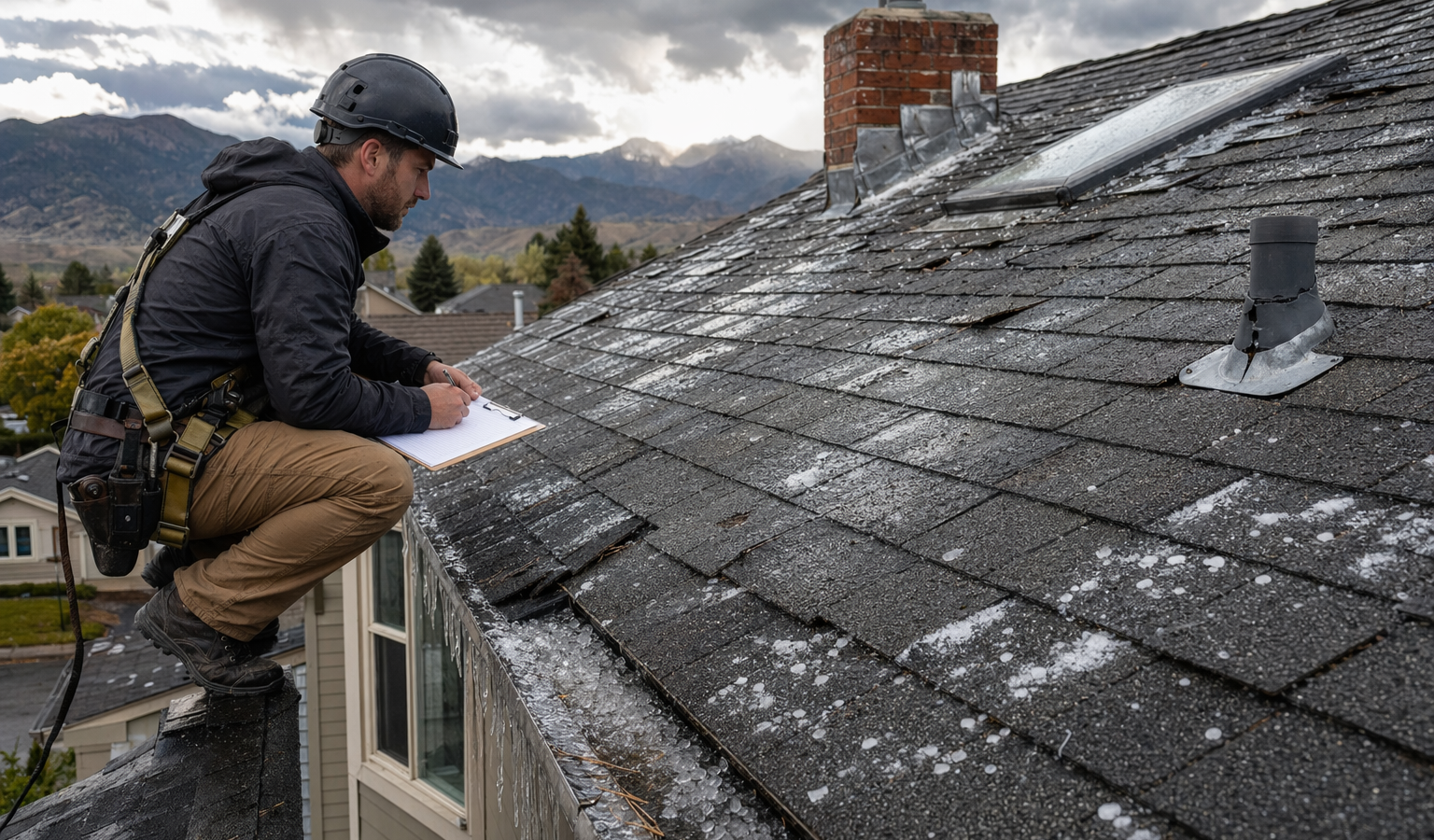
Colorado’s Front Range climate is tough on roofs. Between spring hail, heavy snow, intense high-altitude sun, and strong winds, even a well-built roof can develop leaks over time. Here’s what Colorado homeowners need to know about the most common causes of roof leaks—and how AC INC. Roofing helps you prevent and fix them.
Weather-driven culprits in Colorado
Hail impact and latent damage
Hail is the number-one roof killer along the Front Range. Even when shingles don’t look shredded, hail can bruise the mat, dislodge protective granules, and create micro-fractures that turn into leaks months later. Our HAAG-certified inspectors are trained to identify subtle storm damage and provide thorough documentation for insurance claims.
Ice dams from freeze–thaw cycles
Snowmelt that refreezes at the eaves creates ice dams. Water backs up under shingles and leaks into ceilings and walls. Contributing factors include inadequate attic insulation or ventilation and warm air leakage from the living space. Solutions include improving attic ventilation, sealing warm air leaks, and ensuring proper underlayment at eaves.
Wind-driven rain and uplift
Chinook winds can lift shingle tabs, loosen ridge caps, and open gaps at flashing and seams. Once wind breaks the shingle seal, wind-driven rain can push water beneath the roof covering.
High-altitude UV and thermal movement
Colorado’s sun accelerates asphalt aging. Daily temperature swings cause expansion and contraction that crack sealants, open flashing joints, and fatigue older materials.
Snow load and drifting
Prolonged or drifted snow stresses roof systems and increases meltwater exposure at vulnerable details like valleys, skylights, and chimneys.
Detail and component failures
Flashing at walls, chimneys, valleys, and skylights
Improper or aging flashing is a leading leak source. Missing counterflashing, incorrect step flashing, or dried-out sealants allow water to follow the path of least resistance indoors.
Penetrations: plumbing vents and attic vents
Rubber vent boots can dry out and crack, fasteners can back out, and gaskets can fail, letting water in around otherwise healthy shingles.
Nail pops and fastener back-out
Seasonal movement can push nails up, breaking the shingle seal and opening pathways for water.
Clogged gutters and downspouts
When gutters overflow, water can back up under the first course of shingles and into the fascia or soffit. Regular cleaning and properly sized/downspouts help prevent this. AC INC. Roofing also provides professional gutter installation when replacement is needed.
Aging roofing and prior installation errors
As shingles lose granules and flexibility, they become brittle and crack. Past shortcuts—overdriven nails, improper nailing patterns, or insufficient underlayment—often reveal themselves years later as chronic leaks.
Roof type specifics on Colorado homes
- Asphalt shingles: The most common residential roof. Class 4 impact-resistant options can better withstand hail. We install premium systems from trusted brands, including Atlas shingle systems and GAF, with robust warranty options.
- Metal roofing: Fastener gaskets age, and panel seams move with temperature swings. Proper clip systems and periodic tightening or replacement of exposed fasteners are key.
- Tile roofing: Tiles can crack from hail or foot traffic. Often, the underlayment—not the tile—is the leak source as it ages.
- Low-slope areas (porches, additions): TPO, EPDM, or Modified Bitumen membranes can develop seam failures or ponding water. Fluid-applied coatings can restore and protect some low-slope systems when appropriate.
Early warning signs of a roof leak
- Brown ceiling or wall stains, especially after storms
- Peeling paint, bubbling drywall, or musty odors
- Dripping from light fixtures (turn power off and seek help immediately)
- Visible shingle damage, loose flashing, or granules piling in gutters
What to do if you suspect a leak
- Protect people and property: Move belongings, place buckets, and avoid wet ceilings that sag.
- Don’t climb on a damaged or icy roof. It’s unsafe and can worsen damage.
- Document what you see with photos or video.
- Call AC INC. Roofing for a free roof inspection by a HAAG-certified inspector. We’ll locate the source, provide a clear repair or replacement plan, and, when storm-related, provide thorough documentation to support an insurance claim.
Preventive maintenance for Colorado roofs
- Schedule professional roof inspections at least annually—and after significant hail or wind events.
- Keep gutters and downspouts clean and correctly pitched.
- Trim overhanging branches that can rub shingles or drop debris.
- Check attic ventilation and reduce warm air leakage to help prevent ice dams.
- Maintain sealants at flashings and penetrations; resecure any loose fasteners.
- Consider roof rejuvenation for aging asphalt shingles to help extend service life when appropriate.
Strengthen and protect with the right system
When repairs aren’t enough, AC INC. Roofing installs premium materials designed for Colorado’s climate:
- Impact-resistant asphalt shingles, metal, and tile roofing systems
- Atlas Pro+ Platinum Certified systems (eligible for warranties up to 50 years)
- GAF Certified contractor installations (System Plus warranties available)
- Fortified Roofing Solutions certified options engineered to withstand severe wind and hail
Why homeowners trust AC INC. Roofing
- Master HAAG Certification (Colorado’s first company to reach Master level) for expert inspections and storm-damage evaluation
- Directorii-certified contractor, backed by up to a $20,000 customer guarantee
- Licensed and insured, 5.0-star Google rating
- Local and responsive: based at 6145 Broadway, Suite 25, Denver, CO 80216; serving the Denver metro area, the Front Range, and Cheyenne, WY
- Integrity-driven advocacy with detailed documentation for insurance claims
A small leak rarely stays small. Address issues early to protect your home’s structure, insulation, and indoor air quality—and to preserve your roof’s lifespan.