How to Spot Early Roof Damage Before It Becomes Expensive
Catching small roof issues early is the easiest way to prevent leaks, mold, interior repairs, and premature roof replacement. In Colorado’s Front Range—where hail, strong winds, high-altitude UV, and heavy snow all take a toll—routine checks can save thousands. This guide shows homeowners and property managers exactly what to look for and when to bring in AC INC. Roofing’s HAAG-certified inspectors for a free, professional assessment.
Why small roof issues are common in Colorado
- Hail impacts dislodge granules and bruise shingles, dent metal, and crack tiles.
- High-altitude sun accelerates UV aging, drying out shingles and sealants.
- Wind gusts lift edges and stress fasteners and flashing.
- Freeze–thaw cycles widen tiny cracks, letting meltwater in.
- Snow load and ice dams back water up under shingles and along eaves.
A 10-minute ground-level check (no ladder required)
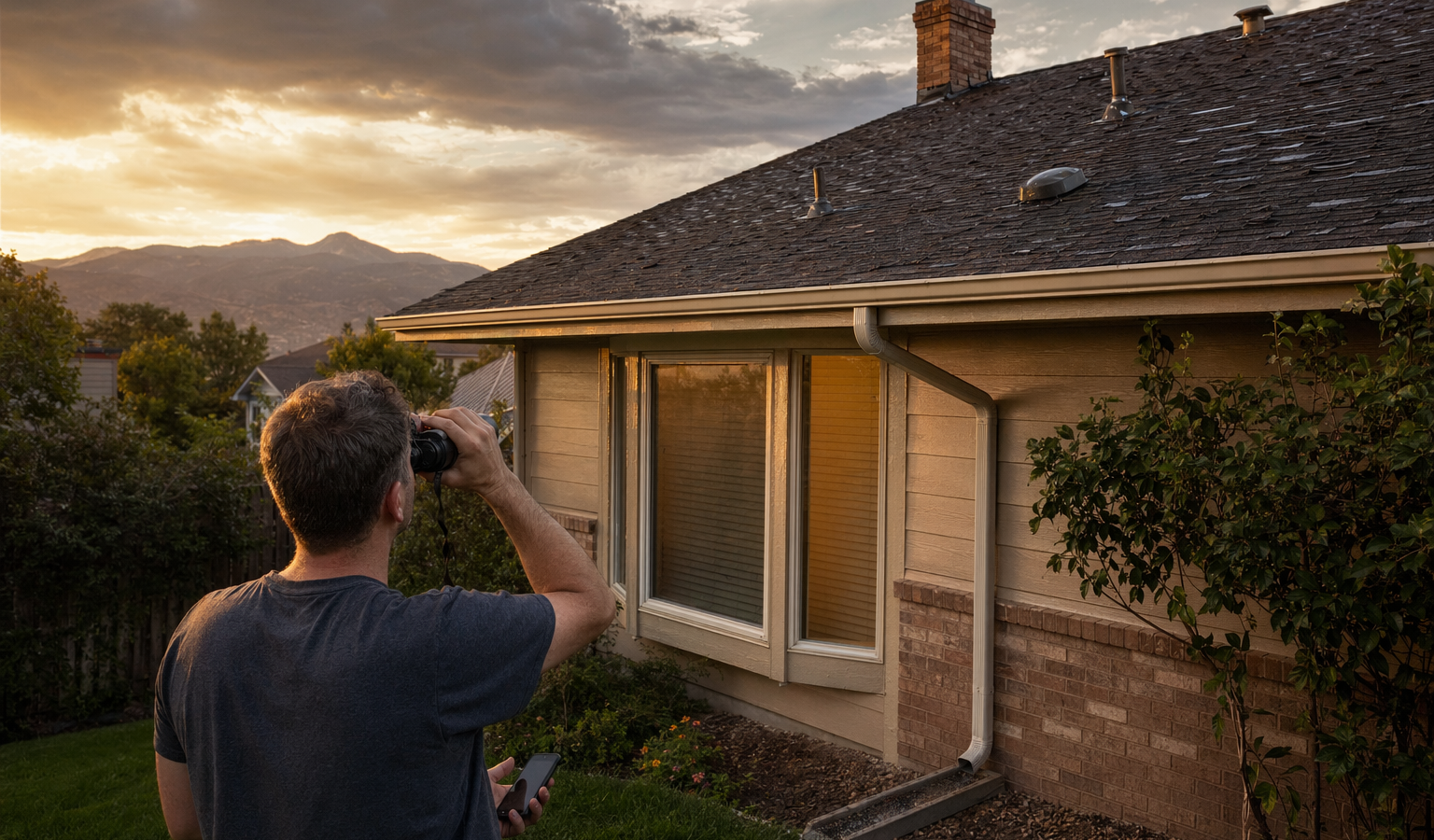
Stay safe—most problems can be spotted from the ground with binoculars and a camera.
- Shingle surfaces: Look for dark, bald, or shiny spots; creased, curled, or missing shingles; mismatched patches from prior repairs.
- Edges and ridges: Check for lifted tabs, exposed nails, or loose ridge caps.
- Flashing areas: Scan around chimneys, skylights, sidewalls, and valleys for gaps, rust, or separated sealant.
- Gutters and downspouts: Note sagging, pulling away, or rust. After rain, look for leaks at seams.
- Granules: Observe the ends of downspouts and splash blocks for piles of roofing granules.
- Soffit and fascia: Spot peeling paint, staining, or soft wood—often a sign of trapped moisture.
- Roofline: From a distance, look for dips or sags that can signal structural or decking issues.
Tip: Take clear, dated photos. Good documentation speeds decisions, especially for storm-related insurance claims.
After hail or high winds: quick post-storm checklist
- Hail: Check for spatter marks on AC units, mailboxes, soft metals, and fences—these are hail indicators. On roofs, look for circular bruises on shingles, chips on tile edges, and dents in metal panels or vents.
- Wind: Identify missing shingles, creased tabs near eaves and rakes, lifted ridge caps, or displaced flashing.
- Skylights and vents: Inspect lenses and housings for cracks; look for loose fasteners and damaged boots.
- Gutters: Clear blockages and confirm downspouts are flowing; hail can clog outlets with granules.
- Attic: Within 24–48 hours, check for fresh water stains or damp insulation after a storm.
If you suspect damage, schedule a free inspection by an AC INC. Roofing HAAG-certified inspector. We’ll provide photos, measurements, and a clear plan to help you decide next steps—and if needed, we’ll support your insurance claim with thorough, professional documentation.
Interior and attic warning signs
- Ceiling spots or bubbling paint—particularly below valleys, chimneys, or skylights.
- Musty odors, damp insulation, or visible mold in the attic.
- Sunlight through the roof deck or around penetrations.
- Rust on roofing nails or metal connectors in the attic (a sign of prolonged moisture).
- Ice-dam indicators: water staining along exterior walls near eaves after heavy snow.
Safety note: Avoid walking on the roof. Attics can have low headroom and exposed fasteners—use protective gear and lighting, or let our team handle it.
Material-specific red flags
Asphalt and impact-resistant shingles
- Bruises (soft spots) from hail, missing granules exposing black mat, or torn/creased tabs from wind.
- Exposed, popped, or rusted nails; cracked sealant on flashing.
- Excess granules washing into gutters soon after a storm.
Metal roofing
- Dents from hail, especially on softer metals; coating scratches down to bare metal.
- Loose or backed-out fasteners; lifted panel seams; compromised sealant at penetrations.
- Rust streaks or oxidation near cut edges, fasteners, or mechanical joints.
Tile roofing (concrete or clay)
- Edge chips, corner breaks, or midspan cracks from impact.
- Slipped or displaced tiles exposing underlayment.
- Broken mortar or deteriorated flashing at ridges and hips.
Low-slope and commercial roofs (TPO, EPDM, Modified Bitumen, coatings)
- Punctures, cuts, or membrane scuffs from windborne debris or foot traffic.
- Open seams or failed lap welds; bridging at corners and parapets.
- Ponding water lasting more than 48 hours after rain.
- Blisters in modified bitumen or coatings; alligatoring from UV aging.
- Loose counterflashing at walls, HVAC curbs, and skylights; degraded sealants.
Don’t forget the details: where leaks love to start
- Chimneys and skylights: Failing step and counterflashing, cracked saddles/crickets, brittle sealants.
- Valleys and dead valleys: Debris buildup traps moisture; check for shingle wear and open seams.
- Sidewalls and headwalls: Look for gaps behind siding, dried caulk, and missing kick-out flashing.
- Penetrations: Cracked rubber boots at plumbing vents; loose storm collars at flues.
- Gutters and downspouts: Clogs cause overflow into fascia and eaves; verify slope and secure hangers.
What to do if you spot a problem
- Document: Take wide and close-up photos, and note dates and storm events.
- Protect: Catch drips with buckets, move valuables, and ventilate damp areas to limit secondary damage.
- Call a pro: Request a free inspection from AC INC. Roofing. Our HAAG-certified team assesses storm and age-related issues objectively and safely.
- Plan: If repairs or replacement are needed, we’ll explain options, materials, and warranties that fit Colorado’s climate and your budget.
AC INC. Roofing specializes in storm damage restoration and insurance claims support. We provide thorough reports and advocacy so you can navigate the process with confidence.
A proactive maintenance calendar for the Front Range
- Spring: Post-winter check for ice-dam staining, lifted shingles, and sealant cracks; clear gutters before spring storms.
- Summer: After hail or wind events, schedule a professional inspection even if damage is not obvious.
- Fall: Clear leaves/debris, confirm attic ventilation, and inspect flashing before snow season.
- After any major storm: If local winds exceeded ~60 mph or hail was reported, book a free inspection.
Ask about roof rejuvenation to extend the life of aging asphalt shingles and improve water repellency.
Fortify your roof for Colorado weather
When it’s time for significant repairs or replacement, choosing proven systems matters.
– Impact-resistant and Atlas shingle systems: As an Atlas Pro+ Platinum Certified contractor, AC INC. Roofing can offer robust system warranties up to 50 years.
– GAF Certified contractor: System Plus warranties are available on qualifying installations.
– Fortified Roofing Solutions certified: Options designed to withstand up to 130 mph winds, EF-2 tornado forces, and 2″ hail.
– Fluid-applied coatings for commercial roofs: Add reflectivity, extend service life, and improve weatherability on qualifying substrates.
Why AC INC. Roofing
- Master HAAG Certification: Colorado’s first company to reach Master level—our inspections are precise and evidence-based.
- Free roof inspections by HAAG-certified inspectors.
- Licensed, insured, and Directorii-certified (backed by up to a $20,000 customer guarantee).
- 5.0-star Google rating with excellent reviews.
- Professional memberships: RSRA (invitation-only), Colorado Roofing Association, NRCA, and APA.
- Services: Residential and commercial roofing; storm damage restoration and insurance claims support; roof inspections, repairs, and replacements; roof rejuvenation; siding and gutter installation; concrete and asphalt sealing.
- Premium materials: Asphalt and impact-resistant shingles; metal and tile; TPO, EPDM, Modified Bitumen; fluid-applied coatings.
Location: 6145 Broadway, Suite 25, Denver, CO 80216
Service area: Denver metro, the Front Range, and Cheyenne, Wyoming.
Staying proactive is the surest way to avoid expensive surprises. If you have any doubts after a storm—or it’s been more than six months since your last check—schedule an expert assessment.