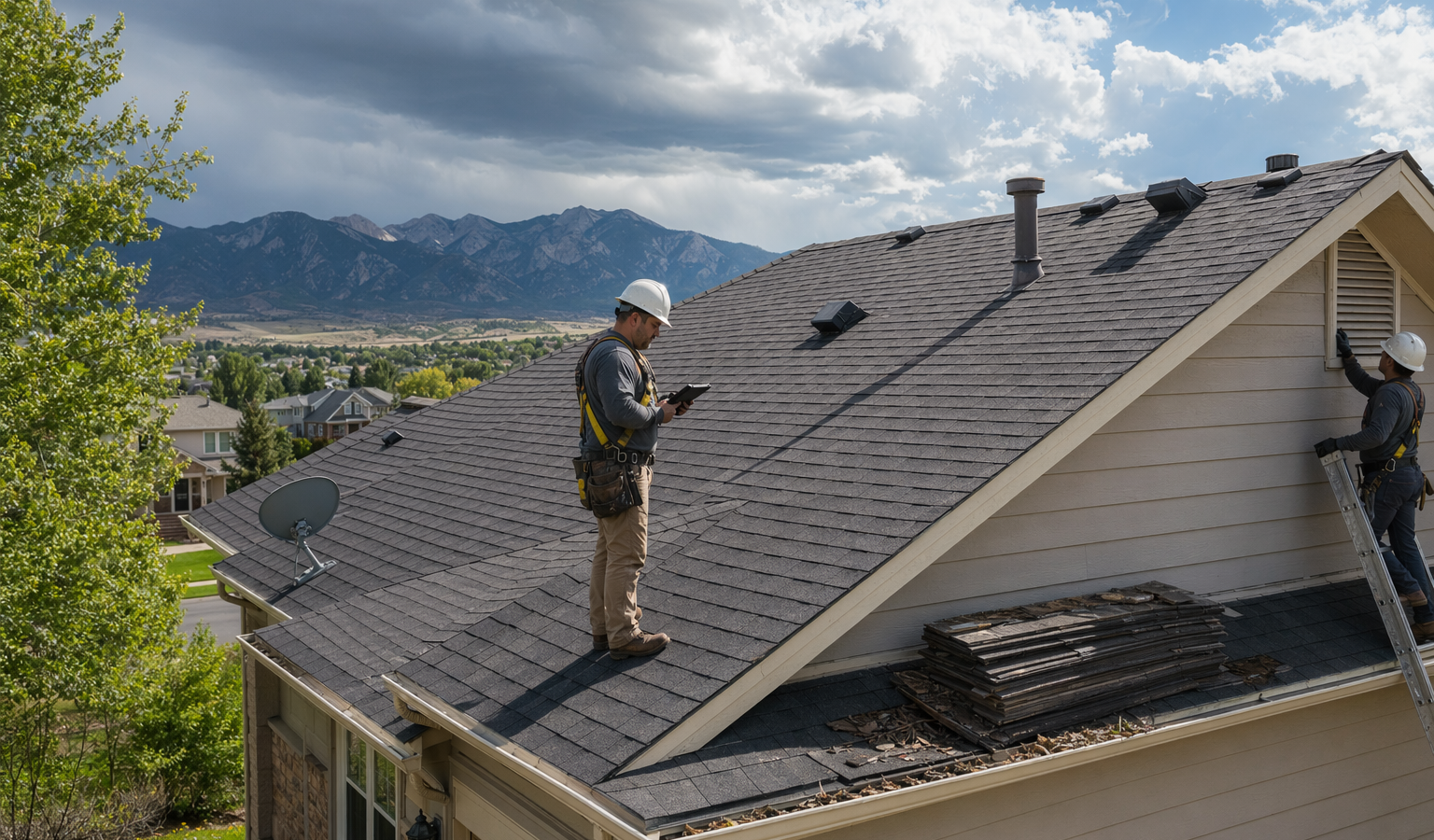
Why your roof warranty matters in Colorado
Between spring hail, high UV at altitude, snow loads, and strong downslope winds along the Front Range, your roof takes a beating. A valid warranty helps protect your investment—but it can be easy to void if you’re not careful. Here’s what Colorado homeowners and property managers should know, plus how AC INC. Roofing helps you stay covered.
AC INC. Roofing is a licensed and insured contractor based in Denver, serving the metro area, the Front Range, and Cheyenne, WY. We’re Atlas Pro+ Platinum Certified (eligible for Atlas warranties up to 50 years), GAF Certified (System Plus warranties available), Colorado’s first Master HAAG Certified company, Directorii-certified (backed by up to $20,000 customer guarantee), and Fortified Roofing Solutions certified. Our HAAG-certified inspectors provide free roof inspections and detailed documentation for storm-related insurance claims.
Understand your coverage: two common warranty types
- Manufacturer/material warranty: Covers manufacturing defects and, with enhanced system warranties, may include more components and longer terms. Coverage varies by brand and product line; weather damage is typically excluded.
- Contractor/workmanship warranty: Covers installation quality for a set period. Terms and transferability vary by contractor.
Always read the actual documents for limits, exclusions, and required maintenance.
Common mistakes that can void a roof warranty
1) Using non-certified or unlicensed contractors for repairs
– Many manufacturer warranties require installation and repairs by certified contractors using specified methods and components. Hiring a handyman or unqualified crew for a quick fix can jeopardize coverage.
2) Skipping routine inspections and maintenance
– Neglected debris, clogged gutters, failing sealants, and unchecked storm damage can lead to leaks and may be considered lack of maintenance. Keep records of seasonal inspections—especially after hail or high wind.
3) Unauthorized roof penetrations or add-ons
– Solar arrays, satellite dishes, skylights, HVAC curbs, holiday lighting anchors, and heat cables installed without proper flashing or manufacturer-approved methods can void coverage. Coordinate with your roofer before anyone penetrates the roof.
4) Mixing components or reusing old parts
– Combining brands or reusing old underlayment, vents, or flashings often violates system-warranty requirements. Stick to a matched, approved system.
5) Shingle overlays (shingle-over-shingle)
– Installing new shingles over worn layers can trap heat/moisture, hide problems, and conflict with code or warranty language. Full tear-offs are usually the safer path.
6) Improper ventilation or insulation changes
– Blocked soffits, power fans added without a balanced plan, or over-insulating the attic can cause condensation, premature aging, and ice dams—issues that may be excluded. Ventilation must meet code and manufacturer specs.
7) Pressure washing or harsh chemical cleaning
– High-pressure washing, abrasive brushing, and unapproved chemicals can damage granules and membranes, risking warranty loss. Ask your roofer for safe cleaning guidance.
8) Aftermarket coatings on shingles
– Coating or painting asphalt shingles with non-approved products can void manufacturer coverage. Always verify eligibility before any roof rejuvenation or coating.
9) Delaying storm-damage repairs
– Warranties rarely cover hail or wind damage, but failing to address damage promptly can worsen issues and complicate both insurance claims and warranty status.
10) Ponding water on low-slope roofs
– On TPO, EPDM, and Modified Bitumen systems, many warranties exclude long-term ponding, clogged drains, or improper slope. Regularly clear drains and correct low spots.
11) Not registering or transferring the warranty
– Some warranties require owner registration or have one-time transfer rules during sale. Missed deadlines can reduce or void coverage.
12) Building code noncompliance and missing permits
– Incorrect fasteners, inadequate ice/water barriers, or skipped permits can conflict with warranty conditions. Your roofer should follow current Colorado codes and manufacturer specs.
13) Excessive foot traffic and misuse
– Frequent traffic from other trades, storage on the roof, or dragging equipment can damage surfaces. Use walk pads on low-slope roofs and limit access.
Colorado-specific pitfalls to watch
- Hail and wind: Impact from hail and wind-driven debris is typically excluded from manufacturer warranties. Consider impact-resistant shingles and document every storm with photos and a professional inspection.
- Snow loads and ice dams: Ensure balanced ventilation and air sealing to reduce ice dams. Heat cables, if used, must be installed without damaging shingles and according to manufacturer guidance.
- High UV and temperature swings: At altitude, UV accelerates aging; correct ventilation and approved materials are essential to maintain coverage.
Special notes for low-slope and commercial roofs
For TPO, EPDM, and Modified Bitumen systems:
– Keep drains and scuppers clear; document maintenance.
– Use manufacturer-approved adhesives, primers, and flashing details.
– Protect membranes from grease, oils, or solvents near rooftop units.
– Coordinate curbs and penetrations through a certified roofer to preserve coverage.
Fluid-applied coatings can extend service life when they’re part of a manufacturer-approved system and installed to spec—avoid one-off, non-approved products.
How AC INC. Roofing helps protect your warranty
- Master HAAG inspections at no cost: Our HAAG-certified inspectors provide thorough, photo-rich reports to establish baseline condition and support insurance claims after storms.
- Certified system installations: As an Atlas Pro+ Platinum and GAF Certified contractor, we install complete, approved systems and can offer enhanced warranty options (including Atlas warranties up to 50 years and GAF System Plus).
- Code- and climate-ready details: Our Fortified Roofing Solutions certification reflects resilient practices for high wind and hail common to the Front Range.
- Clear documentation: Contracts, permits, material lists, photos, and maintenance guidance to help you keep coverage intact.
- Insurance claims support: Expert storm-damage evaluation and documentation to streamline the claims process.
Simple checklist to stay covered
- Register your manufacturer and workmanship warranties; save digital and paper copies.
- Schedule seasonal (and post-storm) inspections; keep a log with photos.
- Use only certified, licensed roofers for any work on the roof.
- Before adding solar, skylights, or satellite dishes, call your roofer.
- Keep gutters, valleys, and low-slope drains clear of debris.
- Avoid pressure washing or unapproved chemicals.
- Don’t mix components; stick to a single, approved system.
- Pull permits when required; follow local codes.
- Limit foot traffic; use walk pads where needed.
FAQs
-
Does hail void my warranty?
Hail is usually excluded from manufacturer warranties. It doesn’t typically “void” coverage by itself, but you should get prompt inspections to document damage and prevent secondary issues. -
Can I coat or rejuvenate my shingle roof?
Only with products and methods approved by the shingle manufacturer. Non-approved coatings can void coverage. Ask us to review your warranty before any treatment. -
Do I need an inspection after a mild storm?
Yes—some hail and wind damage is subtle. A quick, documented inspection protects both warranty status and potential insurance claims. -
I’m selling my home—can the warranty transfer?
Many warranties allow a one-time transfer within a time limit. Check your documents and complete any required forms.
About AC INC. Roofing
Address: 6145 Broadway, Suite 25, Denver, CO 80216
Service area: Denver metro, the Front Range, and Cheyenne, WY
Licensed and insured. 5.0-star rated on Google.
Ready to protect your investment and your coverage? Our HAAG-certified team can inspect, document, repair, and install to manufacturer specs so your warranty works when you need it.