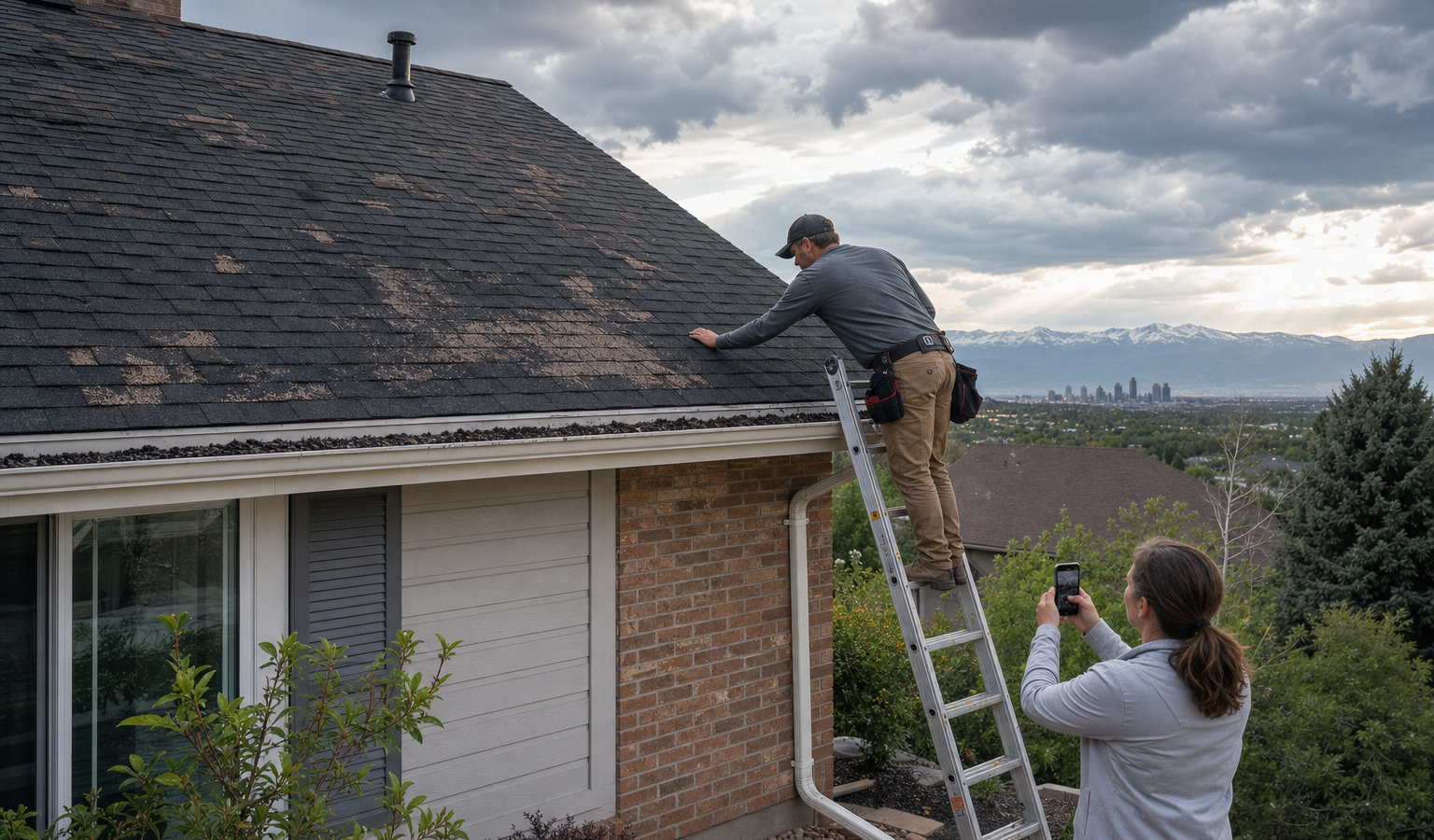
If your Malarkey roof is showing premature granule loss, the right response is to document what you see, avoid guessing at the cause, and schedule a qualified inspection before the problem turns into leaks or a disputed warranty or insurance issue. Granule loss can be normal in small amounts on a newer roof, but widespread shedding, exposed asphalt, bald spots, or uneven wear may point to storm damage, installation problems, ventilation issues, or shingle defects. For homeowners and property managers in Colorado and Wyoming, where hail, wind, and rapid weather swings are common, it is worth getting the roof checked sooner rather than later.
What granule loss means on an asphalt roof
Asphalt shingles are coated with mineral granules that help protect the shingle from UV exposure, weathering, and surface wear. Those granules are not just cosmetic. They are part of what helps the roof age at the pace it is supposed to.
A small amount of loose granules is not automatically a problem. It is common to see some granules in gutters or at downspout exits, especially after installation or after a strong storm. The concern is premature or abnormal granule loss, such as:
- Large accumulations of granules in gutters or on the ground
- Noticeable bald spots on shingles
- Dark or shiny areas where the asphalt mat is more exposed
- Uneven wear on one roof slope but not others
- Granule loss combined with bruising, cracking, or torn shingles
- Loss showing up much earlier than you would reasonably expect for the roof's age
When granules come off too early, the shingles can become more vulnerable to sunlight, heat, impact, and accelerated aging.
Is granule loss always a defect?
No. Granule loss can come from several different causes, and that is exactly why a proper inspection matters.
Normal shedding
Newer shingles often release excess surface granules after installation. If the roof is otherwise in good shape and the shedding is light and temporary, that may be normal.
Hail damage
In Colorado's Front Range and across Wyoming, hail is a common reason shingles lose granules. Hail impacts can knock granules loose and leave behind bruised or fractured areas. This type of damage is not always obvious from the ground.
If your roof has been through a recent storm, a hail inspection may be the next logical step. AC INC. Roofing documents storm-related damage the way carriers expect during a hail damage inspection.
Wind and debris impact
High winds can lift shingles, break their seal, or blow branches and debris across the roof surface. That friction and impact can strip granules away in concentrated areas.
Installation issues
Improper handling, overdriven nails, poor fastening patterns, scuffing during install, or related workmanship problems can contribute to early wear. Sometimes the issue is not the shingle itself but how the roof system was installed.
Ventilation or heat-related aging
An attic that runs too hot can speed up roof aging. While ventilation is not the cause of every granule problem, it can be a factor when shingles look older than they should.
Manufacturing concerns
Sometimes the pattern of wear raises concern about the shingles themselves. That does not mean you should jump straight to blaming the manufacturer, but it does mean the roof should be evaluated and documented carefully.
Signs your Malarkey roof needs prompt attention
If you notice any of the following, do not wait for an interior leak to decide whether the roof has a real problem:
- Bald or thin-looking shingle areas you can see from the ground
- Granules collecting heavily in gutters after mild weather, not just after one major storm
- Circular or random impact marks after hail
- Discoloration that appears patchy rather than uniform aging
- Cracked, creased, or lifted shingles near the granule loss
- Water stains in the attic or on ceilings
- One section of the roof aging much faster than the rest
- A roof that is relatively new but already looks weathered
These symptoms do not all mean the same thing, but they do justify a closer look.
What to do first if you suspect premature granule loss
1. Take photos from the ground
Document visible areas safely. Capture:
- Wide shots of each roof slope you can see
- Close-up photos using zoom if you can do so from the ground
- Granule buildup in gutters, splash blocks, or below downspouts
- Any dents on gutters, downspouts, soft metals, or siding after a storm
Do not get on the roof yourself unless you are trained and equipped to do it safely.
2. Write down the roof age and storm history
Gather basic information such as:
- Approximate installation date
- Known repairs or prior insurance claims
- Dates of recent hail or wind events
- Whether the issue appears suddenly or has gradually worsened
This background helps a roofing inspector separate storm-related damage from wear, maintenance issues, or possible product concerns.
3. Check the attic if you can do it safely
Look for:
- Active leaks or damp decking
- Water stains
- Daylight showing through
- Excess heat or signs of poor ventilation
You are not trying to diagnose the roof from the attic alone. You are simply collecting clues.
4. Schedule a professional inspection
A qualified inspection is the fastest way to understand whether you are dealing with cosmetic granule shedding, functional damage, installation issues, or something that may support a warranty review. For homes, see our residential roofing services. For multi-family, office, retail, or industrial properties, visit our commercial roofing services.
Why inspection quality matters
Granule loss is easy to oversimplify. One contractor may call it normal aging. Another may say it is hail damage. Another may blame the shingle right away. The problem is that those conclusions can affect whether you pursue repairs, a roof replacement, a warranty route, or an insurance claim.
A strong inspection should document:
- The pattern and extent of granule loss
- Whether impacts are consistent with hail damage
- Whether shingles are bruised, fractured, creased, or loosened
- Related damage to vents, flashing, gutters, and soft metals
- Signs of installation or ventilation concerns
- Whether the issue appears isolated or roof-wide
That level of documentation is especially important if you may end up speaking with your insurance carrier or reviewing manufacturer warranty terms.
Will insurance cover granule loss?
Sometimes, but not always.
Insurance generally looks for covered damage caused by a specific event, such as hail or wind. It usually does not cover ordinary wear and tear, age-related deterioration, maintenance neglect, or every type of product issue. That means a claim may be stronger when granule loss is tied to a documented storm and supported by a clear inspection.
If a recent storm may be involved, it helps to have a HAAG-trained roofing inspector document the damage in a way the carrier can understand. AC INC. Roofing assists property owners with inspection reports and storm documentation, but the final claim decision rests with the insurer.
Repair or replacement: how the decision is made
There is no one-size-fits-all answer. The right solution depends on the extent and cause of the granule loss.
Repair may make sense when:
- The damage is limited to a small, defined area
- The surrounding shingles are still in good condition
- The roof has enough remaining life to justify spot repair
- There are no widespread signs of hail impact or system failure
If you are trying to compare likely repair scope, our roof repair pricing page can help with general expectations.
Replacement may make sense when:
- Granule loss is widespread across multiple slopes
- Shingles are bruised, brittle, cracked, or otherwise compromised
- The roof is aging unevenly and repairs would only be short-term
- Hail damage affects a large portion of the system
- Matching existing shingles would be difficult or unreliable
If you are budgeting for a larger project, our general roofing pricing information is a useful starting point.
What not to do
When you are worried about a newer roof, it is easy to make the situation harder than it needs to be. Avoid these common mistakes:
- Do not pressure wash shingles to "clean" the roof surface
- Do not scrape or brush the roof to test how loose the granules are
- Do not caulk over visible damage as a permanent fix
- Do not assume gutter granules automatically mean total roof failure
- Do not wait months after a hailstorm if the roof may have storm damage
- Do not rely only on ground-level guesses if there are warning signs
The goal is to preserve evidence, prevent more damage, and get a defensible assessment.
Why this matters in Colorado and Wyoming
Our service area sees the kind of weather that can shorten roof life when a roof is already vulnerable. Along the Front Range, frequent hail and high winds can turn minor shingle wear into a much larger problem. In Wyoming markets like Cheyenne, Laramie, and Pine Bluffs, wind exposure and temperature swings can also stress roofing materials.
That does not mean every Malarkey roof with granule loss needs replacement. It does mean local weather should be part of the evaluation, especially when the roof appears to be wearing faster than expected.
Next step
If your Malarkey roof is shedding granules sooner than it should, the best next move is a professional inspection with clear documentation. AC INC. Roofing provides free inspections and estimates for homeowners and commercial property managers across Colorado and Wyoming. If you want to know whether you are looking at normal wear, hail damage, repairable issues, or a potential roof replacement, contact us to schedule an inspection.