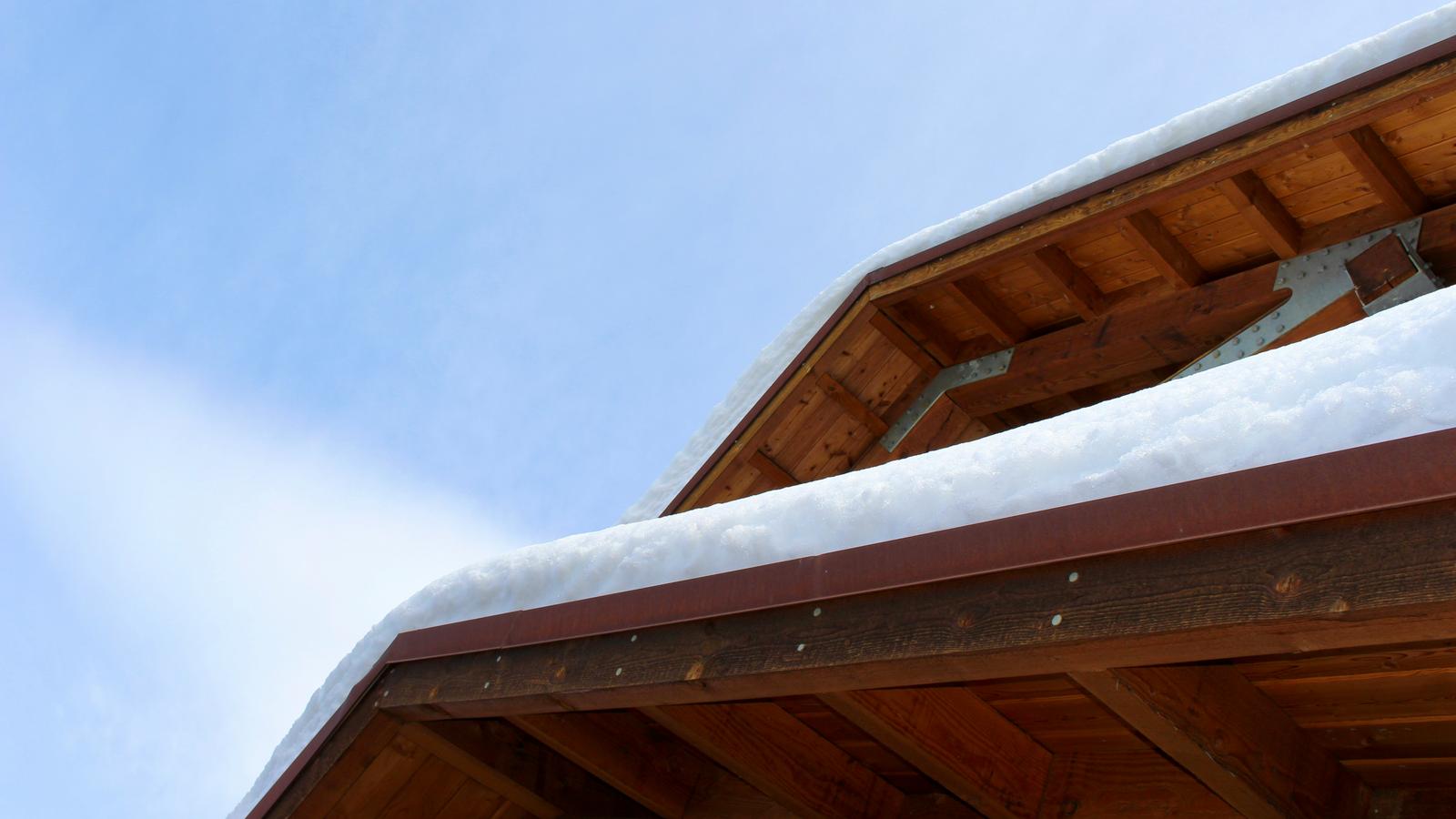
Ice dams in Colorado are a common winter roofing problem, especially along the Front Range where snow, sun, and overnight freezes create ideal conditions for water backup. If you catch the warning signs early and address the real cause—not just the ice itself—you can prevent roof leaks, damaged shingles, wet insulation, and expensive interior repairs before they start.
What is an ice dam?
An ice dam is a ridge of ice that forms along the edge of a roof, usually near the eaves. It happens when snow on the upper sections of the roof melts, runs downward, and then refreezes at the colder roof edge. As that ridge grows, it can trap more meltwater behind it.
That trapped water has nowhere to go except back up under shingles and into the roof system.
In Colorado, ice dams often show up after a snowstorm followed by sunny days and below-freezing nights. Even when outdoor temperatures stay cold, heat escaping from the attic can warm parts of the roof enough to start the melt-refreeze cycle.
Why ice dams are such a problem in Colorado
Colorado roofs deal with a mix of conditions that make ice dams more likely:
- Heavy snow accumulation during winter storms
- Strong sun exposure, even on cold days
- Large temperature swings from day to night
- Wind-driven snow that settles unevenly on roof sections
- Attic heat loss from insulation or ventilation problems
Homes in Hail Alley are built to handle a lot, but winter roof damage can still happen when roof design, insulation, ventilation, and weather all work against each other.
The important point is this: ice dams are usually a symptom. The visible ice at the edge of the roof is only part of the problem. The deeper issue is often uneven roof temperatures caused by heat escaping into the attic or poor airflow that prevents the roof deck from staying consistently cold.
Signs you may have an ice dam problem
Some homeowners do not notice an ice dam until there is already a leak. Watch for these early warning signs:
- Large icicles hanging from gutters or eaves
- A thick ridge of ice along the roof edge
- Snow melting unevenly across the roof
- Water stains on ceilings or exterior walls
- Damp insulation in the attic
- Peeling paint near the roofline
- Dripping water around windows, light fixtures, or vents after snow
Icicles alone do not always mean you have a serious ice dam, but they often point to the same underlying heat-loss issue.
What causes ice dams?
Warm attic, cold eaves
This is the most common cause. When indoor heat escapes into the attic, it warms the roof deck above the living space. Snow melts on the warmer upper roof, then refreezes at the colder eaves where less heat is escaping.
Inadequate insulation
If attic insulation is too thin, uneven, or missing in spots, heat moves upward more easily. That raises roof-surface temperatures and increases melting.
Poor attic ventilation
Ventilation helps move cold outside air through the attic so the roof deck stays closer to the outdoor temperature. Without proper intake and exhaust airflow, warm air gets trapped and melt patterns become uneven.
Air leaks from the house into the attic
Even with decent insulation, air leaks can create hot spots. Common sources include:
- Recessed lights
- Bathroom fan housings or duct issues
- Plumbing penetrations
- Attic hatches
- Chimney chases
- Exhaust vents
Roof design and drainage issues
Some roof layouts are more vulnerable, including:
- Complex rooflines with valleys and transitions
- Areas above garages or additions
- Low-slope sections where drainage is already slow
- Clogged or poorly pitched gutters
How to prevent ice dams before winter damage starts
The best prevention plan focuses on the roof system and the attic together.
1. Schedule a roof and attic inspection
A professional inspection can identify whether your home is vulnerable before winter weather turns into a leak. This is especially helpful if you have had prior hail damage, aging shingles, past repairs, or recurring moisture issues.
At AC INC. Roofing, we look at more than surface shingles. We evaluate the full roofing system, visible drainage conditions, and signs that point to ventilation or storm-related weaknesses. If you suspect seasonal damage, our hail-damage inspection services can also help document related roof issues.
2. Improve attic insulation
A better-insulated attic reduces heat loss into the roof deck. The goal is not just “more insulation,” but consistent coverage without gaps, compression, or thin spots.
Pay special attention to:
- Attic perimeter areas near eaves
- Around access hatches
- Areas above vaulted ceilings
- Spots around mechanical penetrations
3. Seal attic air leaks
Air sealing is one of the most effective ways to reduce the heat that drives ice dam formation. Warm air movement can do as much damage as poor insulation.
Common improvements include sealing gaps around:
- Light fixtures
- Pipe penetrations
- Wiring holes
- Exhaust fan housings
- Framing transitions
4. Make sure attic ventilation is balanced
Ventilation should allow cold air in at the soffits and warm air out near the ridge or upper roof vents. If intake is blocked or exhaust is inadequate, attic temperatures can rise and create uneven melting.
A roofing contractor can help determine whether ventilation appears balanced and whether roof design is contributing to trouble spots.
5. Keep gutters and downspouts clear
Blocked gutters do not directly cause every ice dam, but they can make drainage worse at the roof edge. Before winter, clear leaves and debris so melting snow can move away more easily during warmer periods.
If your gutter system is damaged, loose, or poorly draining, address that before snow season. Roof edge and gutter problems often work together to create winter backups.
6. Remove excess snow carefully
If a major storm leaves heavy accumulation on the roof, removing some of that snow can reduce the amount of meltwater available to feed an ice dam.
Use caution:
- Use a roof rake from the ground when possible
- Avoid climbing onto a snowy or icy roof
- Do not chop at ice with sharp tools
- Do not pull aggressively on shingles or gutters
Improper snow removal can damage shingles, underlayment, flashing, and gutters.
What not to do when you see ice dams
When homeowners see water backing up, it is natural to want a quick fix. But some common responses can cause more harm than good.
Avoid:
- Hammering or chipping ice off the roof
- Using open flame or high heat on roofing materials
- Climbing onto an icy roof without proper safety equipment
- Assuming the problem is solved once the ice melts
Temporary melting methods may reduce immediate backup, but they do not fix the underlying cause. If the attic is still losing heat or the roof system already has vulnerable areas, the next storm can recreate the problem.
Can ice dams damage a newer roof?
Yes. Even a newer roof can develop ice dam issues if insulation, ventilation, flashing details, or drainage conditions are not performing well. A new roof covering does not automatically solve an attic heat-loss problem.
That said, older roofs are often at greater risk because:
- Shingles may be more brittle or worn
- Flashing may be aging or loose
- Underlayment protection may be limited compared to newer systems
- Previous repairs may have created inconsistent water-shedding areas
If your roof is older or has already taken storm wear, it is worth reviewing whether repair or roof replacement makes more sense before another winter cycle.
When to call a roofing professional
You should have your roof checked if:
- You have had repeated ice dam problems
- You see interior water stains after snow
- You notice sagging gutters or damaged eaves
- You suspect prior hail or wind damage weakened the roof
- Snow melts unevenly on the same roof sections every year
- You are buying or managing a property and want to reduce winter risk
For larger buildings, winter drainage and ice buildup can also affect membrane roofs, edge details, and rooftop penetrations. Property managers can learn more about our commercial roofing services if they need a broader inspection plan.
Ice dams, hail damage, and insurance claims
Sometimes winter leaks reveal damage that did not start in winter. Hail impacts, lifted shingles, compromised flashing, and storm-related wear can all make a roof more vulnerable when ice and standing water show up.
If damage may involve an insurance claim, documentation matters. A thorough inspection can help separate long-term wear from storm-related damage and identify where water likely entered the system. That is especially important in Colorado and Wyoming, where roofs often see both hail season and winter freeze-thaw stress in the same year.
If you are unsure whether you need a repair or full replacement, you can also review general pricing information or visit our roof repair pricing page for planning purposes.
Next step
If you are seeing icicles, uneven snow melt, or signs of winter roof damage, don’t wait for a ceiling stain to get worse. AC INC. Roofing offers inspections for homeowners and property managers across Colorado and Wyoming, including Cheyenne. Contact us for a free inspection or estimate through our contact page.