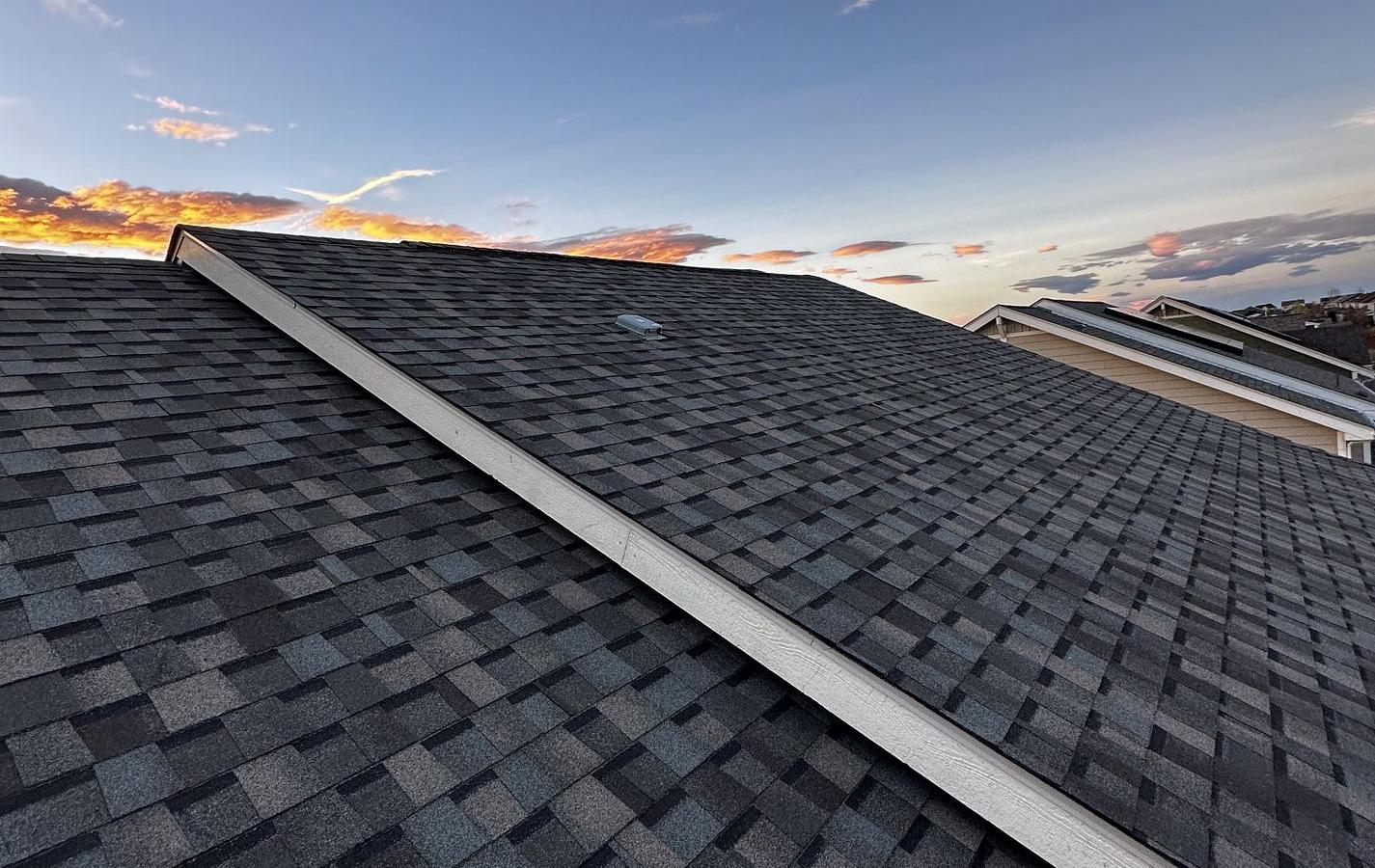
Holiday lights make a Colorado home feel festive, but the way they are attached can lift shingles, strain gutters, and leave small openings that turn into leaks once snow and ice arrive. Late November is a popular time to decorate, especially around the Thanksgiving weekend, and it is also when roofs can be cold, brittle, and slick. A little planning protects the roof, the lights, and anyone climbing a ladder.
Why holiday lights can damage a Colorado roof
Most holiday-lighting damage is not dramatic in the moment. It shows up later as a loose shingle, a dripping soffit, or a gutter that pulled away from the fascia after a heavy snow. The Front Range freeze-thaw cycle makes those small problems worse. Water that gets under a lifted shingle tab can freeze overnight, expand, and open the gap a little more each week.
Common ways decorations stress a roof include:
- Punctures and fasteners. Nails, staples, and screws driven through shingles, flashing, or gutter runs create holes that are hard to seal once winter weather starts.
- Lifted shingle tabs. Clips or hooks forced under sealed asphalt shingles can break the factory sealant and let wind and water work underneath.
- Overloaded gutters and fascia. Heavy light strands, icicle lights, and tight wraps add weight to gutters that may already hold ice and debris.
- Foot traffic. Walking the roof to reach a ridge or valley can scuff granules, crease shingles, and leave slick spots more dangerous in cold weather.
None of this means you have to skip lights. It means the safest display usually stays along the eaves, uses clips made for gutters or shingles, and keeps people off the roof whenever possible.
Check the roof before you decorate
A quick look from the ground, and from a stable ladder at the eaves if it is safe, can prevent a decoration project from turning into a repair. Do this in daylight, on a dry day, before the first string goes up.
- Look for curled, cracked, or missing shingles, especially along edges and valleys.
- Check whether gutters are secure, clean, and fastened tight to the fascia. Loose spikes or hidden hangers should be fixed before they hold more weight.
- Note any sagging soffit, stained fascia, or peeling paint under the eaves, which can point to an existing moisture problem.
- Check flashing around the chimney, skylights, vents, and wall intersections. Do not clip lights to flashing or sealant.
- If the roof already leaks, has active storm damage, or feels spongy at the eaves, pause the decorating and have it inspected first.
If you are unsure what you are seeing, a professional look is the safer first step. AC INC. Roofing offers a free inspection for homeowners in Denver, Aurora, and other Colorado and Wyoming communities, and it is an easy way to confirm the roof is ready for winter and for lights.
Safer ways to hang holiday lights
The goal is to support the lights without piercing the roofing system or breaking shingle seals. Plastic clips designed for gutters or for the leading edge of a shingle are usually a better choice than improvised hooks, zip ties around fasteners, or a staple gun.
Gutter clips and shingle-edge clips
For most homes, the cleanest look comes from lights that follow the gutter line and the lower edge of the roof. Use clips that hook onto the gutter lip or rest on the shingle edge without being driven into the roof. Space them so the strand is supported and not pulled tight across long gaps.
Avoid forcing a clip deep under a shingle. If you feel the tab resist or hear the sealant tear, back off and use a gutter clip instead. A shingle that has lost its seal is more likely to blow up in a winter wind.
Skip nails, staples, and tight wire
Do not nail or staple through shingles, underlayment, or metal flashing. Those holes are a leak path, and they are difficult to patch neatly around a light strand you plan to take down in January. Also avoid wrapping wire or zip ties around pipe boots, vent flashings, or satellite mounts. Tight wraps can cut into rubber boots or shift flashing that is supposed to stay seated.
If a section of the roofline cannot be reached with clips from a ladder, it is better to leave that stretch dark than to invent a fastener.
Ridge, peak, and valley lighting
Ridge lines and peaks photograph well, but they usually require walking on the roof. On a cold Colorado afternoon, frost can linger on the north slope even when the driveway is dry. If you cannot reach a peak safely from a ladder, consider lighting the eaves, gables, trees, and porch instead.
Valleys should stay clear. Lights, cords, and clips in a valley can dam melting snow and send water sideways under the shingles.
Protect your gutters and drainage
Gutters do a lot of work in a Colorado winter. Afternoon melt needs a clear path off the roof, and anything that blocks or overloads the gutter can push water behind the fascia.
- Clean gutters and downspouts before you hang anything, so clips are not sitting on packed leaves.
- Do not run cords through downspout openings or strap lights in a way that traps debris.
- Use a ladder standoff or stabilizer rather than resting the ladder directly on aluminum gutters.
- Keep clips from blocking the flow of water along the gutter channel.
- If gutters already pull away from the house, overflow in a light rain, or have separated joints, have them repaired before adding holiday lighting weight.
Seamless gutter work and related roof repairs are outlined on our pricing page if you want a sense of the service options before you call.
Ladder and roof safety in cold weather
Most lighting injuries happen on the ladder, not on the roof. Late November in the Denver metro area can bring early sunsets, morning frost, and sudden wind. Safety should drive the schedule as much as the design.
- Hang lights on a dry, calm day, and wait until morning frost has burned off.
- Set ladders on firm, level ground and keep three points of contact.
- Have a second person on the ground to steady the ladder and hand up materials.
- Avoid walking on the roof whenever you can. If you must step onto it, wear soft-soled shoes, stay off steep pitches, and never walk on snow or ice.
- Stop if the wind picks up or if a surface feels slick. The display can wait a day.
Repeated foot traffic also wears shingles. Granules scuff off and shingle edges crease, and that wear adds up when lights go up and come down every year.
When holiday lights reveal a roof problem
Decorating is often the first time a homeowner looks closely at the eaves, gutters, and lower shingles since summer. It is common to notice issues while you are up there:
- Shingles that lift easily, feel brittle, or are missing granules along the edge
- Soft decking, stained wood, or rusted fasteners at the fascia
- Gaps in chimney or wall flashing, or cracked sealant around vents
- Gutters that shift when you add even a light clip
Those are signs to document what you see, keep water out if a leak is active, and schedule an inspection rather than covering the area with more decorations. If lights are already up and you later find a drip inside the home, take care when removing strands so you do not tear a compromised shingle further.
When the season ends, remove lights carefully on a dry day. Work the clips off without prying against shingle tabs, and do a final walk-around at ground level to look for anything left lifted or out of place.
Plan the takedown as carefully as the install
Lights that stay up too long are another source of roof wear. Strands left in place through late winter collect ice, and frozen clips can tear shingle edges or twist gutter lips when someone finally yanks them free on a cold morning. A planned takedown on a dry day in early January is easier on the roof than a rushed removal after a storm.
Work from the same ladder positions you used to hang the lights, and remove clips one at a time instead of pulling a long run until something gives. If a clip is frozen in place, wait for a warmer afternoon rather than prying against the shingle. After the lights are down, look along the eaves for tabs that are standing up, granules in the gutters, or fasteners that look newly loose. Those are worth noting and, if needed, having checked before the next snow.
Extension cords and timers should also come off the house rather than remaining draped over gutters or tucked into soffit vents. Anything left behind can hold moisture against wood trim or get buried in a snowdrift and become a surprise obstruction when the roof sheds ice.
Next step
If you want a second set of eyes before you decorate, or if hanging lights turned up loose shingles, weak gutters, or staining at the eaves, schedule a professional inspection. AC INC. Roofing provides free inspections and estimates for Colorado and Wyoming property owners. Contact us through our online form to get a clear assessment of your roof before winter weather and holiday lighting add more stress.