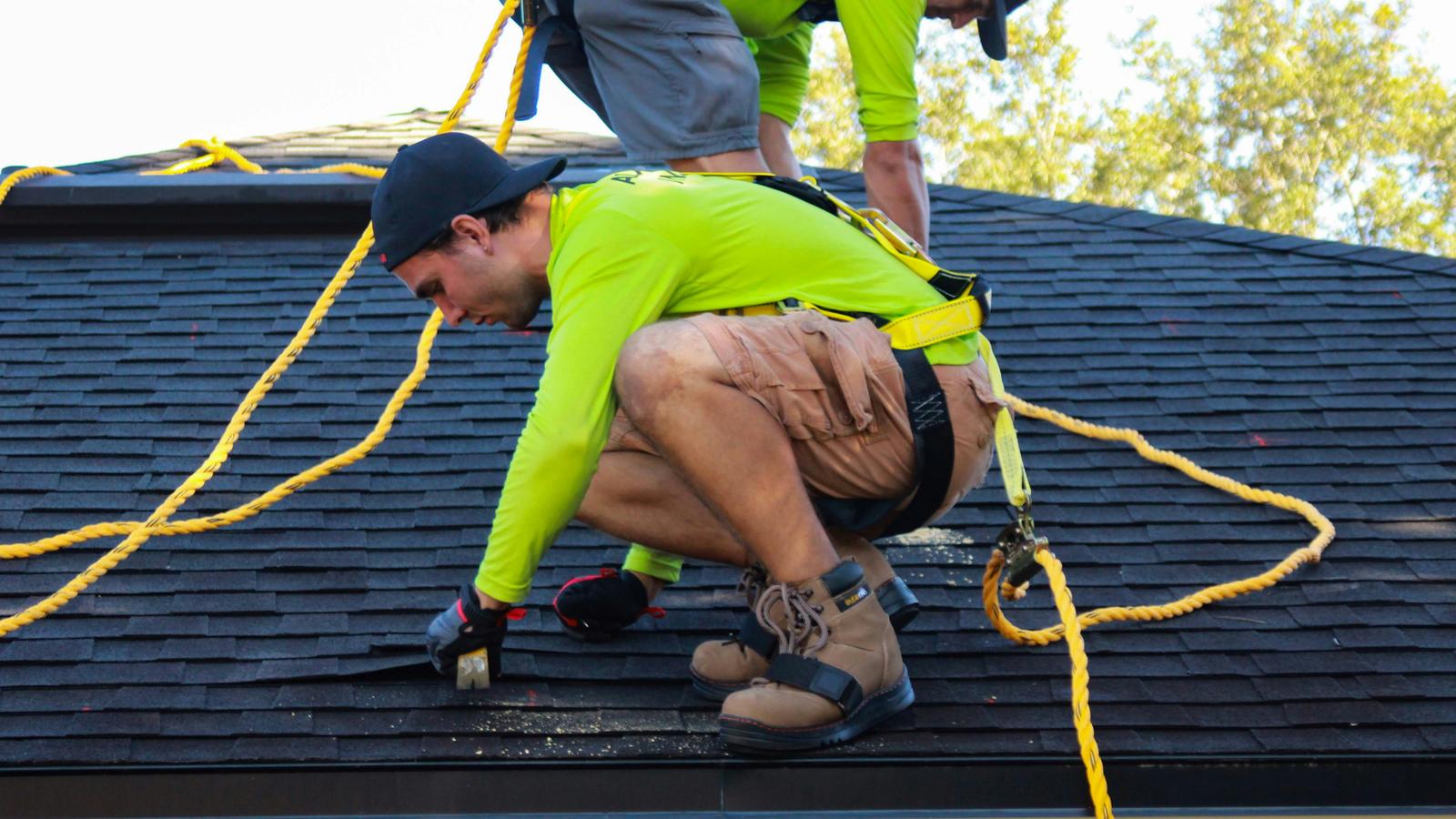
If you need to know how to check your roof for hail damage after Colorado’s summer storm season, start with a safe ground-level inspection, look for obvious signs on gutters and soft metal, and then have a professional confirm what you’re seeing before you file an insurance claim or schedule a roof replacement. In Colorado’s Front Range and nearby Wyoming markets, hail damage is common, but not every mark is storm-related. Knowing what to look for can help you protect your home, document damage properly, and avoid missing problems that turn into leaks later.
Why hail damage is easy to miss
Hail does not always leave dramatic holes or immediate leaks. On many roofs, especially asphalt shingle systems, damage can be subtle at first. A roof may look “mostly fine” from the driveway while still having impact damage that shortens its life.
That matters for a few reasons:
- Small impact points can weaken shingles and expose the mat underneath.
- Granule loss can speed up UV aging and wear.
- Damage to vents, flashing, gutters, and downspouts can create future water-entry points.
- If you wait too long, it can be harder to connect the damage to a specific storm for insurance claim purposes.
Colorado’s summer storms often bring wind-driven hail, which means damage may be heavier on one slope than another. That’s one reason a complete inspection matters.
Start with a safe exterior check
Before you think about getting on a ladder, walk the property and inspect everything you can see from the ground. For most homeowners, this is the safest and most practical first step.
Look for hail signs around the house
Hail often leaves clues on surfaces other than the roof itself. Check for:
- Dents on gutters and downspouts
- Dings on garage doors, window trim, and mailbox surfaces
- Damage to deck covers, pergolas, or painted wood trim
- Splatter marks on siding, especially where dust or oxidation made impacts visible
- Fallen shingle granules collecting near downspout exits
- Torn window screens from wind-driven hail
If soft metal items around the property show fresh impact marks, there is a good chance the roof took hits too.
Check landscaping and recent storm clues
After a severe storm, you may also notice:
- Leaves shredded by hail
- Broken branches
- Patio furniture cushions or covers punctured
- Neighbors scheduling roof inspections or tarps going up nearby
These are not proof of roof damage, but they support the case that your property was in the storm path.
What hail damage looks like on asphalt shingles
Asphalt shingles are the most common residential roofing material in Colorado. Hail damage on shingles can vary based on the size of the hail, wind speed, roof age, and shingle condition before the storm.
Common signs to look for
If you can safely see roof areas from a second-story window or from the ground with binoculars, watch for:
- Dark, random spots where granules may have been knocked off
- Bruising that looks like a soft impact area
- Circular or irregular marks that do not match the normal shingle pattern
- Exposed asphalt or fiberglass mat in isolated hits
- Sharp edges or small tears where hail struck with force
A true hail hit often appears random, not perfectly repeated. It may feel soft or spongy when tested by a trained inspector, but that is not something most homeowners should try to verify themselves.
What is often mistaken for hail damage
Not every blemish is storm damage. We often see homeowners mistake these issues for hail impacts:
- Normal granule loss from aging shingles
- Blistering from manufacturing or heat cycles
- Scuffing from foot traffic
- Mechanical damage from tools, branches, or mounted equipment
- Nail pops or raised shingles from installation or ventilation issues
This is where a documented inspection helps. Insurance carriers usually want storm-related evidence, not just roof wear.
Check roof accessories and soft metal
One of the best ways to spot likely hail damage is to inspect soft metal components. Hail marks are often easier to see there than on shingles.
Areas worth checking
Look at visible:
- Gutters and downspouts
- Roof vents
- Metal flashing
- Furnace or plumbing vent caps
- Skylight frames
- Ridge vents with metal components
- Air-conditioning condenser fins at ground level
Fresh hail dents tend to look like small impact depressions, sometimes with chipped coating or bright exposed metal. If these components show clear storm impact, your roof may need a closer look.
Watch for interior warning signs too
Roof hail damage does not always leak right away. Still, after summer storm season, it is smart to check inside the home for developing issues.
Look for:
- New ceiling stains
- Damp insulation in the attic
- Musty smells after rain
- Peeling paint near roof lines
- Water marks around vents, chimneys, or skylights
If you see interior signs, move quickly. What starts as hail damage can turn into a repair issue that is larger and more expensive than it needed to be.
Should you get on the roof yourself?
In most cases, no. Walking a roof can be dangerous, especially if shingles are steep, hot, wet, or already damaged. On top of that, untrained foot traffic can cause additional scuffing or breakage that complicates an insurance claim.
A better approach is:
- Inspect from the ground first
- Take clear photos of visible exterior damage
- Note the storm date if you know it
- Schedule a professional hail-damage inspection
If you suspect storm damage, a contractor experienced in Colorado hail claims can document the roof in a way that is useful to both you and your insurance carrier. AC INC. Roofing provides detailed hail damage inspections and documentation for homeowners across the Front Range and Wyoming.
When to call a professional inspector
You should schedule an inspection if any of the following are true:
- Hail larger than pea size hit your area
- Neighbors are finding roof damage
- You see dents on gutters, vents, or other metal surfaces
- Your roof is more than several years old and has been through multiple storm seasons
- You notice leaks, stains, or missing granules after a storm
- You are preparing to buy, sell, or refinance the home
A professional inspection is especially important if you are trying to decide between a repair and a full roof replacement. The right answer depends on how widespread the damage is, whether the shingle mat was compromised, and whether surrounding roof components were affected.
For broader roofing help, you can also review our residential roofing services.
What a professional hail inspection should include
Not all inspections are equal. A proper storm assessment should go beyond a quick glance from the ladder.
A thorough inspection often includes:
- Evaluation of each roof slope
- Review of shingles, flashing, vents, and accessories
- Inspection of gutters, downspouts, and soft metal for impact evidence
- Photo documentation of damage
- Identification of storm-related issues versus wear and tear
- Guidance on whether repairs may be enough or whether replacement is more appropriate
- Documentation helpful for an insurance claim
As HAAG Certified Master Inspectors, AC INC. Roofing documents storm damage the way insurance carriers expect, which can make the process clearer for homeowners dealing with hail damage for the first time.
What to do if you think you have hail damage
If your inspection raises concerns, use this simple checklist:
- Document what you can see. Take photos of dents, downspouts, screens, siding marks, and any interior staining.
- Write down storm details. Note the approximate date, time, and hail size if you know it.
- Avoid temporary “fixes” that hide evidence. Do not paint over dents or throw away damaged items before they are documented.
- Schedule a professional roof inspection. Get a qualified opinion before assuming you need a full roof replacement.
- Review repair versus replacement options. If damage is limited, targeted work may be enough. See our roof repair pricing information for general guidance.
- Talk with your insurance carrier if storm damage is confirmed. Good documentation helps the claim process go more smoothly.
If you manage a multifamily, office, retail, or industrial property, the same basic principles apply, but the inspection process is often more complex because of roof access, drainage patterns, and membrane systems. Learn more about our commercial roofing services.
Colorado-specific considerations after summer hail
Colorado’s storm season creates a few challenges homeowners should keep in mind:
Damage may be uneven
Because hail is often driven by wind, one side of the roof may take the brunt of the storm while another looks nearly untouched.
Older roofs can show damage faster
A roof that was already worn may lose granules more easily or crack under impact more readily than a newer system.
Insurance timing matters
Policies differ, but storm-related claims are typically easier to support when the roof is inspected and documented sooner rather than later.
Not every roof needs replacement
Some roofs need localized repairs; others have enough functional damage to justify replacement. The key is an honest inspection backed by clear evidence.
Next step
If Colorado’s summer storms rolled through your neighborhood and you are not sure whether your roof was damaged, schedule a free inspection or estimate with AC INC. Roofing. We help homeowners and property managers across Colorado and Wyoming identify hail damage, document it clearly, and choose the right next step. Contact us through our contact page or learn more about general project costs on our pricing page.