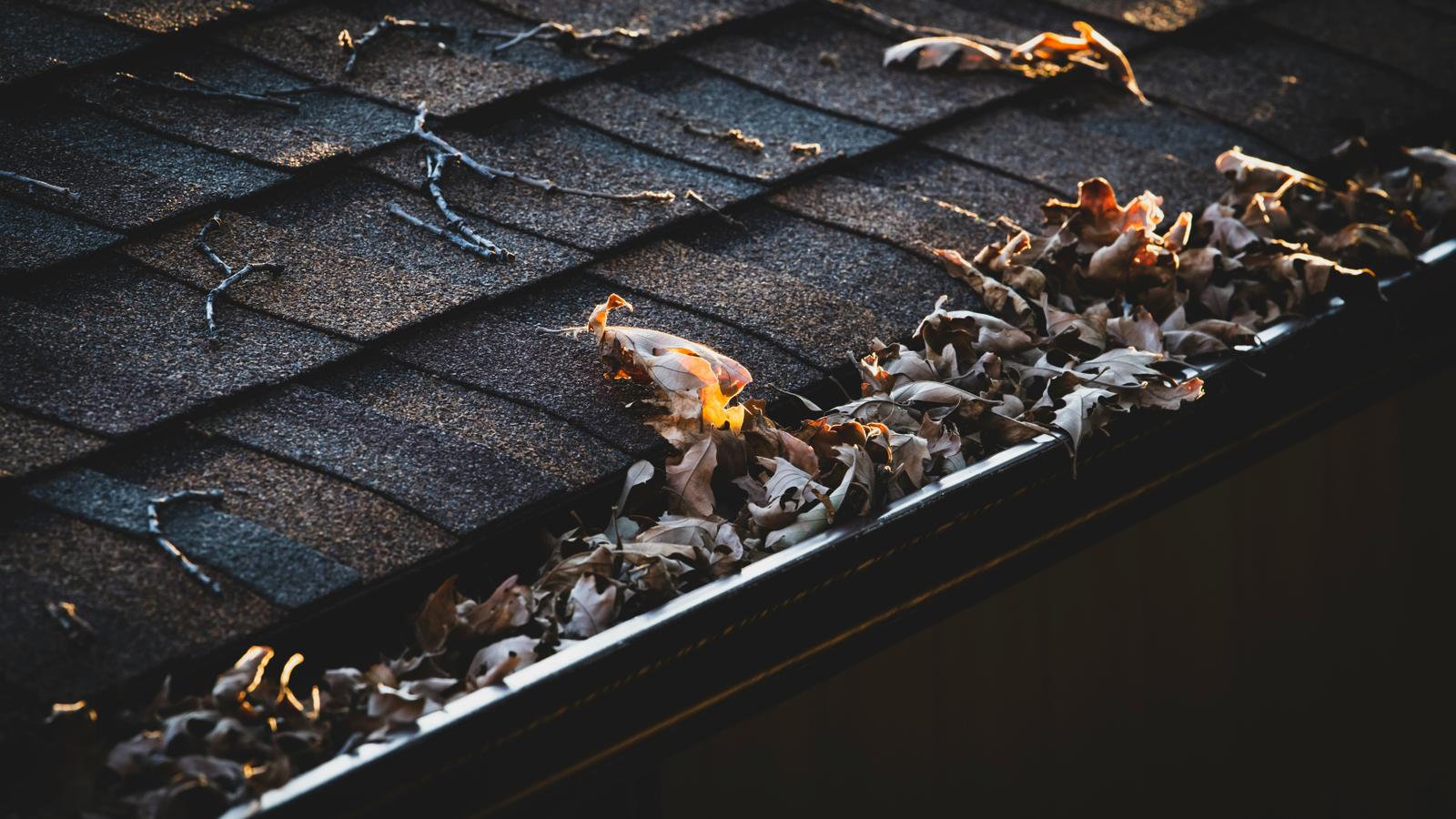
Fall leaves may look harmless, but fall leaves and debris can damage your roof and gutters by trapping moisture, blocking drainage, and hiding early signs of wear. For homeowners and property managers in Colorado and Wyoming, that matters because a small buildup in autumn can turn into roof leaks, ice problems, gutter failure, and avoidable repair costs by winter and spring.
Why leaves are hard on roofing systems
A roof is designed to shed water quickly. Gutters are designed to collect that runoff and move it away from the home or building. When leaves, pine needles, twigs, seed pods, and roof granules collect on those surfaces, the system slows down.
Instead of draining cleanly, water can:
- Sit on shingles longer than it should
- Back up at roof edges and valleys
- Overflow from clogged gutters
- Soak fascia, soffit, and siding
- Pool near foundations and walkways
In our region, debris problems often get worse after wind events, early snow, and hail storms. A roof may already have minor storm damage, and a layer of leaves can hide it until a leak shows up indoors.
The main ways leaves and debris damage your roof
Moisture gets trapped against the roof surface
Wet leaves hold moisture like a sponge. When they collect in valleys, behind chimneys, around skylights, or along low-slope transitions, they keep parts of the roof damp for longer periods.
That can lead to:
- Faster shingle aging
- Staining or discoloration
- Deterioration around flashing details
- Higher risk of wood rot in roof decking at vulnerable areas
Even on steeper roofs, leaves tend to settle in places where water already slows down. Those are the same places where leaks are more likely to start if flashing or shingles are worn.
Debris can lift or displace shingles
As debris piles up, wind can push it around. Twigs and branches may scrape shingle surfaces, while packed debris can wedge under exposed edges. Over time, that movement can loosen shingles or make existing damage worse.
This is especially important after hail damage. If a roof has bruised shingles or compromised seal strips, additional debris and moisture can speed up the failure of those areas. If you suspect storm impact, a professional hail damage inspection can help document what is cosmetic and what is functional damage.
Roof valleys become choke points
Valleys handle a heavy volume of water during rain and snowmelt. They also collect leaves faster than open field areas of the roof. Once a valley fills with debris, water has fewer paths to drain.
The result can be:
- Slow drainage
- Water backing up under shingles
- Concentrated wear in one section of the roof
- Interior leaks near walls or ceilings below that valley
Valleys are one of the first places we inspect when a property owner says, "The leak only happens during hard rain" or "It started after the leaves came down."
How clogged gutters create bigger problems
Gutters are often where fall debris does the most visible damage. A gutter full of wet leaves gets heavy, drains poorly, and can pull away from the structure.
Overflow can damage more than the gutter itself
When downspouts clog or gutter channels fill up, water spills over the sides instead of moving away from the building.
That overflow can affect:
- Fascia boards
- Soffits
- Siding
- Window trim
- Entry areas
- Landscaping and soil around the foundation
What starts as a roof maintenance issue can quickly become a siding, paint, drainage, or even interior moisture issue.
Added weight strains fasteners and seams
Wet debris is much heavier than dry leaves. Gutters holding that weight may sag, separate at seams, or loosen at brackets and spikes. Once the slope is off, the gutter keeps holding more water, which makes clogging and overflow even worse.
If gutters are already aging or storm-damaged, debris can push them past the point where a simple cleaning is enough. In some cases, repairs are the right fix. In others, replacement is more practical.
Clogs set the stage for winter ice issues
In Colorado and Wyoming, fall cleanup is not just about autumn rain. It is also about what happens when temperatures swing below freezing.
When gutters are clogged:
- Water drains slowly or not at all
- Meltwater refreezes at the roof edge
- Ice can build up in gutters and along eaves
- Water may back up beneath roofing materials
That is one reason fall maintenance matters so much in places like Cheyenne, Laramie, Pine Bluffs, and the Front Range. Debris left in place before the first freeze can contribute to cold-weather leaks later.
Warning signs to watch for in fall
You do not need to climb on the roof to notice early problems. From the ground, look for signs that leaves and debris are affecting performance.
Common warning signs include:
- Gutters overflowing during light or moderate rain
- Plants or weeds growing in gutters
- Dark streaks or wet spots near roof edges
- Sagging gutter sections
- Downspouts that barely discharge water
- Leaf piles in roof valleys or behind chimneys
- Water marks on siding beneath gutters
- Granules collecting heavily near downspout exits
Inside the property, pay attention to:
- Ceiling stains
- Damp attic insulation
- Musty odors near exterior walls
- Peeling paint around soffits or window headers
If you see any of those signs, it is smart to schedule an inspection before winter weather makes the issue harder to diagnose or more expensive to fix.
What property owners should do each fall
The goal is simple: keep water moving off the roof and away from the building.
A practical fall roof and gutter checklist includes:
- Remove leaves and debris from roof surfaces, especially valleys and low areas
- Clean gutters and downspouts completely
- Check that downspouts discharge away from the structure
- Look for loose gutter sections, separated seams, or bent metal
- Inspect flashing around chimneys, vents, and skylights
- Trim back overhanging branches where possible
- Check attic spaces for moisture or daylight at penetrations
- Schedule a professional inspection if the roof is older or recently hit by hail or high wind
For many property owners, the safest choice is to have this done by a roofing professional, especially on steep, high, or complex roof systems. A trained inspector can cleanly separate normal debris issues from hidden storm damage or wear-related roof problems.
Why professional inspections matter after storm season
In Hail Alley and across southeast Wyoming, leaves often show up after a season of hail, wind, and heavy rain. That timing matters. Debris can conceal punctures, lifted shingles, flashing damage, or impact marks that should be documented for an insurance claim.
A professional inspection helps answer key questions:
- Is this just a cleaning issue, or is there actual roof damage?
- Are the gutters clogged, storm-damaged, or pulling away from the fascia?
- Is water intrusion coming from roofing, flashing, or drainage failure?
- Is a roof repair enough, or is a larger roof replacement discussion warranted?
At AC INC. Roofing, our HAAG Certified Master Inspectors document damage in a way insurance carriers expect, which is especially helpful when a property owner is not sure whether they are dealing with maintenance, storm damage, or both.
If your property includes multifamily, office, retail, or other larger buildings, debris can affect drainage across broad roof areas and multiple downspout runs. In those cases, it is worth having a contractor experienced with both residential roofing and commercial roofing systems.
Repair or replace? It depends on what the debris has caused
Not every debris-related issue means you need a new roof or gutter system. Often, the right solution is a targeted repair and cleanup.
You may only need repairs if:
- The roof is otherwise in serviceable condition
- The problem is isolated to one gutter run or one roof section
- Flashing or a few shingles need correction
- Drainage improves once clogs are removed
A larger repair or replacement may be worth discussing if:
- Water backup has caused repeated leaks
- Gutters are sagging in multiple sections
- Fascia or decking shows rot
- The roof has widespread storm damage or advanced aging
- Previous patching has not solved the drainage problem
If you are comparing options, our pricing page and roof repair pricing information can help you understand the scope of typical work before you commit.
Preventive steps that reduce future buildup
No roof stays debris-free forever, especially near mature trees, but a few preventive steps can reduce the risk.
Consider these habits:
- Clean gutters regularly during heavy leaf drop
- Inspect after major wind events
- Keep valleys and roof penetrations clear
- Trim branches that hang directly over the roof
- Address minor gutter slope issues before they worsen
- Do not ignore small leaks or overflow patterns
The earlier you catch a drainage problem, the less likely it is to turn into interior damage or an insurance headache later.
Next step
If you are seeing overflowing gutters, leaf buildup in valleys, or signs of a roof leak, AC INC. Roofing can help. We offer free inspections and estimates for homeowners and property managers across Colorado and Wyoming, including Cheyenne. Reach out through our contact page to schedule an inspection before fall debris turns into winter damage.