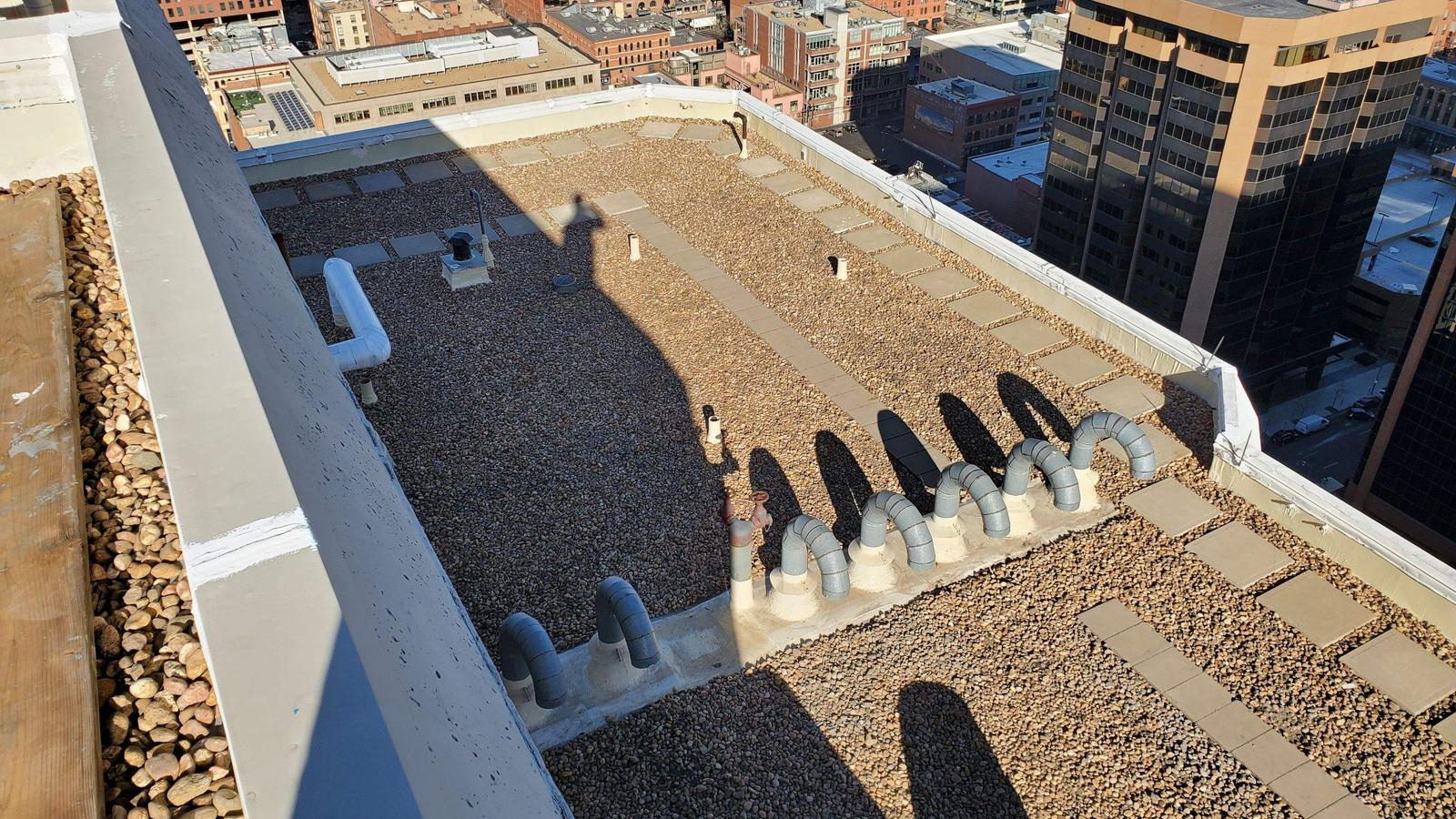
Commercial roofing in Firestone usually comes down to a few practical priorities: stop leaks fast, document storm damage correctly, protect flat roof systems from Colorado weather, and plan repairs or replacement before interior damage spreads. For warehouses, office buildings, retail centers, and multi-tenant properties, the right approach is not just patching the visible problem—it is understanding the full roof condition, drainage, membrane health, and whether insurance-related restoration may apply after hail or wind.
Why Firestone commercial roofs need a local approach
Firestone properties deal with the same Front Range weather pattern that affects much of Colorado’s Hail Alley: hail, high wind, strong sun, fast temperature swings, and snow events that can expose weak points in a flat or low-slope roof. Those conditions can shorten the life of roofing materials, loosen flashing, damage seams, and turn minor drainage issues into active leaks.
For commercial property owners and managers, that creates a few common challenges:
- Water intrusion that disrupts tenants or operations
- Hail damage that is not obvious from the ground
- Aging flat roof membranes with repeated repair history
- Drainage problems around scuppers, drains, and rooftop equipment
- Uncertainty about whether a roof needs repair, coating, or full replacement
A nearby contractor matters because leak response, storm documentation, and follow-up inspections often need to happen quickly. A local team also understands how Colorado weather patterns affect flat roofing systems over time.
The most common commercial roofing issues in Firestone
Most commercial roofing in Firestone involves low-slope or flat roof assemblies on office, industrial, retail, and multi-unit buildings. These systems perform well when maintained, but they tend to fail in predictable ways.
Storm damage from hail and wind
Hail does not always create dramatic punctures. On many flat roofs, the damage is more subtle:
- Membrane bruising or surface fractures
- Damage to seams or field laps
- Impact marks on vents, HVAC units, flashing, and soft metals
- Granule loss or coating wear on exposed surfaces
- Displacement around edge details
Wind can also lift membrane edges, stress flashing, and open vulnerable points around penetrations. After a storm, a professional inspection is the best way to determine whether the roof has cosmetic wear, functional damage, or claim-worthy damage that should be documented.
If your building may have been hit by a recent storm, start with a dedicated hail damage inspection.
Persistent leaks on flat roofs
Commercial roof leaks often show up far from the actual entry point. Water can travel along insulation, decking, or structural elements before it appears inside a unit, office, or common area.
Typical leak sources include:
- Open seams or flashing failure
- Ponding water and slow drainage
- Penetration issues around rooftop equipment
- Aging sealants at transitions and terminations
- Damage from foot traffic or service trades
The key is to identify the source, not just the symptom. Repeated spot repairs without a full roof assessment can turn into a costly cycle.
Coating wear and aging membranes
Some commercial roofs in Firestone can be extended with restoration or roof coatings, but only if the underlying system is still a good candidate. If the membrane is saturated, poorly attached, or widely deteriorated, a coating may only delay a needed replacement.
An inspection should answer:
- Is the roof structurally and functionally sound enough for a coating?
- Are there moisture issues below the surface?
- Do seams, flashing, and drainage details need correction first?
- Will a coating meaningfully extend service life?
That assessment helps owners avoid spending money on a short-term fix when a replacement plan would be more responsible.
Flat roof repair vs. replacement: how to decide
One of the biggest questions in commercial roofing in Firestone is whether to repair a flat roof, restore it, or replace it. The answer depends on the roof’s condition, age, repair history, and the extent of storm or water damage.
Repair may make sense when:
- Damage is isolated to a limited area
- The membrane is still performing well overall
- Seams, flashing, and drainage are mostly intact
- The roof has useful life remaining
- Leaks were caught early before widespread saturation
In these cases, targeted repairs can stabilize the roof and buy time, especially when paired with a maintenance plan.
For budgeting, you can review general repair pricing information.
Replacement may be the better choice when:
- Leaks are recurring in multiple areas
- The roof has extensive storm damage
- Insulation or substrate issues are widespread
- Previous repairs are no longer holding
- Drainage design is contributing to ongoing problems
- Tenant interruption or inventory risk is rising
A commercial roof replacement is often less about one visible leak and more about risk management. If the cost and disruption of repeated repairs keep increasing, replacement can be the more predictable long-term option.
What to expect from a commercial roof inspection
A proper commercial inspection should give you usable information for decision-making, not just a verbal opinion.
At a minimum, the inspection process should look at:
- Overall membrane condition
- Seams, laps, and flashing details
- Curbs, penetrations, and rooftop equipment transitions
- Drainage performance and ponding areas
- Signs of hail, wind, or impact damage
- Interior leak indicators and likely entry points
- Repair history and visible patchwork
For storm-related cases, documentation matters. Insurance carriers typically expect organized photo evidence, notes on damage type and location, and a clear explanation of what was affected. That is especially important for owners and managers who are navigating a claim for the first time.
Roof coatings for commercial buildings in Firestone
Roof coatings can be a useful tool for the right commercial building, especially when the existing roof is weathered but still fundamentally serviceable. For offices, retail properties, and some warehouse applications, a coating system may help extend roof life and improve surface protection.
But coatings are not a cure-all. Before recommending one, a contractor should confirm that:
- The roof is dry or can be properly remediated
- Seams and flashing can be reinforced as needed
- Drainage issues are manageable
- The existing system is a suitable candidate
When applied in the right situation, coatings can be part of a broader asset-management strategy. When applied to a failing roof, they often become an expensive temporary layer over a larger problem.
Leak response for warehouses, offices, retail, and multi-tenant buildings
Commercial leak response is not the same as routine repair work. When active water intrusion is affecting business operations, timing matters.
A good response plan usually includes:
- Protecting interior areas, inventory, equipment, or tenant spaces
- Identifying the most likely entry points on the roof
- Performing temporary measures if weather is still active
- Completing a full inspection once conditions allow
- Documenting storm damage if an insurance claim may be involved
- Recommending repair, restoration, or replacement based on findings
For multi-tenant properties, response speed is especially important because one roof issue can quickly affect multiple suites, common areas, or shared systems.
Maintenance support helps commercial roofs last longer
Many commercial roof failures are not sudden. They build slowly through neglected drainage, aging sealants, minor storm hits, and small membrane defects that go unnoticed until a tenant reports a leak.
Routine maintenance helps catch those issues earlier. For Firestone commercial properties, that may include:
- Scheduled roof inspections
- Drain and scupper clearing
- Minor flashing and seam repairs
- Post-storm condition checks
- Photo documentation for owner records
- Planning for future capital replacement
Maintenance is especially valuable for buildings with older flat roofs, properties with frequent HVAC access, and owners managing several locations.
Regional experience matters for insurance-related restoration
Colorado storm restoration has its own rhythm. After hail events, property owners may be contacted by many contractors at once, but commercial roofs require a more methodical evaluation. Not every impact mark justifies replacement, and not every leak should be handled as a simple patch.
Regional experience matters because the contractor should understand:
- How Front Range hail affects different commercial roof systems
- What adjusters typically need to see in the documentation
- How to separate wear-and-tear from storm-related damage
- How to prioritize temporary protection while a claim is being reviewed
That kind of process helps owners avoid under-documenting legitimate damage or overcommitting to the wrong scope.
AC INC Roofing works with commercial and residential properties across the Front Range and nearby markets, bringing local storm knowledge to both commercial roofing services and broader property exterior needs.
Planning your next commercial roofing project in Firestone
If you own or manage a warehouse, office, retail center, or multi-tenant property, the best time to plan is before a small flat roof issue becomes an operational problem. A professional inspection can clarify whether you need immediate leak repair, a coating strategy, storm claim documentation, or a full replacement plan.
For broader project planning, you can also review general roofing pricing information or learn more about related building envelope work through our residential services if you manage mixed-use or adjacent housing properties.
Next step
If you need commercial roofing in Firestone, AC INC Roofing can inspect your flat roof, document storm damage, and help you determine whether repair, coating, or replacement makes the most sense. Contact us for a free inspection or estimate at /contact.