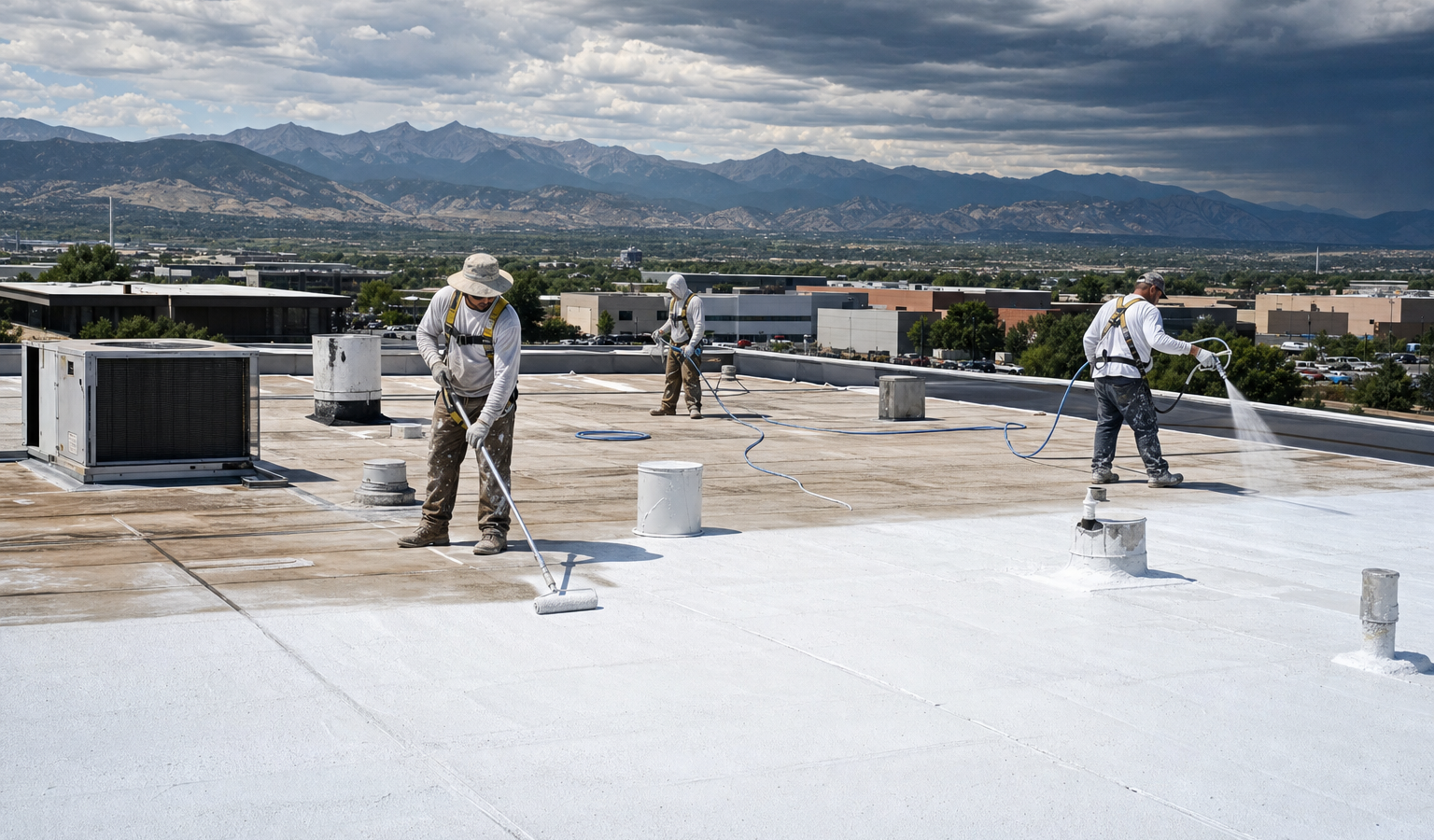
A commercial roof coating is a fluid-applied roofing system designed to protect and extend the life of an existing commercial roof when the underlying assembly is still structurally sound. For Colorado and Wyoming property owners, coatings can be a practical alternative to full roof replacement on the right flat or low-slope roof—especially when you want to address UV exposure, minor leaks, aging membranes, and maintenance costs without tearing off a serviceable roof. The key is choosing the right coating for the roof type, climate, and storm history.
What is a commercial roof coating?
A commercial roof coating is a liquid product that is sprayed or rolled onto an existing roof to create a continuous protective layer. Once cured, it helps shield the roof from sun exposure, standing water on some systems, weathering, and normal aging.
Depending on the product and the roof condition, a coating may help:
- Restore waterproofing performance in worn areas
- Seal minor surface cracks, seams, and fastener points
- Improve reflectivity and reduce heat absorption
- Extend the service life of the current roof
- Delay the timing of a full roof replacement
That said, a coating is not a shortcut for every roof problem. If the roof has widespread moisture intrusion, saturated insulation, major seam failure, storm-created punctures, or structural issues, coating over the damage can make things worse by hiding conditions that should be repaired properly first.
Which commercial roofs are best candidates?
Commercial roof coatings are most often used on flat and low-slope roofs, but they do not fit every roof assembly equally well.
Roofs that are often good coating candidates
A coating may be a strong option for:
- Metal roofing systems with weathering, exposed fasteners, or minor oxidation
- Modified bitumen roofs that are aging but still intact
- Built-up roofing (BUR) systems with stable surfaces and limited moisture issues
- Single-ply membranes such as certain TPO, PVC, or EPDM roofs, depending on age, condition, and coating compatibility
- Previously coated roofs that need re-coating as part of a maintenance cycle
Roofs that may not be good candidates
A coating may not be the best path when the roof has:
- Large areas of trapped moisture beneath the membrane
- Significant hail impact damage that compromised the system
- Open seams, membrane shrinkage, or widespread punctures
- Severe ponding water issues on a product not rated for that exposure
- Failing flashing details around penetrations and edges
- Structural deck problems or insulation deterioration
This is why an inspection matters. Before recommending a commercial roof coating, we look at the roof type, age, drainage, repair history, and evidence of hail damage or hidden moisture.
When a coating makes sense instead of replacement
For many property owners, the main question is simple: should you coat the roof or replace it?
A coating is usually worth considering when:
- The roof is aging but still fundamentally serviceable
- Leaks are limited and traceable to repairable details
- Insulation and substrate conditions are still acceptable
- You want to improve performance while controlling near-term capital spending
- The roof has enough remaining integrity to justify restoration
- A full tear-off would be more disruptive than necessary right now
In those situations, a coating can be part of a smart maintenance plan rather than a temporary patch.
When replacement is the better investment
A full replacement is often the better long-term move if:
- Storm damage is extensive
- The roof has recurring leaks across multiple areas
- Moisture has infiltrated below the surface over a broad section
- Previous repairs have become a cycle without lasting results
- The existing roof has reached the point where restoration no longer makes technical or financial sense
If you are weighing both options, a qualified inspection can help you compare likely repair scope, restoration potential, and replacement timing. For broader service options, see our commercial roofing services.
Best coating types for Colorado and Wyoming conditions
Not all coatings perform the same way in high sun, freeze-thaw cycles, temperature swings, and hail-prone conditions. Colorado's Front Range and southeastern Wyoming regularly expose roofs to intense UV, wind, and severe storms, so material selection matters.
Silicone coatings
Silicone coatings are often chosen for roofs that deal with weather exposure and areas of intermittent ponding water. They can perform well under UV exposure and maintain flexibility over time.
They are commonly considered for:
- Roofs with ponding concerns
- Buildings exposed to strong sun and harsh weather
- Restoration projects where moisture resistance is a priority
Acrylic coatings
Acrylic coatings are often valued for reflectivity and cost-effectiveness on the right roof. They are commonly used where energy savings and UV protection are major goals.
They are often a fit for:
- Roofs with good drainage
- Owners focused on lowering rooftop heat gain
- Systems where ponding water is not the primary issue
Polyurethane coatings
Polyurethane systems are often selected where impact resistance and durability are important. In some cases, they are used in high-traffic areas or where the roof may see more mechanical wear.
They may be worth considering for:
- Roofs with moderate foot traffic
- Areas around equipment and service paths
- Projects where toughness is a major factor
The right product depends on more than the label. Roof substrate, drainage pattern, existing repairs, and storm history all affect whether a coating system is appropriate.
How hail exposure affects coating decisions
Property owners across Colorado and Wyoming cannot talk about roofing without talking about hail. A commercial roof coating can help protect a roof surface, but it is not a cure-all for hail damage.
What coatings can do
A properly selected and installed coating can:
- Add a protective wear layer
- Help seal vulnerable details after repairs
- Improve the roof's resistance to weathering
- Support a maintenance strategy between major roofing events
What coatings cannot do
A coating cannot reverse functional storm damage to a roof assembly that has already been compromised. If hail has fractured membrane components, damaged seams, punctured the surface, loosened flashings, or caused hidden moisture intrusion, the roof needs a real condition assessment before any restoration work.
At AC INC. Roofing, our HAAG Certified Master Inspectors document storm-related roof damage in a way property owners and insurance carriers can understand. If your building may have been hit, start with a hail damage inspection before deciding on a coating.
Can a commercial roof coating reduce energy costs?
In many cases, yes. Reflective coatings can reduce roof-surface temperatures and help limit heat absorption, which may reduce cooling demand during warmer months.
For commercial buildings along the Front Range and in markets like Cheyenne, Laramie, and Pine Bluffs, that can be a meaningful benefit on large low-slope roofs with long sun exposure.
Keep expectations realistic, though. Energy savings depend on:
- Existing roof color and condition
- Insulation levels below the roof
- Building use and occupancy patterns
- HVAC efficiency
- The coating's reflectivity and long-term maintenance
A coating should be evaluated first as a roofing solution, then as a possible energy-performance improvement.
What to expect before a coating is installed
A successful coating project starts with preparation, not just product selection.
Typical pre-coating steps
Most projects include:
- A full roof inspection
- Moisture evaluation where needed
- Identification of wet insulation or damaged sections
- Repairs to seams, flashings, penetrations, or punctures
- Surface cleaning and preparation
- Compatibility checks between the existing roof and the proposed coating
Skipping prep work is one of the most common reasons coating systems fail early. The coating is only as good as the roof surface underneath it.
How coatings fit into a maintenance plan
A commercial roof coating works best when it is part of a broader maintenance strategy, not a one-time decision you forget about.
Property owners should still plan for:
- Routine inspections after hail or wind events
- Seasonal drain and debris checks
- Follow-up on rooftop penetrations or mechanical work
- Timely repairs to protect the coating system
- Re-coating cycles when recommended for the specific product and roof condition
If you are budgeting for current work or comparing restoration to repair costs, our pricing page and roof repair pricing information can help you plan the conversation.
When to call AC INC. Roofing
If you own or manage a commercial property in Colorado or Wyoming, call for an inspection when:
- Your flat or low-slope roof is showing signs of age
- You have had recurring leaks but are not sure replacement is necessary
- The building was recently exposed to hail or high wind
- You want to know whether a commercial roof coating is realistic for your roof type
- You need documentation to support maintenance planning or an insurance claim
We inspect commercial roofs across Colorado's hail-prone Front Range and Wyoming, including Cheyenne and surrounding communities. Our goal is straightforward: determine whether your roof is a good coating candidate, needs targeted repair, or has reached the point where replacement is the better option.
Next step
If you are considering a commercial roof coating, start with a professional inspection before investing in restoration work. AC INC. Roofing can evaluate your roof, document storm damage, and help you decide whether coating, repair, or replacement makes the most sense. Contact us for a free inspection or estimate at /contact.