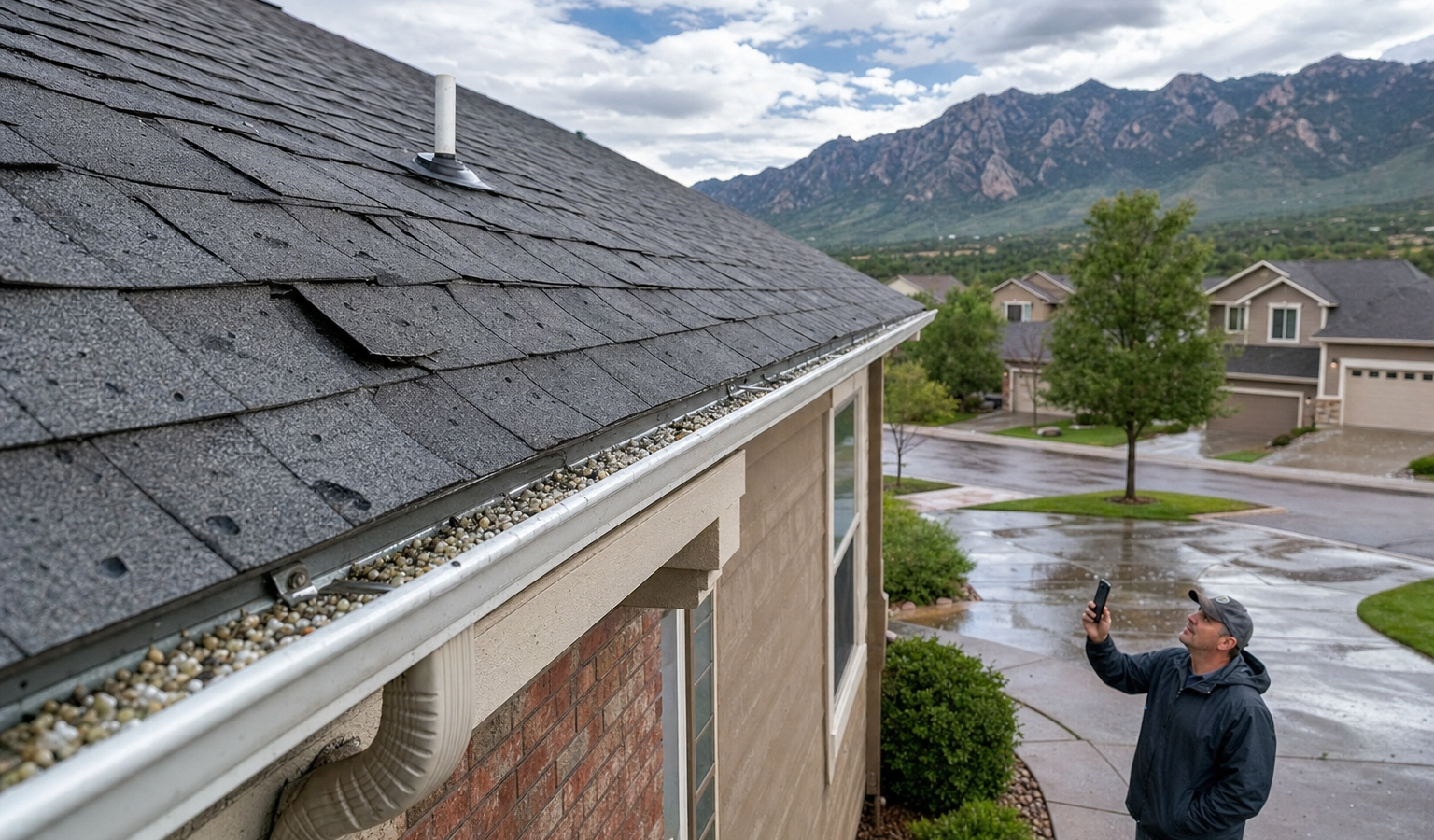
Colorado Springs hail damage after the June storms is not always obvious from the ground, but small signs can point to real roof damage that leads to leaks, shortened shingle life, and insurance-claim headaches later. If your home or building was under a recent hail path, a timely roof inspection helps confirm what was actually damaged, what can be repaired, and what needs to be documented before the next storm moves through.
Why June hail storms in Colorado Springs deserve attention
Colorado Springs sits in a region where fast-moving spring and early summer storms can produce hail, heavy wind, and sudden downpours in the same event. That combination matters because hail damage is not just about dents. Wind can crease or lift shingles, rain can expose weak spots, and hail impacts can knock granules loose and bruise the asphalt mat underneath.
A roof can look "mostly fine" from the driveway and still have damage that affects:
- Water shedding performance
- Shingle life expectancy
- Underlayment exposure
- Flashing and vent integrity
- Gutter drainage
- Your insurance claim documentation
For homeowners, the biggest mistake is often waiting until a leak shows up inside. For commercial property managers, delayed action can turn a repair issue into interior damage, tenant complaints, or a larger roof replacement conversation.
1. Granules collecting in gutters or downspouts
One of the most common signs of hail damage is excess asphalt shingle granules washing into gutters after a storm. Granules protect shingles from UV exposure and help the surface shed weather over time.
A little granule loss is normal on older roofs, but after June hail you should pay attention if you notice:
- Dark, sand-like buildup in gutter troughs
- Granules collecting near downspout exits
- Bare-looking spots on shingles from the ground
- Uneven wear on one slope more than another
Hail impacts can loosen granules in concentrated areas. Once those protective granules are gone, shingles can age faster through the rest of the summer.
2. Dark spots, bruising, or random impact marks on shingles
Hail does not damage every shingle evenly. Instead, it often leaves scattered impact areas that trained inspectors look for up close.
What bruising looks like
On asphalt shingles, hail bruising may appear as:
- Dark circular spots
- Soft impact points when tested by hand
- Small areas where granules are missing
- Random strike patterns across multiple slopes
These marks matter because the shingle may still be in place while the underlying mat has been weakened. That kind of hidden damage is one reason many owners call for a professional hail damage inspection after a major storm.
3. Dented metal components around the roofline
Metal accessories often show storm severity before shingles tell the full story. If you can safely view exterior roof components from the ground, look for dents or fresh impact marks on:
- Gutters and downspouts
- Metal flashing
- Roof vents
- Ridge caps with metal accessories
- Garage door trim, window wraps, or AC condenser fins nearby
These dents do not automatically prove functional roof damage, but they are strong indicators that hail had enough force to affect roofing materials too. For insurance-claim purposes, those surrounding impacts can also help establish the size and direction of the storm event.
4. Cracked, creased, or lifted shingles after wind-driven hail
June storms in Colorado Springs often include strong gusts along with hail. That means your roof may have both impact damage and wind damage.
Watch for shingles that appear:
- Cracked along exposed edges
- Bent upward or no longer lying flat
- Creased across tabs or architectural laminate sections
- Missing entirely after the storm
Wind-lifted shingles can break the seal strip that helps resist future storms. Even if they settle back down, the bond may already be compromised. That leaves the roof more vulnerable during the next hail or wind event.
If you are unsure whether the issue is isolated or widespread, a professional inspection can help determine whether a targeted roof repair estimate makes sense or whether the storm damage is extensive enough to support a larger claim.
5. Water stains, attic moisture, or musty odors indoors
Not all hail damage shows up on the roof surface first. Sometimes the earliest clue is inside the building.
Check for:
- Ceiling stains or fresh discoloration
- Damp insulation in the attic
- Musty smells after rain
- Peeling paint near roof-to-wall transitions
- Moisture around vent pipes, chimneys, or skylights
A hailstorm can damage shingles, flashing, vents, or soft metal details just enough to allow water intrusion during the next rain. Interior staining does not always mean the roof needs full replacement, but it does mean the assembly needs to be inspected quickly to keep the damage from spreading.
For commercial buildings, it is also worth checking top-floor ceiling tiles, parapet transitions, rooftop penetrations, and drainage points after a storm.
6. Damage to roof vents, flashing, skylights, or other penetrations
Some of the most important storm damage happens at the roof's weak points: penetrations and transitions. Hail can crack vent covers, dent flashing, damage sealant lines, or chip skylight components.
Areas that deserve a close look include:
- Plumbing vent boots
- Furnace or exhaust vents
- Chimney flashing
- Skylight frames and seals
- Satellite or equipment mounts
- Wall-to-roof intersections
These components are common leak points even on roofs with limited shingle damage. If your building has multiple penetrations or low-slope sections, a qualified commercial or residential inspection is especially important. AC INC. Roofing handles both residential roofing and commercial roofing storm assessments across the Front Range and into Wyoming markets like Cheyenne.
7. Your neighbors are filing claims, but your roof "looks fine"
One of the most overlooked warning signs is neighborhood context. If nearby homes have visible hail hits, contractor visits, or active insurance claims, your property may have been affected too, even if the damage is not easy to spot.
Storm paths can be narrow, but they often hit entire subdivisions, apartment communities, office parks, or retail centers with similar force. Roof age, slope, material type, and previous wear all influence how damage appears.
That is why visual comparison from the street is not enough. Two roofs on the same block can respond very differently to the same June storm.
What to do after you spot one or more signs
If you noticed any of the signs above, the goal is not to guess whether you need a repair or roof replacement. The goal is to document the condition while the storm event is still recent.
Here is the best next move:
- Take ground-level photos of obvious exterior signs, such as gutter dents or displaced shingles.
- Photograph any interior staining or attic moisture.
- Write down the approximate storm date and time.
- Avoid climbing onto the roof yourself.
- Schedule a professional storm inspection.
A thorough inspection should identify:
- Whether damage is cosmetic, functional, or both
- Which slopes and components were affected
- Whether repair is practical
- Whether the damage pattern supports an insurance claim
- What documentation will help if an adjuster visits
As HAAG Certified Master Inspectors, AC INC. Roofing documents storm-related roof damage the way insurance carriers expect to see it. That can make the process clearer for owners dealing with hail damage for the first time.
Why a professional inspection matters more than a quick visual check
After a June storm, many owners do a fast walk-around and assume no leak means no problem. The issue is that hail damage often develops into visible failure later, after UV exposure, heat cycling, and another round of rain or wind.
A professional inspection helps separate:
- Normal aging from fresh storm impacts
- Isolated repair items from broader slope damage
- Surface dents from functional water-entry risks
- Wear issues from claim-worthy hail damage
That matters whether you are protecting a home, managing a multifamily property, or responsible for a commercial building. Clear documentation also helps reduce confusion when talking with your carrier, adjuster, or maintenance team.
When timing matters most
The best time to schedule an inspection is soon after the hail event, especially if:
- The storm included large hail or strong wind
- You can see accessory dents or granule loss
- The roof is older or has prior repairs
- You already have an active leak or stain
- Your insurer has reporting deadlines or claim timelines
Waiting does not make damage easier to prove. It usually does the opposite.
Next step
If the June storms hit your area, AC INC. Roofing can inspect for Colorado Springs hail damage, document what we find, and explain whether repair or replacement makes the most sense. Contact us for a free inspection or estimate through our contact page, or learn more about typical project costs on our pricing page.