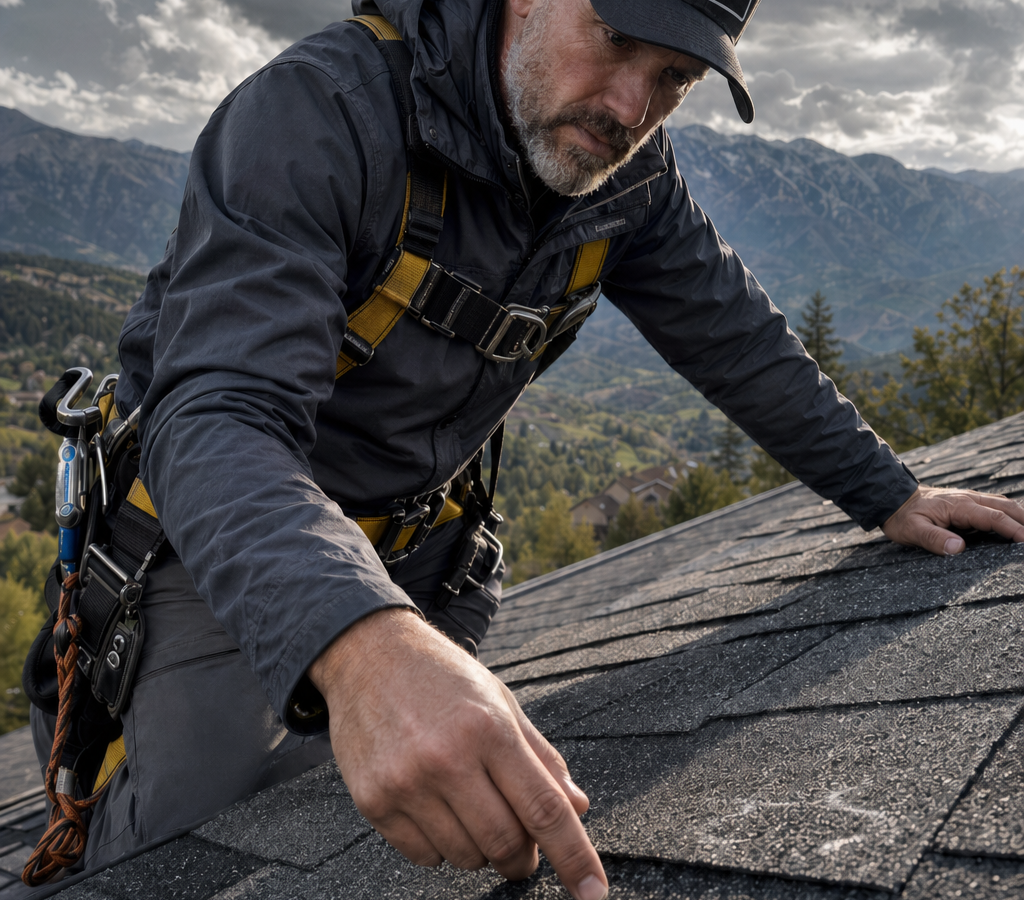
If you are comparing class 3 shingles vs class 4 in Colorado, the short answer is this: Class 4 shingles are usually the better fit for hail-prone areas because they are built to resist impact better, may help with insurance considerations, and often deliver better long-term value. Class 3 shingles can still be a solid option for some homes and budgets, but along the Front Range and across Wyoming markets like Cheyenne, the upgrade to impact-resistant roofing is often worth a close look.
What Class 3 and Class 4 ratings actually mean
The “class” on an asphalt shingle refers to its impact resistance rating, not its wind rating, lifespan, or overall build quality by itself. These ratings are commonly tied to standardized impact testing used to evaluate how a shingle holds up when struck.
In simple terms:
- Class 3 shingles offer moderate impact resistance.
- Class 4 shingles offer the highest commonly available impact resistance rating for asphalt shingles.
That matters in Colorado because hail damage is not rare or occasional here. Along the Front Range, many homeowners deal with repeated hail events over the life of the roof. Even if a roof looks “mostly fine” from the ground, impact can bruise matting, loosen granules, crack the shingle surface, or shorten service life.
Why the rating matters more in Colorado
Colorado sits in one of the country’s most active hail corridors. That means roofing decisions here should account for more than color, curb appeal, and initial price.
When hail hits, the issue is not just whether a shingle survives one storm. It is whether the roof can:
- resist cosmetic and functional damage better
- reduce the chance of premature roof replacement
- hold up through multiple storm seasons
- support a smoother hail damage inspection and insurance claim process if damage does occur
For many homeowners, this is where the difference between Class 3 and Class 4 becomes practical rather than technical.
Class 3 shingles: where they fit
Class 3 shingles are often chosen when a homeowner wants a step up from basic shingles but is not ready to pay for the highest impact rating available.
Pros of Class 3 shingles
- Usually cost less than Class 4 products
- Can provide better hail resistance than lower-rated options
- May be a reasonable choice for tighter budgets or lower-risk properties
- Available in many common architectural styles and colors
Limits of Class 3 shingles
- Less impact resistance than Class 4 in real hail conditions
- More likely to show granule loss or bruising after stronger storms
- May not provide the same insurance benefits as a true Class 4 roof
- Can be a weaker long-term value in areas with frequent hail claims
For homeowners outside the heaviest hail zones, Class 3 may be enough. But for much of Colorado, “good enough” can turn into a shorter replacement cycle if the area sees repeated storms.
Class 4 shingles: why they get attention in hail markets
Class 4 shingles are designed to better withstand impact from hail and debris. They are often marketed as impact-resistant shingles, and in many Colorado neighborhoods, that is the upgrade homeowners ask about first after a storm.
Pros of Class 4 shingles
- Highest standard impact rating commonly available for asphalt shingles
- Better chance of resisting hail damage from smaller to moderate storms
- Often attractive to insurers compared with lower impact ratings
- Can improve long-term value in hail-prone areas
- May reduce the frequency of repair calls and early roof replacement
Limits of Class 4 shingles
- Higher upfront material cost in many cases
- Not “hail-proof” or damage-proof
- Product performance still depends on installation quality, roof slope, ventilation, and storm severity
That last point matters. A Class 4 roof can still be damaged in a severe Colorado hailstorm. The benefit is not a guarantee against claims. It is better resistance and often better durability over time.
Impact resistance: the real-world difference
On paper, the difference between Class 3 and Class 4 sounds simple. In the field, it can mean the difference between:
- minor wear versus functional damage
- keeping a roof in service versus needing a full roof replacement
- documenting scattered damage versus widespread hail hits during an inspection
Hail damage does not always appear as dramatic punctures. More often, we find:
- bruising beneath the surface
- granule displacement
- fractured matting
- edge damage on shingles
- collateral damage to soft metals, vents, gutters, and siding
A roof with stronger impact resistance may still show signs of a storm, but it often handles those impacts better. For homeowners in Hail Alley, that can be the deciding factor.
If you suspect storm damage, a professional inspection is the right first step. Our team documents roof conditions and storm-related damage through our hail damage inspection services.
Insurance implications: what homeowners should know
Insurance is one of the biggest reasons Colorado homeowners compare Class 3 and Class 4 shingles.
Potential premium considerations
Some carriers may offer discounts or favorable underwriting for Class 4 impact-resistant roofing. This is not automatic, and it varies by carrier, policy type, and location. In some cases, the discount helps offset part of the upgrade cost over time.
Claim considerations
A tougher shingle may reduce the likelihood of damage from smaller hail events, which can mean fewer claims over the life of the roof. That can matter in markets where insurers are closely watching repeated storm losses.
Important caution
Do not choose a roof based only on a hoped-for insurance discount. Policies change, underwriting changes, and discount structures vary. The safer approach is to treat any insurance benefit as a bonus, not the sole reason to upgrade.
If you are replacing a storm-damaged roof as part of a claim, proper inspection and documentation matter just as much as the shingle you choose. That is where HAAG-trained storm assessment can make a difference.
Warranty differences: what they do and do not mean
Homeowners often assume a Class 4 shingle comes with a better warranty across the board. Sometimes the product line may include stronger terms, but you should read warranty language carefully.
A few key points:
- Impact rating is not the same as a warranty promise.
- A Class 4 label does not mean the manufacturer will cover every hail event.
- Cosmetic damage and functional damage may be treated differently.
- Coverage can depend on installation method, accessory products, ventilation, and registration requirements.
In other words, a higher class rating is mainly about tested impact performance. It should not be treated as a guarantee that hail damage will be covered or that replacement will never be needed.
Long-term value: where Class 4 often wins
When homeowners ask whether Class 4 is “worth it,” the best answer is to look beyond the initial estimate.
Class 3 may make sense if:
- you are on a strict budget
- the property may be sold soon
- the area has lower hail exposure than the Front Range core
- you need a practical replacement and do not want to stretch into an upgrade
Class 4 often makes sense if:
- your home is in a hail-prone Colorado market
- you plan to stay in the home for several years
- you want fewer repair concerns after moderate storms
- you are trying to improve resilience, not just replace what was there before
- you want to explore potential insurance advantages
Over the long term, a roof that resists impact better can mean:
- fewer storm-related repairs
- less chance of premature aging
- a lower likelihood of replacing the roof after a marginal hail event
- better peace of mind during severe weather season
That does not mean Class 4 is always the cheapest option. It means it is often the better value option in Colorado.
How to choose between Class 3 and Class 4 for your home
If you are deciding between the two, use this checklist:
- Look at your location. Homes along the Front Range, in Denver-area hail zones, and in Wyoming markets like Cheyenne often benefit from higher impact resistance.
- Review your storm history. If your neighborhood has seen repeated hail claims, Class 4 deserves serious consideration.
- Check your insurance carrier. Ask whether impact-resistant roofing affects premium, deductibles, or eligibility.
- Compare total project cost, not just shingle price. Underlayment, ventilation, flashing, and installation quality all matter.
- Think about ownership timeline. The longer you plan to keep the home, the easier it is to justify a stronger roof system.
- Get a real inspection if the current roof has storm damage. Your options may look different if the roof is already compromised.
If you need help evaluating products for a replacement, our residential roofing team can walk you through practical options based on your roof, your neighborhood, and your budget. For commercial properties, see our commercial roofing services.
So, which is better?
For most Colorado homeowners, Class 4 is better because hail resistance is not a niche feature here. It is a core part of roof performance. Class 3 shingles can still be a valid choice when budget is the top concern, but in a high-hail market, Class 4 usually offers the stronger mix of durability, insurance appeal, and long-term value.
The right answer still depends on your property, your risk tolerance, and how long you plan to keep the roof. If you are comparing bids, make sure you are not just comparing line items. Compare the impact rating, the full roofing system, the installer’s storm-damage knowledge, and the documentation support available if hail becomes part of the story again.
Next step
If you are weighing class 3 shingles vs class 4 for a Colorado home, AC INC Roofing can help you compare real options based on storm exposure, roof condition, and budget. Contact us for a free inspection or estimate through our contact page, or review general roof pricing and repair pricing information before you decide.