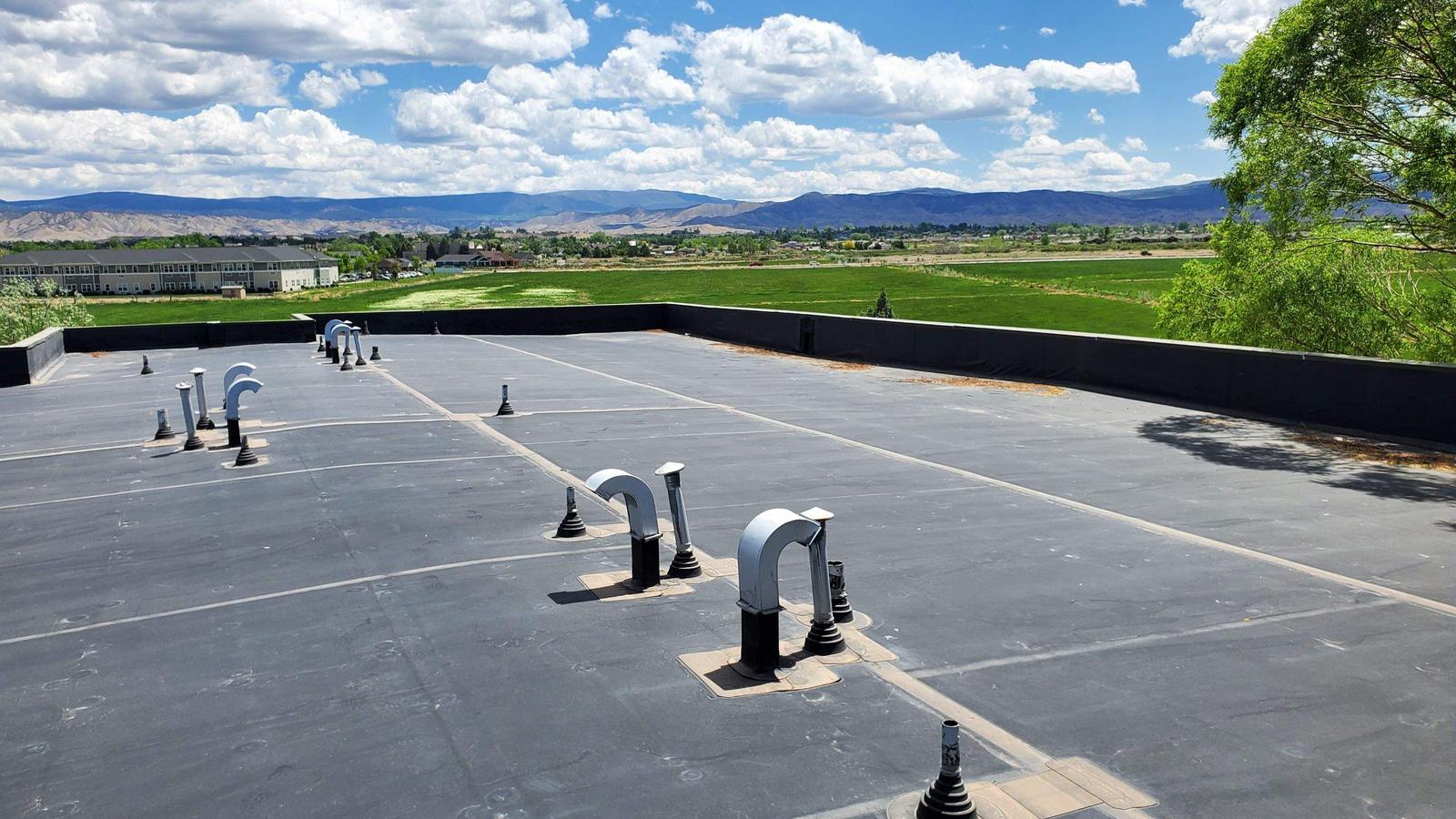
Bitumen roof repair is not a one-size-fits-all decision. For commercial buildings in Denver and the surrounding Front Range, the right fix depends on the roof’s age, how widespread the damage is, whether moisture is trapped in the system, and whether hail or wind created insurable damage. In some cases, a targeted patch buys useful time. In others, a restoration coating can extend service life. And when seams, insulation, or large roof areas have failed, full replacement is usually the safer and more cost-effective move.
Why bitumen roofs need a careful repair decision
Modified bitumen roofing systems are common on low-slope commercial buildings because they handle traffic, weather, and temperature swings better than many lighter systems. But Colorado’s hail, UV exposure, freeze-thaw cycles, and drainage issues can wear them down in different ways.
The challenge is that surface damage does not always tell the whole story. A roof may look patchable from the ground while moisture has already entered insulation, weakened seams, or spread under the membrane. That is why a repair decision should be based on an inspection, not just the most visible leak point.
For owners and property managers, the goal is simple: spend money where it actually improves roof performance and avoid paying twice for a short-lived fix.
Start with the three main options
1. Patch repair
A patch repair is a localized fix for a specific problem area, such as:
- A split or puncture in the membrane
- A failed seam or lap
- Flashing damage at penetrations or edges
- Isolated storm impact damage
- A small leak source that has not spread into surrounding areas
Patch repairs make sense when the roof is still in generally serviceable condition and the damage is limited.
2. Coating restoration
Restoration usually means repairing defects first, then applying a compatible roof coating system over the existing bitumen roof. This can help:
- Improve weather resistance
- Protect against UV degradation
- Seal minor surface wear across a broad area
- Extend service life without a full tear-off
Restoration is most useful when the roof is aging but still structurally sound and relatively dry.
3. Full replacement
Replacement means removing all or a substantial portion of the failed roofing system and installing a new assembly. This is often the best choice when:
- Leaks are recurring in multiple areas
- Wet insulation is widespread
- Membrane deterioration is advanced
- Hail or storm damage affects a large section of the roof
- Prior repairs have become a cycle instead of a solution
For many commercial owners, replacement feels like the most disruptive option. But if the roof is at the end of its useful life, continuing to patch it can cost more over time.
When a patch repair is the right call
A good patch can be the right decision when the problem is specific, accessible, and unlikely to signal larger system failure.
Signs a patch may be enough
Look for these conditions:
- The roof is relatively young or mid-life
- The leak is traced to one clear point
- Damage is limited to a small area
- Seams and flashings elsewhere are holding well
- Moisture has not spread into large sections of insulation
- The roof has not had repeated repairs in the same area
A patch is especially practical after a single event, such as a puncture from rooftop work or a small section of uplift at a perimeter edge.
When patching becomes risky
Patchwork stops making sense when it turns into a pattern. If your maintenance log shows repeat leaks, multiple service calls, or patches across several roof zones, the roof may be telling you it needs more than another repair.
This is also true when the visible leak is only the symptom. Water can travel in low-slope roof systems, so the drip inside the building may be far from the actual membrane failure.
When restoration is the better middle ground
For some Denver-area commercial roofs, restoration is the best balance between upfront cost and added service life. A coating system is not a shortcut or cover-up when used correctly. It is a planned option for roofs that still have a sound substrate and manageable repair needs.
Restoration may fit when:
- The membrane is weathered but not severely deteriorated
- Leaks are limited and repairable first
- Insulation remains mostly dry
- Drainage issues are minor and correctable
- The owner wants to delay replacement while protecting the asset
A restored bitumen roof can make sense for office buildings, retail centers, warehouses, and other commercial properties where the roof has broad surface wear but not deep system failure.
What restoration cannot fix
Coatings are not a cure for major trapped moisture, saturated insulation, open seams across the field, failed flashings throughout the roof, or significant structural concerns. If the roof is already soft underfoot in many areas or moisture mapping shows widespread water intrusion, restoration usually becomes a temporary cosmetic measure rather than a dependable solution.
That is why restoration should always begin with repairs and a real condition assessment, not just a sales pitch for coating.
When full replacement is the smart investment
Replacement is usually the right call when the roof’s problems are systemic rather than isolated.
Common signs replacement is needed
- The roof is near or beyond its expected service life
- Leaks appear in multiple areas or keep returning
- Large areas of membrane are blistered, split, or separating
- Moisture testing shows wet insulation in several sections
- Storm damage affects seams, flashing, and membrane integrity
- Repair costs are stacking up without long-term improvement
On older commercial bitumen roofs, hidden moisture is often the deciding factor. Even if only parts of the membrane look damaged, wet insulation below can reduce thermal performance, contribute to continued deterioration, and make future repairs less reliable.
For owners considering a capital project, replacement also creates the opportunity to correct drainage details, improve edge metal, and install a roof assembly better suited to current conditions.
How age affects the decision
Age alone does not decide whether you need bitumen roof repair or replacement, but it strongly shapes the answer.
A newer roof with isolated storm or traffic damage is often a patch candidate. A mid-life roof with general weathering but limited moisture may be a restoration candidate. An older roof with repeated leaks and declining performance is much more likely to justify replacement.
The key question is not just, "How old is it?" It is, "How much useful life is realistically left after this repair?"
If a patch solves the issue and preserves years of service, it makes sense. If the same roof is already nearing the end and the patch only delays a larger failure, replacement may be the wiser spend.
Moisture intrusion changes everything
Moisture is one of the biggest decision points on any low-slope commercial roof.
Once water gets below the membrane, several things can happen:
- Insulation loses performance
- Adhesion can weaken
- Seams may become more vulnerable
- Deck conditions can worsen over time
- Interior damage risk goes up with each storm
This is why commercial owners should not decide based only on what the roof surface looks like. Core cuts, infrared review, or other moisture evaluation methods can help determine whether the problem is truly localized or more widespread.
If moisture intrusion is limited, targeted repair may work. If it is widespread, restoration is often ruled out and replacement becomes much easier to justify.
Hail damage on bitumen roofs in Denver
Denver sits in a hail-prone market for a reason. Commercial property owners across the Front Range regularly deal with storms that leave visible and functional roof damage.
On modified bitumen roofs, hail can damage:
- Granule surfaces
- Membrane plies
- Seams and laps
- Flashings
- Rooftop accessories and penetrations
Not every hail mark means replacement, but not every hail hit is cosmetic either. Functional damage may include punctures, fractures, displaced surfacing, or impact that shortens service life even when leaks have not started yet.
That is where a documented inspection matters. At AC INC. Roofing, our HAAG Certified Master Inspectors evaluate storm damage in a way that aligns with what carriers typically expect to see in a claim file. If your building was recently hit, a professional review can help determine whether hail damage services are the next step.
Insurance considerations for patch, restore, or replace
Insurance does not automatically pay for every aging roof issue, but storm-related damage may be covered depending on the policy and documented condition.
Situations that may support a claim
- A recent hail or wind event caused identifiable membrane damage
- Flashings or edge details were damaged by storm forces
- The roof was serviceable before the event and failed after it
- Damage is functional, not just superficial
What owners should do
- Document when leaks or damage were first noticed
- Take photos if it is safe to do so
- Avoid making broad assumptions before inspection
- Get a commercial roof inspection with clear reporting
- Keep records of prior repairs and roof age if available
Good documentation helps whether the outcome is a repair scope or a larger replacement recommendation. For commercial owners who need support understanding condition, scope, and next steps, our commercial roofing team can help evaluate the roof and explain practical options.
A simple decision guide for property owners
If you are comparing repair paths, this framework is a good starting point:
Choose a patch when:
- Damage is isolated
- The roof still has meaningful service life left
- Moisture intrusion is limited
- One repair is likely to solve the problem
Choose restoration when:
- The roof is aging but still fundamentally sound
- Surface wear is broad but not severe
- Repairs can address defects before coating
- The roof is mostly dry and replacement can reasonably be deferred
Choose replacement when:
- Leaks are recurring or widespread
- Wet insulation is present in multiple areas
- Storm damage is extensive
- The roof is near end of life
- Ongoing repairs are no longer cost-effective
If budgeting is part of the decision, reviewing likely repair versus replacement ranges can help frame the conversation before work begins. See our pricing information or roof repair pricing page for general planning guidance.
Next step
If you are unsure whether your bitumen roof needs a patch, restoration, or full replacement, the best next move is a professional inspection. AC INC. Roofing provides commercial roof evaluations across Denver, the Front Range, and Wyoming markets including Cheyenne. Contact us for a free inspection or estimate, and we will help you choose the repair path that fits the roof’s actual condition. Get in touch.