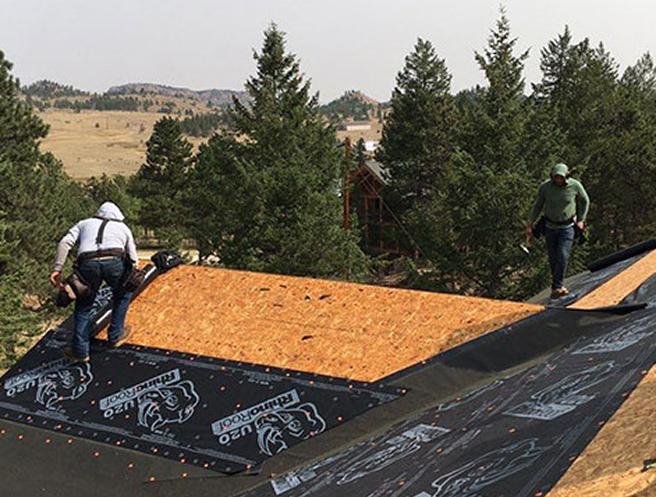
If you are comparing the best ice and water shield for a Colorado roof, the right answer is not just a brand name. It is a membrane that stays flexible in cold weather, bonds tightly to the roof deck, seals around nails, and is installed in the right leak-prone areas for snow, ice dams, wind-driven rain, and hail. In Colorado and Wyoming, where roofs see sharp temperature swings and heavy storm cycles, the best product is the one that matches the roof system, local code requirements, and the parts of the roof most likely to leak first.
What ice and water shield does
Ice and water shield is a self-adhered roofing underlayment designed to stop water intrusion in vulnerable roof areas. Unlike standard felt or many synthetic underlayments, it sticks directly to the roof deck and helps seal around fasteners.
That matters in our region because leaks often start when:
- snow melts and refreezes at the eaves
- ice dams push water back under shingles
- wind-driven rain gets under roofing materials
- hail or debris damages the surface roofing
- flashing details around penetrations begin to fail
For homeowners and property managers, this membrane is one of the most important hidden parts of a leak-resistant roof assembly. It is especially important on steep-slope residential roofs, mountain-adjacent snow zones, and any reroofing project where past leak history is a concern.
What makes the best ice and water shield in Colorado
Colorado roofs are exposed to conditions that can overwhelm a basic membrane. The best ice and water shield needs to perform in both winter and summer, and it needs to stay bonded through expansion, contraction, and storm exposure.
Strong adhesion to the roof deck
A good membrane must bond well to a properly prepared deck. That bond is what keeps water from traveling beneath the underlayment.
Look for products designed to adhere to common deck types such as:
- plywood
- OSB
- properly primed or approved metal substrates in specialty applications
Adhesion matters even more on reroofing jobs. Older decking can have dust, minor surface irregularities, or repairs that affect how well the membrane sticks. If the deck is compromised, replacement of damaged sections is often the smarter move before new underlayment goes down.
Cold-weather flexibility and application range
Colorado roofs may be installed in cool fall conditions or repaired after winter damage. A membrane that becomes brittle or difficult to apply in low temperatures can create installation problems.
The best products for snow zones typically offer:
- flexibility in low temperatures
- a manufacturer-approved cold-weather application range
- stable adhesion after freeze-thaw cycles
This is one area where installation quality matters as much as the material. Even a strong membrane can underperform if it is applied to a wet, frosty, or dirty deck.
Heat resistance for high-elevation sun exposure
People often focus on winter, but summer roof temperatures matter too. High elevation sunlight and low humidity can create intense heat at the roof surface. Some membranes are better suited to high-temperature conditions, especially under metal roofing or other roof systems that can transfer more heat.
For that reason, the best ice and water shield for one roof may not be the best choice for another. A standard shingle roof and a standing seam metal roof may need different underlayment specifications.
Nail-sealing performance
One of the biggest advantages of self-adhered membrane is its ability to seal around fasteners. In hail-prone areas, where shingles or flashings can become stressed over time, that extra layer of protection is valuable.
Nail sealing helps reduce the chance that water will follow fasteners into the deck when the primary roof covering is damaged or temporarily overwhelmed.
Where ice and water shield should be installed
The best product still has to be installed in the right places. In Colorado and Wyoming, leak prevention usually starts at the roof areas that collect runoff, hold snow, or contain penetrations.
Eaves
Eaves are the most common location associated with ice dam protection. Building code requirements can vary by jurisdiction and roof design, but the general purpose is the same: protect the lower roof edge where backed-up water is most likely to get under the roof covering.
On many homes, the membrane should extend from the eave edge to a point inside the warm wall line, not just a narrow strip at the gutter.
This matters because:
- snow melt often refreezes near the overhang
- water can back up above the visible ice line
- short coverage can leave the interior edge unprotected
Valleys
Valleys handle concentrated water flow and are one of the first places we check after hail or snow-related leaks. Ice and water shield in valleys provides a critical secondary barrier beneath shingles, metal valley flashing, or other valley details.
In Colorado, valleys deserve extra attention because they often collect:
- drifting snow
- slow-melting packed snow
- debris that traps moisture
- high runoff volume during spring thaw or heavy rain
If leak prevention is a priority, valleys are rarely the place to cut corners.
Roof penetrations
Plumbing vents, flues, skylights, exhaust vents, and other penetrations are common leak points. Flashing does the visible work, but membrane protection around penetrations helps back up that flashing system.
A careful installation can help protect against:
- water intrusion from flashing movement
- wind-driven rain entry
- minor sealant failure over time
- snow buildup around protrusions
Rakes, transitions, and problem areas
Depending on roof design, additional self-adhered protection may be appropriate at:
- low-slope to steep-slope transitions
- dormer tie-ins
- around chimneys
- wall-to-roof intersections
- vulnerable rake edges in high-wind exposure
These areas are not always treated the same on every roof. The right scope depends on roof geometry, local conditions, and whether the building has a history of leakage.
Code-related installation areas to know about
Ice and water shield requirements are typically tied to climate, roof slope, and risk of ice damming. Exact code interpretation can vary by municipality, so the practical question is not just "Is it required?" but also "Where does it make sense beyond the minimum?"
A few important points:
- Minimum code coverage is not always best practice for a storm-exposed roof.
- Snow zones and mountain-influenced weather patterns often justify broader protection.
- Re-roofs are the right time to upgrade vulnerable details if the deck is open and accessible.
For property owners in the Front Range and Wyoming markets, especially in hail-exposed areas, it is smart to think about underlayment as part of the whole roofing system, not just a code checkbox. If you are already planning a residential roofing project or commercial roofing work, this is one of the details worth discussing before materials are ordered.
Matching the membrane to the roof system
Not every ice and water shield works equally well under every roof covering.
Asphalt shingle roofs
For most Colorado homes, asphalt shingles are the most common application. A quality self-adhered membrane at the eaves, valleys, and penetrations provides strong backup protection when shingles are exposed to hail, wind, or ice dam conditions.
The key is choosing a membrane approved for use with the shingle system and roof slope involved.
Metal roofs
Metal roofing can perform very well in snow country, but it often calls for a membrane with higher heat tolerance. Surface temperatures under metal can climb significantly, and some membranes are better suited for that environment than others.
This is especially important on:
- standing seam systems
- darker metal colors
- lower-slope metal applications
Low-slope transitions and specialty areas
Some homes and commercial buildings include porch roofs, additions, canopies, or transitions with lower slope sections. These can be leak-prone if underlayment selection is too generic.
On buildings with mixed roof types, the best ice and water shield may differ from one section to another. That is one reason a detailed inspection matters before a roof replacement or major repair.
Special guidance for reroofing projects
Reroofing is often where leak prevention decisions matter most. If the existing roof has had previous leaks, staining, ice dam damage, or repeated repairs, underlayment strategy should be part of the conversation.
Check the deck condition first
A membrane can only perform as well as the surface beneath it. During tear-off, look for:
- rotten or delaminated decking
- soft spots near eaves and valleys
- old patching around penetrations
- fastener issues or deck movement
If those areas are not corrected, even the best membrane may not bond properly.
Upgrade beyond the bare minimum when needed
On reroofs, we often recommend looking beyond minimum required coverage if the roof has:
- a history of winter leaks
- complex valleys
- skylights or multiple penetrations
- heavy snow exposure
- evidence of past hail damage and repairs
This is also the time to review related components such as flashing, ventilation, gutters, and the roof covering itself. If storm damage is involved, our hail damage inspection services can help document what happened and identify whether repair or full roof replacement makes more sense.
Common mistakes to avoid
When property owners ask about the best ice and water shield, they are often really asking how to avoid the failures they have seen on past roofs.
The most common mistakes include:
- using a membrane not rated for the roof type or temperature conditions
- installing over wet, dirty, or damaged decking
- stopping coverage too short at the eaves
- skipping valleys or relying only on valley metal
- poor detailing around penetrations and wall intersections
- assuming all self-adhered membranes perform the same
A good product cannot make up for poor layout or rushed installation.
How to choose the right approach
If you are comparing options, ask your roofer practical questions:
- Where will self-adhered membrane be installed on my roof?
- How far will it extend at the eaves?
- What is being used in valleys and around penetrations?
- Is the product compatible with my roof system?
- Is it appropriate for local snow and temperature conditions?
- If this is a reroof, how will damaged decking be handled?
Those answers will tell you more than a simple brand recommendation.
Next step
If you want help choosing the best ice and water shield for a Colorado or Wyoming roof, AC INC Roofing can inspect the roof, identify the leak-prone details, and recommend the right installation scope for your system. Whether you are planning replacement, repairs, or storm-related work, contact us for a free inspection or estimate through our contact page, or review more project information on our pricing page and roof repair pricing page.