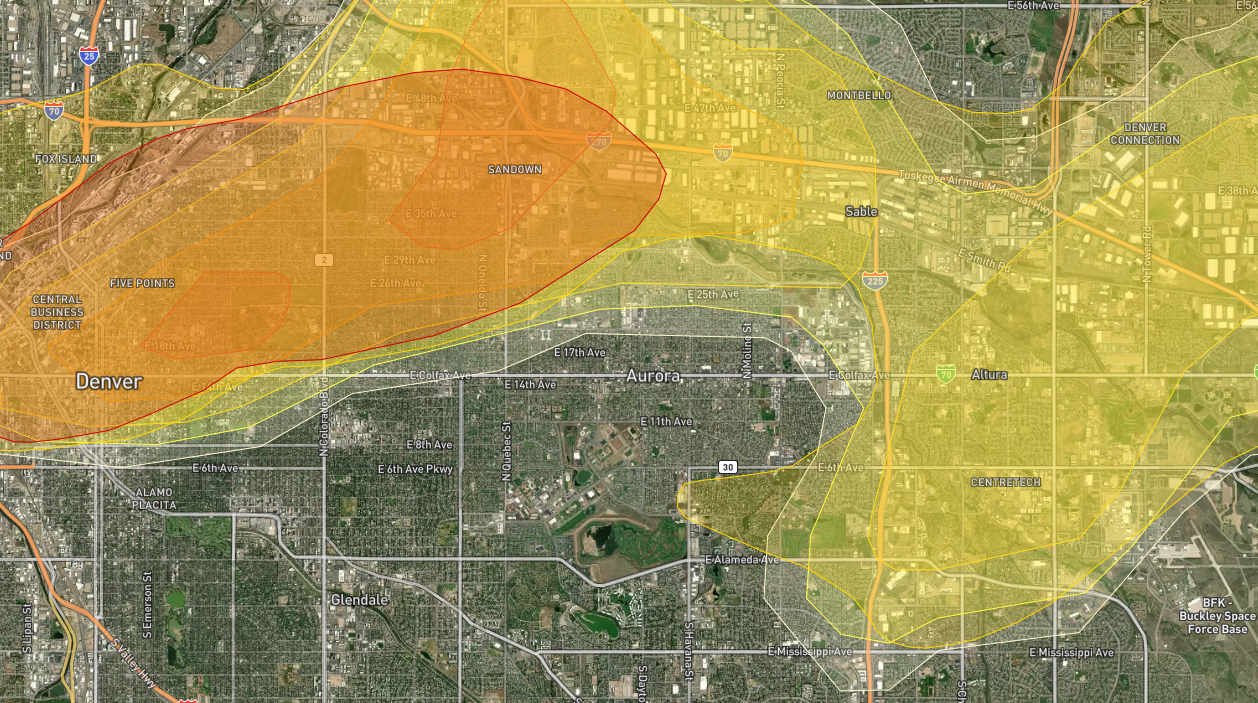
If you are searching for an Aurora hail damage map after the latest storms, you are trying to answer a practical question: Was my neighborhood hit hard enough to damage my roof, gutters, or siding? A hail map is a useful starting point because it shows where storm cells likely produced damaging hail, but it does not confirm the condition of your home. In Aurora and across Colorado’s Front Range, even a short hail event can lead to hidden roof damage, shortened shingle life, and insurance-claim issues if you wait too long to document it.
What an Aurora hail damage map can tell you
A hail damage map uses weather radar, storm reports, and impact modeling to estimate where hail fell, how large it may have been, and how the storm moved across a city or region. For homeowners, that helps narrow down risk after a major storm.
In Aurora, that matters because storm intensity can vary block by block. One subdivision may see mostly pea-sized hail, while another just a few streets away gets larger stones and wind-driven impacts that can damage roofing materials.
A map can help you:
Confirm whether your address was inside the storm path
See the approximate hail size reported near your home
Identify the date and timing of the event
Support your initial records if you later file an insurance claim
Decide whether it is smart to schedule an inspection now instead of waiting for leaks
What it cannot do is prove your roof needs repair or roof replacement. Radar-based maps are estimates, not physical inspections.
Why hail maps matter in Aurora
Aurora sits in Colorado’s Front Range, part of the region many property owners know as Hail Alley. That means homes and commercial buildings here are exposed to repeated hail seasons, strong summer storms, and wind-driven impacts that often damage more than shingles.
After the latest storms, homeowners usually want to know three things:
Did my property likely take hail damage?
If so, how serious is it?
What should I do before filing an insurance claim?
A hail damage map helps with question one. A professional inspection answers questions two and three.
The limits of a hail map
Many homeowners assume that if a map shows 1-inch or larger hail over their neighborhood, damage is guaranteed. Others assume that if they do not see obvious leaks, their roof is fine. Both assumptions can cause problems.
Hail size alone does not tell the full story
Actual damage depends on several factors, including:
Roof age and current condition
Shingle type and quality
Wind speed and direction during the storm
Slope and orientation of the roof
Number of hail hits in key areas
Soft metal impacts on vents, flashing, gutters, and downspouts
For example, a newer roof may handle one storm better than an older roof that has already been exposed to years of heat, wind, and prior hail.
Not all hail damage is obvious from the ground
You may notice dented gutters or torn window screens, but asphalt shingle damage is often harder to identify without getting on the roof. Bruising, granule loss, and mat damage can be subtle at first. By the time leaks show up inside, the repair options may be more expensive and the insurance documentation process may be harder.
Signs your Aurora home may have hail damage
If your address appears in a recent hail swath, check for visible storm clues around the property. You do not need to climb on the roof to look for early warning signs.
Common indicators include:
Dents on gutters, downspouts, flashing, or metal roof components
Granules collecting in downspout outlets or on splash blocks
Cracked, torn, or missing shingles
Damage to siding, paint, or window trim
Torn window screens
Dents on AC fins, garage doors, mailboxes, or fence caps
Water spots in the attic or on ceilings after the storm
If you see any of these, it is worth scheduling a storm inspection for your roof and exterior.
What to do after the latest Aurora hail storm
1. Save the storm date
Write down the date of the storm and save screenshots of the hail damage map showing your area. This gives you a basic timeline and helps if you later need to discuss the event with your insurer.
2. Walk the property safely
Do a ground-level inspection only. Look at:
Gutters and downspouts
Siding and painted surfaces
Deck covers and screens
Roof lines visible from the yard
Windows, skylights, and exterior fixtures
Take clear photos of any dents or impacts.
3. Check inside the home
Look for:
New ceiling stains
Attic moisture
Drafts or water near vents and penetrations
Drips around skylights or chimneys
Interior evidence can strengthen the case that the storm caused a real roofing problem.
4. Schedule a professional inspection
A trained inspector can determine whether the storm caused cosmetic marks, functional damage, repairable issues, or damage severe enough to justify roof replacement. This is where documentation matters.
At AC INC. Roofing, we provide hail-damage inspections and document conditions in a way insurance carriers expect, including roof slopes, test areas, collateral damage, and photo evidence.
5. Review claim timing before you wait too long
Insurance policies vary. Waiting can make it harder to separate fresh storm damage from normal wear, older impacts, or foot traffic. Even if you are not sure you want to file a claim, an early inspection gives you useful facts.
Why documentation matters for insurance claims
After a storm, many homeowners ask whether they should call insurance first or call a roofer first. In most cases, it helps to get a qualified inspection before filing, so you understand whether there is enough evidence of hail damage to support a claim.
Good documentation usually includes:
The storm date
Your property address
Photos of all roof slopes
Photos of soft metal and other collateral hits
Notes on shingle condition and damage pattern
Repairability or replacement considerations
Exterior items affected, such as gutters or siding
This is especially important when the damage is real but not dramatic from the ground. A detailed inspection can help prevent underreporting or confusion during the claim process.
If your property includes multiple structures or commercial buildings, a more systematic review is even more important. AC INC. Roofing also handles commercial roofing services and can help property managers organize storm-related findings across larger sites.
Roof repair or roof replacement?
A hail map cannot answer this by itself. The right solution depends on what the inspection shows.
Repair may make sense when:
Damage is limited to a small area
The rest of the roof is still in solid condition
Matching materials are available
The hail impacts did not compromise a large portion of the system
You can learn more about typical repair planning on our roof repair pricing page.
Replacement may make sense when:
Multiple slopes show functional hail damage
The roof is older and already near the end of service life
Repairs would leave widespread weakness or mismatched areas
The storm damaged roofing, gutters, and siding across the property
For homeowners comparing options, our residential roofing services and general pricing information can help you understand the scope of work involved.
How Aurora homeowners should use a hail map wisely
The best use of an Aurora hail damage map is not as a final verdict, but as a decision tool.
Use it to:
Confirm whether your neighborhood was likely hit
Prioritize a roof inspection after a major event
Keep a record of storm timing
Better understand why nearby homes may also be getting inspections
Do not use it to:
Assume there is no damage because you do not see a leak
Assume all homes in the mapped area need full replacement
Delay documentation until the next storm hits
Rely only on door-to-door opinions without inspection photos and findings
A note on hidden damage after repeated storms
One storm may not create an immediate leak, but repeated hail events can weaken shingles over time. That matters in Aurora because roofs here often face a combination of hail, high UV exposure, snow, freeze-thaw cycles, and wind. A roof that looks “mostly okay” after one event may have reduced life expectancy if hail bruising and granule loss are widespread.
That is why a professional inspection after the latest storms is about more than finding active leaks. It is about understanding the true condition of the system now, before the next season adds more stress.
Next step
If your address falls inside a recent Aurora hail damage map, the smart next move is to verify the condition of your roof and exterior with a professional inspection. AC INC. Roofing serves homeowners across Colorado’s Front Range with clear storm documentation, repair recommendations, and help preparing for the insurance process. Contact us for a free inspection or estimate through our contact page.