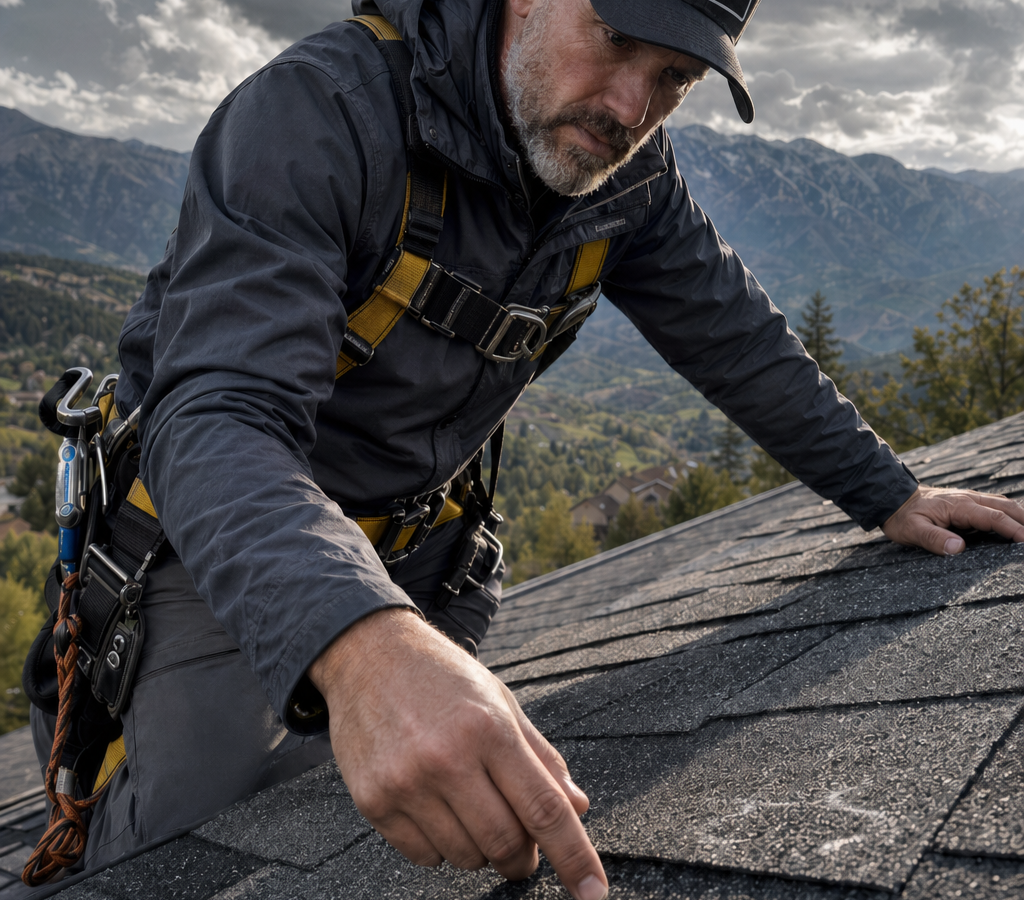
Roof hail damage is one of the most common reasons Colorado homeowners end up needing repairs or a full roof replacement, especially along the Front Range where repeated storms can shorten a roof’s life. If you are wondering whether your roof was damaged after a recent storm, there are several visible and less-obvious signs that can point to hail impact, granule loss, and hidden problems that may affect an insurance claim later.
Why hail damage is easy to miss
Not all hail damage looks dramatic from the ground. Some roofs show obvious bruising and missing shingles right away. Others develop more subtle signs that homeowners do not notice until a leak appears, gutters fill with shingle granules, or an insurer asks for better storm documentation.
Colorado roofs take a beating from hail, wind, UV exposure, and fast temperature swings. That combination can make fresh hail damage harder to separate from normal aging unless the roof is inspected carefully. That is why it helps to know what to look for before deciding whether you need a repair, a claim inspection, or a full roofing service for your home.
1. Dents or impact marks on metal surfaces
One of the first signs of hail damage is often not on the shingles themselves. Check the metal components around your home, including:
- Gutters and downspouts
- Metal roof vents
- Flashing
- Furnace caps
- Window screens or screen frames
- Garage doors or other painted metal surfaces
If hail was large enough to dent soft metal, there is a good chance the roof was hit hard as well. These impact marks help establish storm intensity and can support a hail damage inspection.
What to look for
- Round or random dents
- Fresh marks with chipped paint
- Repeated impact patterns on the sides of components facing the storm
Metal dents do not automatically mean every part of the roof needs replacement, but they are an important clue that the shingles may have sustained functional damage too.
2. Dark spots or bruising on asphalt shingles
Bruising is a classic indicator of hail damage on asphalt roofs. When hail strikes a shingle, it can displace the protective granules and damage the asphalt mat underneath.
From the ground, bruises may appear as dark, scattered spots. Up close, they may feel soft or spongy when gently tested by a trained inspector. These marks matter because they can shorten the roof’s service life and make shingles more vulnerable to water intrusion, cracking, and premature failure.
Why this matters for homeowners
A roof can look mostly intact and still have enough bruising to justify repairs or replacement. Insurance carriers usually want clear photo documentation showing more than cosmetic wear, which is why a professional hail damage inspection is often the smartest next step.
3. Excessive granules in gutters or downspouts
Asphalt shingles are coated with granules that protect them from sunlight and weather. After a hailstorm, it is common to see some granule loss where impacts knocked that protective layer loose.
Check your gutters and downspouts for:
- Grit-like shingle granules collecting in low spots
- Unusual buildup shortly after a storm
- Granules washing out at downspout exits
A small amount of granule shedding can happen as a roof ages, so context matters. If the buildup appears suddenly after hail, it may point to fresh storm damage rather than simple wear and tear.
4. Cracked, split, or missing shingles
Hail does not always leave behind neat circular marks. On older or more brittle roofs, impacts can crack shingle surfaces, split edges, or loosen tabs so wind can lift them later.
Look for:
- Shingle corners broken off
- Visible cracking across the mat
- Torn or displaced tabs
- Missing shingles after a hail and wind event
This type of damage is more urgent because it can expose underlayment and roof decking to moisture. Even one damaged area can become a leak path if it is ignored.
If you suspect this level of damage, it is worth getting a repair assessment quickly. Homeowners comparing options can also review roof repair pricing or broader roofing pricing information before deciding on the next move.
5. Damage to vents, flashing, skylights, or roof accessories
Your shingles are not the only roofing materials at risk. Hail often damages the roof’s vulnerable transition points and accessories first, including:
- Pipe boots
- Flashing around chimneys or walls
- Ridge vents
- Static vents
- Skylight glazing or trim
These areas are important because they are already common leak locations. A hail hit that bends flashing, cracks a boot, or loosens a vent can lead to water intrusion even if the surrounding shingles seem fine from the yard.
Common warning signs
- Bent or punctured flashing
- Cracked rubber around vent pipes
- Loose seals
- Chipped or fractured skylight components
This kind of detail is easy to miss without getting on the roof, which is one reason many homeowners benefit from a documented inspection after a major Colorado storm.
6. Interior water spots after a storm
Sometimes the first sign of roof hail damage shows up inside the home. If a storm was followed by any of the issues below, your roof may have been compromised:
- Water stains on ceilings
- Damp attic insulation
- Drips near vents, chimneys, or skylights
- Peeling paint near upper walls
- Musty odors in attic spaces
A leak does not always mean hail was the only cause, but it should never be ignored. Hail can weaken shingles and flashing enough that the next rain event exposes the problem. The longer moisture sits, the more likely you are to face decking rot, insulation damage, or mold concerns.
7. Damage patterns on more than one side of the house
True hail events often leave a pattern. You may notice dents on the west-facing gutter line, granule loss on one roof slope, and screen damage on a couple of windows. That pattern matters.
Insurance adjusters and inspectors usually look for collateral signs across multiple exterior surfaces because they help confirm storm direction, hail size, and whether the roof impacts are consistent with a real hail event.
Signs of a broader hail pattern
- Similar impact marks on roof vents and gutters
- Damage concentrated on the sides that faced the storm
- Splatter marks or fresh pitting on exterior finishes
- Matching signs on sheds, fences, or detached garages
This is where professional documentation can make a difference. A HAAG-trained inspector knows how to separate normal aging from storm-created patterns and present findings clearly for an insurance claim.
What not to do after suspected hail damage
If you think your roof may have hail damage, avoid a few common mistakes:
- Do not climb onto a wet or steep roof yourself
- Do not assume there is no damage just because you do not see a leak
- Do not wait too long to document the storm event and resulting issues
- Do not rely only on ground-level photos if you plan to file an insurance claim
- Do not sign with the first storm chaser who knocks on your door
Colorado and Wyoming homeowners are often approached by out-of-town contractors after major hailstorms. It is safer to work with an established roofing company that understands local weather patterns, local code requirements, and the documentation insurers expect.
When to call for a professional roof inspection
You should schedule an inspection if:
- Hail was large enough to dent metal around your home
- Your neighbors are reporting roof damage
- You see granules, bruising, or missing shingles
- Water spots appeared after the storm
- Your roof is older and may be more vulnerable to impact damage
A professional inspection can help answer three practical questions:
- Is there functional hail damage?
- Is a repair enough, or is roof replacement more realistic?
- Is there enough evidence to support an insurance claim?
For homeowners, that usually means less guesswork and better documentation. For property managers, it helps with maintenance planning, tenant protection, and budget decisions. If the property is not residential, our commercial roofing services may be a better fit for the inspection and repair process.
Why local documentation matters in Colorado
Colorado’s hail season creates a lot of roofing claims, and not every damaged roof looks the same. Some roofs show immediate functional damage. Others have borderline impacts that need a trained eye, especially when age, heat, wind, and prior wear are part of the picture.
Good documentation usually includes:
- Photos of roof slopes and test areas
- Notes on collateral damage
- Identification of damaged components
- A clear explanation of whether issues appear storm-related or age-related
That kind of inspection record can help homeowners make better repair decisions and avoid filing weak claims based on incomplete evidence.
Next step
If you have noticed any of these signs of roof hail damage, the safest move is to get the roof inspected before a small issue becomes a leak or a disputed insurance claim. AC INC. Roofing provides free inspections and estimates for homeowners across Colorado and Wyoming, including hail-prone areas along the Front Range and Cheyenne. Contact us through our contact page to schedule an inspection and get a clear, honest assessment of your roof.