
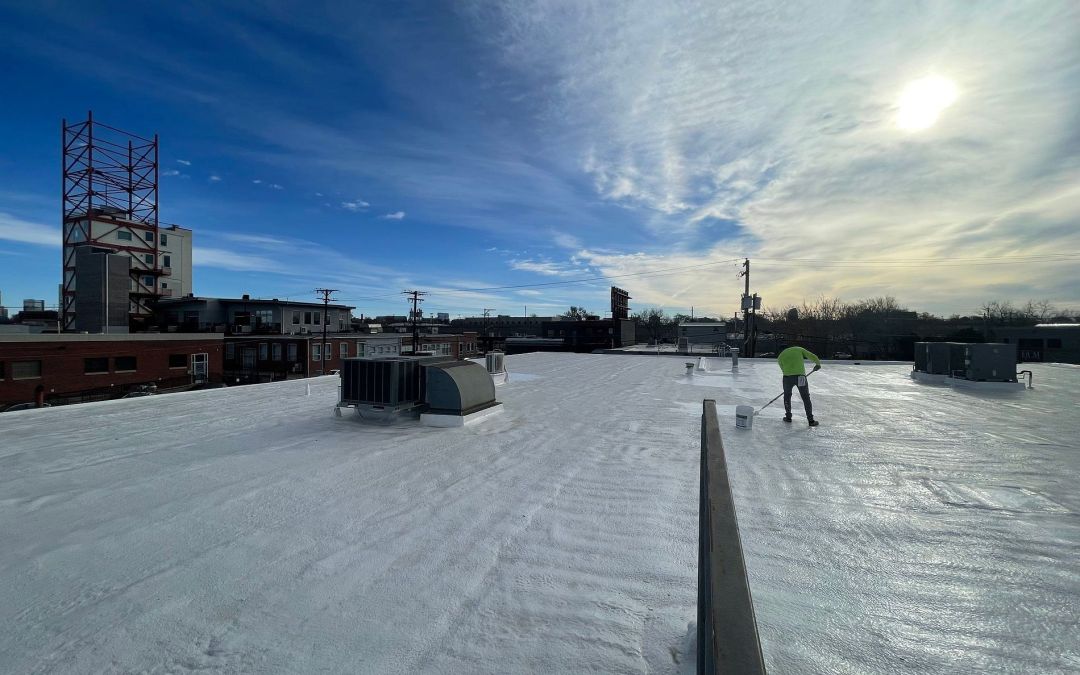
Early-season storms on Colorado’s Front Range can dump heavy, wet snow, then swing to sunny melt and overnight refreeze. For flat and low-slope commercial roofs, that whiplash often exposes weak drainage and can lead to visible sagging or persistent ponding water. Here’s how to respond quickly, protect your building, and plan a durable fix.
First, protect people and property
- Keep staff off the roof until it’s evaluated by a professional. Wet membranes, hidden ice, and overloaded areas pose serious fall and collapse risks.
- Evacuate or restrict access below any visibly deflected roof areas, bowed ceilings, or active interior leaks.
- Shut off or protect electrical near leaks. Place catch pans and plastic sheeting where needed.
- Document conditions: take photos of ponding areas, blocked drains/scuppers, ceiling stains, and any snow depth. Note dates, times, and weather—helpful for insurance.
- Call a licensed, insured roofing contractor with flat-roof expertise. AC INC. Roofing provides free roof inspections by HAAG-certified inspectors and rapid documentation support.
Why ponding and sagging happen after early snow
Colorado’s early snows are heavy and followed by freeze–thaw cycles that stress flat roofs:
- Melt–refreeze creates ice at drains/scuppers, blocking flow and trapping water.
- Insufficient slope/tapered insulation allows shallow basins where water lingers.
- Saturated insulation from prior leaks increases weight and depresses the deck.
- Aging membranes (TPO, EPDM, Modified Bitumen) can lose tension or adhesion at seams and flashings.
- Debris in gutters, scuppers, or internal drains reduces capacity just when snowmelt is highest.
- Structural deflection from load can create new low spots.
Persistent ponding (water remaining 48+ hours after dry conditions) accelerates membrane degradation, increases leak risk, and may signal structural concerns.
What to do next: a practical plan
1) Schedule a professional inspection
– AC INC. Roofing’s HAAG-certified inspectors provide a free, comprehensive assessment of membrane condition, seams and flashings, drainage hardware, insulation saturation indicators, and deck deflection. We create a photo-rich report you can use for maintenance or insurance.
– If structural concerns are suspected, we’ll advise engaging a structural engineer before anyone attempts water removal or load changes.
2) Restore drainage safely
– Clear scuppers, gutters, downspouts, and strainers to re-establish flow. Don’t chip ice off the membrane; it can puncture or tear. Professionals use membrane-safe methods.
– Identify and mark low spots and ice dams for corrective design later.
3) Stabilize the waterproofing
– Install compatible temporary patches on open seams, punctures, and flashing splits using materials appropriate for TPO, EPDM, or Modified Bitumen.
– Where safe, protect high-traffic service paths with temporary walkway pads to avoid further damage during cold-weather access.
4) Document for insurance if storm-related
– Early snow events, hail, and wind can combine to cause covered damage. AC INC. Roofing specializes in storm damage restoration and insurance claims support. We provide thorough documentation, meet with adjusters, and advocate for the correct scope of repairs.
Long-term fixes that prevent repeat ponding
- Tapered insulation and crickets
-
Installing tapered insulation systems creates positive slope toward drains and scuppers, eliminating chronic low spots and improving energy performance.
-
Drainage improvements
-
Repair or replace damaged scuppers and edge metal. Evaluate overflow scuppers where appropriate. For internal drains, coordination with a licensed plumber may be required; we can integrate roofing details around upgraded hardware.
-
Membrane recover or replacement
-
Based on condition and code, options include new TPO, EPDM, or Modified Bitumen systems. AC INC. Roofing installs premium commercial membranes and details terminations to resist Colorado’s high winds and severe weather.
-
Fluid-applied coatings (select conditions)
- Fluid-applied coatings can extend service life and improve UV/weather protection, especially on sound substrates. Note: coatings are not a cure for structural ponding; design corrections are addressed first, then coatings may be used per manufacturer guidance.
Maintenance checklist before the next storm
- Fall cleaning of roofs, gutters, scuppers, and drain strainers; confirm downspouts discharge freely.
- Verify that ponding areas from the last season have been corrected or are monitored.
- Inspect seams, terminations, and roof-to-wall flashings for early signs of failure.
- Check rooftop units (curbs, pitch pans, sleeper/penetration flashings) for cracks or movement.
- Keep a roof log: dates of inspections, photos, and any repairs.
- Establish a snow and meltwater response plan identifying who to call and safe access routes.
When is sagging an emergency?
Call immediately if you observe:
– Rapidly growing ceiling cracks or audible popping/creaking.
– Doors or windows suddenly sticking beneath the roof area.
– Standing water that expands despite clear weather, or ponding that persists well beyond 48 hours.
– Large deflection visible from the ground or inside.
If in doubt, keep occupants clear, do not add weight to the roof, and contact professionals.
Why AC INC. Roofing
- Master HAAG Certification: Colorado’s first company to reach the Master level—expert damage evaluation and documentation.
- Atlas Pro+ Platinum and GAF Certified contractor: access to robust manufacturer-backed system warranties on appropriate assemblies.
- Directorii-certified: backed by up to a $20,000 customer guarantee.
- Fortified Roofing Solutions certified: trained in resilient roofing assemblies designed to withstand severe weather.
- Fully licensed and insured; 5.0-star Google rating with excellent reviews.
- Local expertise: based at 6145 Broadway, Suite 25, Denver, CO 80216. Serving the Denver metro, the Front Range, and Cheyenne, WY.
Whether you manage a retail center, office, multifamily, or industrial facility, our team understands Front Range snow loads, hail, and wind—and how to design flat-roof solutions that hold up.
Our commercial roofing capabilities
- Roof inspections, repairs, and replacements for TPO, EPDM, Modified Bitumen, and fluid-applied coatings.
- Storm damage restoration with full insurance claims support and detailed reporting.
- Siding and gutter installation to support proper building drainage.
If your flat roof is showing sagging or ponding after early snow, act quickly to protect your building and budget. Our HAAG-certified inspectors are ready to help.