
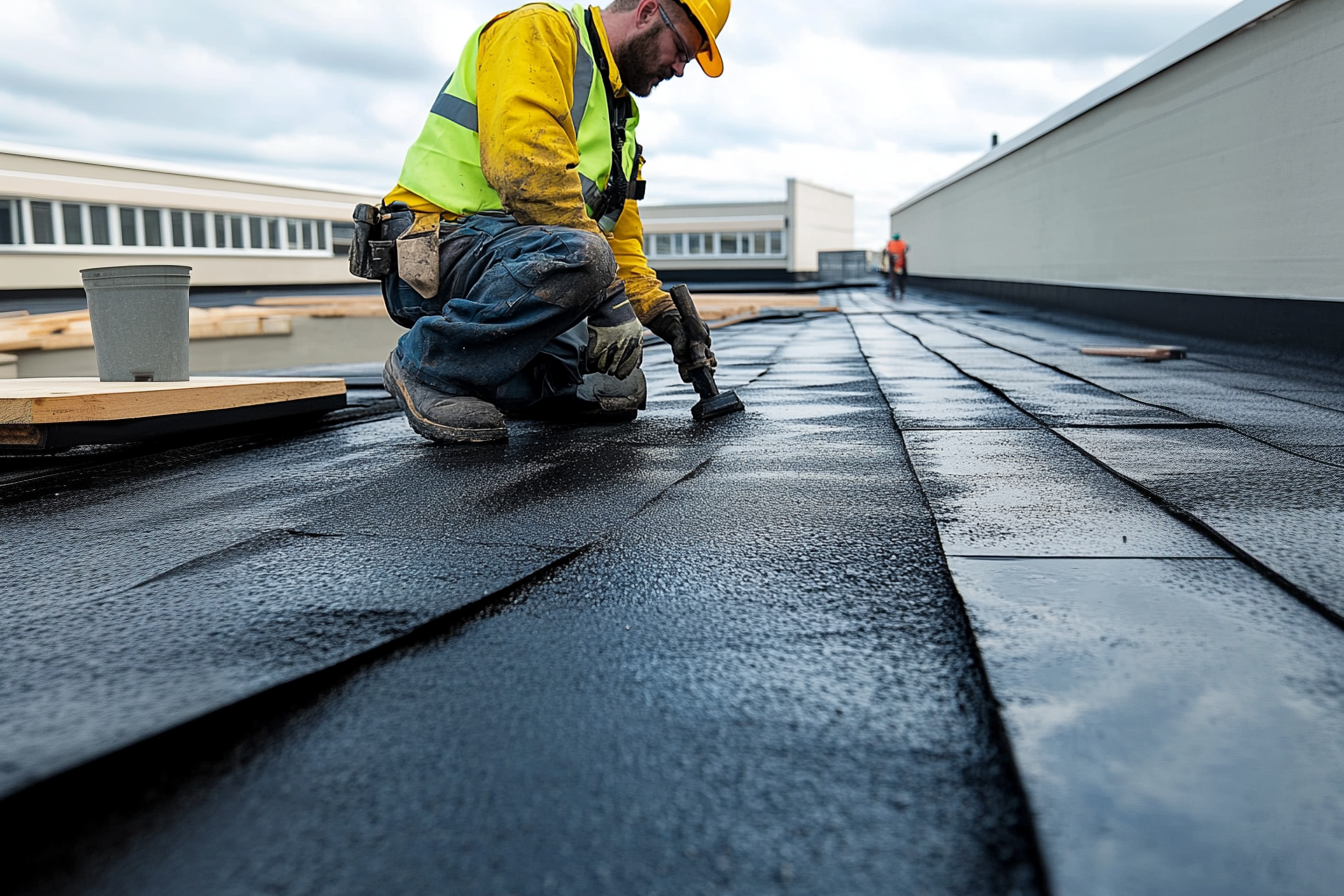
Bitumen flat roofs are a popular choice due to their durability and cost-effectiveness. However, like any roofing material, they may require repairs over time due to weather exposure and general wear and tear. At AC INC. Roofing, we understand the importance of maintaining your roof to ensure longevity and safety. In this article, we’ll explore the most effective techniques and tips for repairing bitumen flat roofs.
Understanding Bitumen Flat Roofs
Before diving into repair techniques, it’s important to understand what bitumen flat roofs are. These roofs are typically made from asphalt-based materials and come in several forms, including:
- Built-Up Roofing (BUR): Consists of multiple layers of bitumen and reinforcing fabrics.
- Modified Bitumen Roofs: Incorporate modifiers like APP or SBS to improve flexibility and strength.
- Single-Ply Roofs: Made from a single layer of bituminous material.
Each type has its unique repair requirements, but the general principles discussed here apply broadly.
Common Issues with Bitumen Flat Roofs
Bitumen flat roofs can experience several issues over time, including:
- Cracks and Splits: Caused by thermal movement and aging.
- Blisters: Resulting from trapped air or moisture.
- Pooling Water: Due to improper drainage.
- UV Damage: Leading to material degradation.
Addressing these issues promptly is crucial to prevent further damage and costly repairs.
Essential Repair Techniques
1. Patching Small Cracks and Splits
For minor cracks and splits, patching is an effective solution. Here’s how to do it:
- Clean the Area: Remove debris and dirt from the damaged area using a stiff brush.
- Apply Primer: Use a roofing primer to enhance adhesion.
- Install a Patch: Cut a piece of bitumen membrane slightly larger than the damaged area. Apply adhesive and press the patch firmly onto the roof.
- Seal the Edges: Use a bitumen sealant to waterproof the edges of the patch.
2. Fixing Blisters
Blisters can be tricky as they involve trapped air or moisture. Follow these steps:
- Cut Along the Blister: Use a utility knife to cut a slit along the blister.
- Remove Moisture: Allow the area to dry completely.
- Seal the Blister: Apply roofing cement inside the blister and press the layers back down.
- Reinforce with a Patch: Apply a bitumen patch over the repaired area for added protection.
3. Addressing Pooling Water
Standing water can lead to leaks and structural damage. To address pooling:
- Improve Drainage: Ensure drains are clear and functioning.
- Create a Slope: Use a leveling compound to create a gentle slope, directing water towards drains.
- Install a Tapered Insulation System: This can help redirect water away from flat areas.
4. Protecting Against UV Damage
UV rays can degrade bitumen over time. To protect your roof:
- Apply Reflective Coatings: These coatings reflect sunlight, reducing heat absorption and UV damage.
- Regular Inspections: Schedule annual inspections to catch early signs of UV damage.
Maintenance Tips for Longevity
- Routine Inspections: Regularly check for signs of damage or wear.
- Clean Gutters and Drains: Ensure proper drainage to prevent water accumulation.
- Trim Overhanging Branches: Prevent debris buildup and potential damage.
- Professional Assessments: Hire roofing professionals for comprehensive inspections and maintenance.
Conclusion
Repairing a bitumen flat roof requires understanding the material and applying the right techniques. By addressing issues promptly and maintaining your roof regularly, you can prolong its lifespan and ensure it continues to protect your property effectively. For professional assistance, contact AC INC. Roofing. Our experienced team is ready to help with all your roofing needs.
Contact us today and discover what we can do to revitalize your roof!