
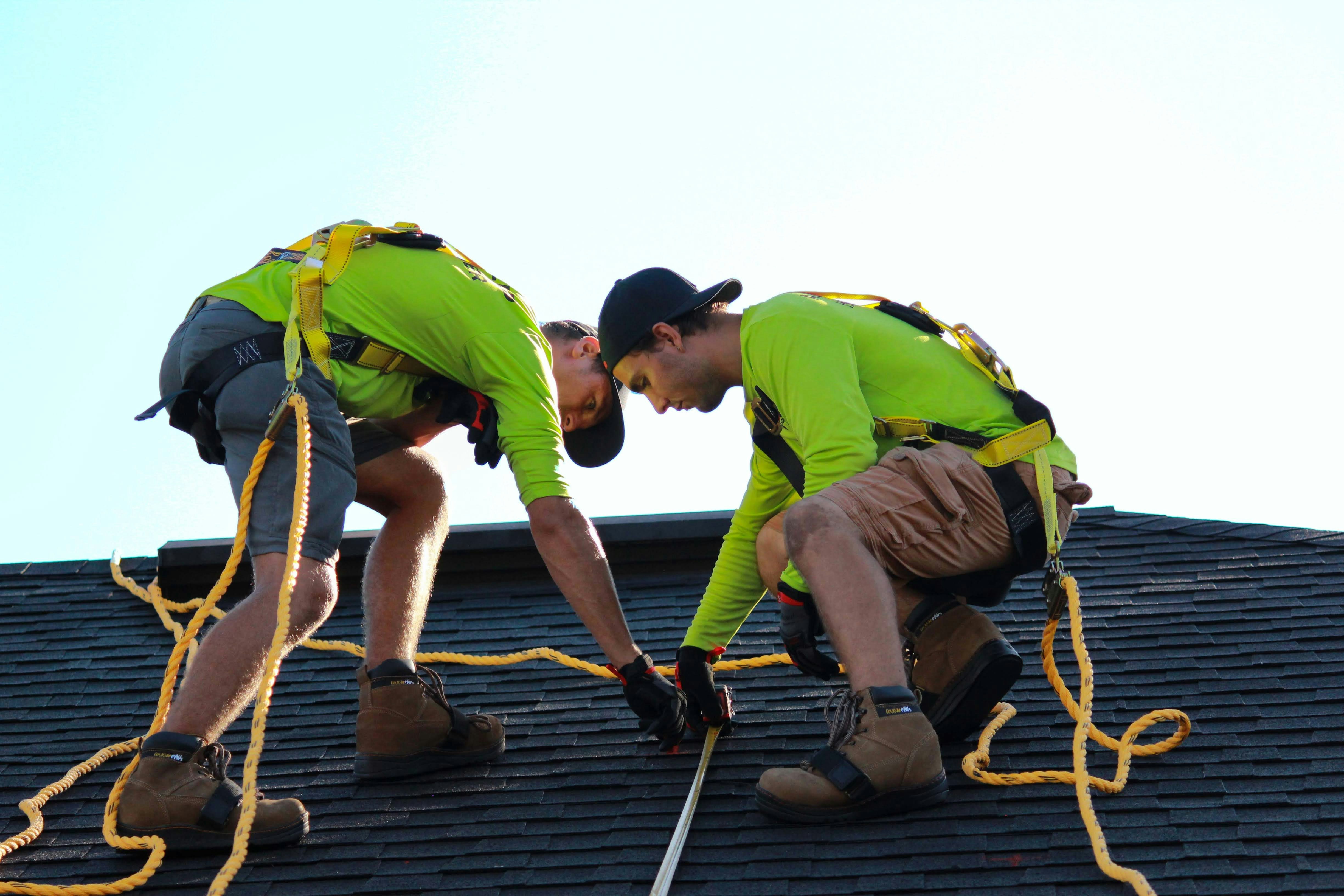
Colorado summers bring intense sun, high elevation UV, and big day–night temperature swings. Without the right roof and attic ventilation, that heat can build up, overwork your HVAC, shorten shingle life, and even set the stage for winter ice dams. Here’s how smart ventilation design keeps your home or building comfortable and your roof performing at its best.
Why attics overheat on the Front Range
- High solar exposure at altitude drives roof surface temperatures up
- Dry air and clear skies allow rapid daytime heating
- Limited air movement in under-ventilated attics traps heat and bakes the deck
- Bathroom, kitchen, or dryer vents terminating in the attic add heat and moisture (a common but correctable mistake)
How proper ventilation manages heat
Balanced ventilation continuously replaces super-heated attic air with outside air.
- Intake at the eaves/soffits pulls in cooler air
- Exhaust at the ridge or high on the roof lets hot air escape
- Continuous airflow lowers attic temperatures, reducing heat transfer into living spaces
- Correct ventilation also exhausts moisture from daily living, helping prevent mold, deck rot, and insulation degradation
Tip: The International Residential Code (IRC) generally calls for net free ventilation area (NFVA) equal to 1/150 of the attic floor area, or 1/300 when specific conditions are met and intake/exhaust are balanced. A 50/50 to 60/40 split (intake/exhaust) is a good target. AC INC. Roofing can verify sizing during an inspection.
Benefits you’ll feel (and your roof will, too)
- More consistent indoor comfort during heat waves
- Reduced strain on cooling equipment
- Longer shingle life and preserved manufacturer warranties (Atlas and GAF warranties require proper ventilation)
- Less risk of winter ice dams by minimizing roof deck temperature swings
- Healthier attic environment with controlled moisture
Ventilation options we install and service
For steep-slope (asphalt, impact-resistant, metal, tile):
– Continuous ridge vents paired with soffit intake (preferred on many homes)
– Intake solutions for limited soffit space, including edge/intake vents
– Static roof vents and off-ridge vents when a ridge vent isn’t feasible
– Gable vents (often used to supplement, not replace, balanced soffit-to-ridge systems)
– Turbine vents in specific applications
– Powered/solar attic fans when properly sized and balanced with adequate intake air (to avoid pulling conditioned air from the home)
For low-slope and commercial roofs (TPO, EPDM, Modified Bitumen):
– Heat management focuses on reflectivity, insulation, and moisture control rather than attic ventilation
– Cool, reflective membranes (e.g., white TPO) and fluid-applied coatings help limit rooftop temperatures and reduce heat gain into the building
Our HAAG-certified inspectors evaluate intake and exhaust, baffle placement, and any blocked vents to recommend the right solution for your roof system.
Signs your roof may be under-ventilated
- Upstairs is noticeably hotter than the main level on summer afternoons
- A/C runs constantly but struggles to keep up
- Shingles show premature granule loss or curling
- Musty odors, rusted fasteners, or darkened roof decking in the attic
- Ice dams or uneven snow melt in winter
Colorado-specific best practices
- Prioritize balanced intake at the soffits; insulation baffles keep airflow channels open
- After hail or wind events, verify that ridge caps, vents, and soffit screens weren’t damaged or blocked by debris
- Choose compatible systems for metal and tile roofs—use ventilating ridge components designed for those materials
- Coordinate bath and dryer exhausts to terminate outdoors, not into the attic
Sizing ventilation safely (quick guide)
- Calculate attic square footage (length × width)
- NFVA target: area ÷ 150 (or ÷ 300 when conditions allow)
- Split NFVA between intake and exhaust (roughly half each)
- Match product NFVA ratings (in square inches) to reach the target; don’t guess—verify
Not sure where to start? We’ll measure, calculate, and document everything as part of a free inspection.
Why partner with AC INC. Roofing
- Master HAAG Certification (Colorado’s first to reach Master level) for precise storm and ventilation assessments
- Atlas Pro+ Platinum and GAF Certified contractor status; we install complete systems with eligible long-term warranties
- Fortified Roofing Solutions certified for resilient installations that stand up to 130 mph winds, EF-2 tornadoes, and 2″ hail
- Directorii-certified, backed by up to a $20,000 customer guarantee
- 5.0-star Google rating, licensed and insured
- Full-service support: inspections, repairs, replacements, roof rejuvenation, storm damage restoration and insurance claim documentation
- Serving the Denver metro, Front Range, and Cheyenne, WY from our Denver office at 6145 Broadway, Suite 25, Denver, CO 80216
When to call a pro
- You’re planning a reroof and want to ensure warranty-compliant ventilation
- You’ve had hail or high winds and need a post-storm ventilation and roof assessment
- Hot upstairs rooms, high summer energy bills, or attic odors are persistent
- You manage multifamily or commercial properties and want reflective membranes or coating options to mitigate rooftop heat
AC INC. Roofing provides free roof inspections by HAAG-certified inspectors and clear, photo-rich reports you can use for maintenance planning or insurance claims.