
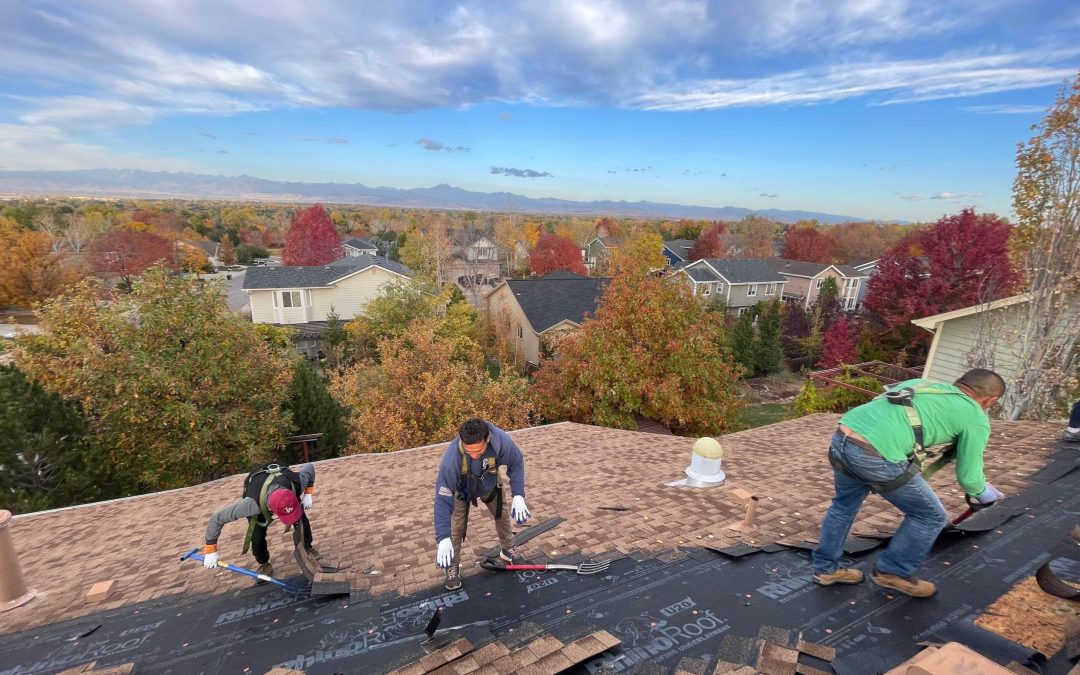
Roof Repair vs. Replacement: How to Decide in Colorado
Colorado’s Front Range is tough on roofs—hail, high UV, rapid freeze–thaw cycles, chinook winds, and heavy spring snow all accelerate wear. If you’re seeing leaks or storm damage, the big question is whether a targeted repair will do the job or if it’s smarter to replace the roof. This guide walks Denver metro and Cheyenne property owners through practical decision points—and how AC INC. Roofing can help.
Quick decision guide
- Choose repair for isolated, minor damage on a relatively young roof.
- Consider replacement for widespread damage, chronic leaks, or end‑of‑life materials.
- Unsure? Start with a professional inspection. AC INC. Roofing offers free roof inspections by HAAG‑certified inspectors and clear documentation for your records and insurance.
When a repair makes sense
- Localized storm damage: A few missing, cracked, or lifted shingles; a small area of hail hits without widespread bruising; a single puncture from debris.
- Flashing or penetration issues: Leaks around chimneys, skylights, vents, or wall transitions often come from deteriorated flashing or sealant that can be repaired.
- Minor leaks caught early: Damp spots or small, intermittent drips after a storm may be resolved with targeted fixes if the underlayment and decking are sound.
- Newer roofs: If your asphalt, metal, or tile roof is well within its service life and otherwise healthy, a repair is usually the most cost‑effective choice.
- Sound structure: If the decking, trusses, and ventilation system are in good shape and there’s no recurring ice‑damming or condensation.
- Maintenance boost: For aging asphalt roofs that are still structurally solid, ask about roof rejuvenation to help extend service life and improve water shedding.
Tip: On flat/low‑slope roofs (TPO, EPDM, Modified Bitumen), small seam splits, punctures, or isolated membrane damage can often be repaired or detailed without a full replacement.
When replacement is the better investment
- Widespread hail or wind damage: Large areas of hail bruising, granule loss, or cracked shingles; creased/lifted shingles across multiple slopes; or significant impact damage to metal and tile.
- Chronic leaks or moisture intrusion: Repeated leak history, wet insulation on flat roofs, or signs of deck deterioration and mold.
- End‑of‑life materials: Curling, cupping, bald spots, pervasive blistering, or brittle shingles; rusting or failing fasteners on metal; spalling or multiple broken tiles.
- Code and safety considerations: Extensive prior patching, multiple existing layers, or ventilation shortfalls that compromise performance.
- Storm severity: Wind‑driven damage, large falling branches, or ice‑dam back‑ups that affected multiple roof planes and components.
When you replace, you can upgrade to impact‑resistant materials designed for Colorado weather:
– Asphalt and impact‑resistant shingles (Atlas systems available)
– Metal and tile roofing systems
– TPO, EPDM, Modified Bitumen for low‑slope roofs
– Fluid‑applied coatings to restore certain commercial roofs
As an Atlas Pro+ Platinum Certified contractor, AC INC. Roofing can offer Atlas shingle systems with warranties up to 50 years, and as a GAF Certified contractor, System Plus warranties are available on qualifying systems.
Insurance and storm‑damage claims in the Front Range
AC INC. Roofing specializes in storm‑damage evaluation and insurance advocacy. Here’s how we support you:
– HAAG‑certified inspection: Detailed assessment with photos, test squares (as appropriate), and a written report to document hail and wind damage.
– Claims support: We provide thorough documentation and communicate with your carrier to align scope with actual damage.
– Restoration planning: Material and code‑compliant scopes that meet local requirements in Denver, the Front Range, and Cheyenne.
– Added peace of mind: Directorii‑certified contractor, backed by a customer guarantee up to $20,000.
Pro tip: After a hail or wind event, book an inspection even if you don’t see leaks. Many impacts are not visible from the ground and can shorten roof life.
Cost, longevity, and risk considerations
- Repair now, replace later: Sensible when damage is confined and the roof has meaningful life left. Consider this if you’re budgeting for a future replacement or preparing a property for sale.
- Replace when repairs stack up: If repeated repairs are addressing symptoms, not causes—especially on older roofs—it often costs less long‑term to replace.
- Performance upgrades: Fortified Roofing Solutions certification means we can build to standards designed to withstand up to 130 mph winds, EF‑2 tornado conditions, and 2″ hail when applicable to your roof type and project scope.
- Energy and weather resilience: New systems can improve ventilation, water shedding, and snow‑load performance—key for Colorado freeze–thaw.
Roof types: what to consider
- Steep‑slope (asphalt, metal, tile): Look for hail bruising/granule loss, loose fasteners, broken tiles, compromised flashing, and attic ventilation issues.
- Low‑slope (TPO, EPDM, Modified Bitumen): Watch for seam failures, membrane shrinkage, blisters, ponding water, and saturated insulation. In some cases, fluid‑applied coatings can restore and protect a roof that still has a sound substrate.
Maintenance that extends roof life
- Keep gutters and downspouts clear to prevent ice dams and overflow.
- Maintain proper attic ventilation and insulation to minimize condensation and snowmelt refreeze.
- Trim nearby branches and remove debris after wind events.
- Schedule routine inspections—especially after hail or heavy snow.
Why homeowners and property managers choose AC INC. Roofing
- Licensed and insured; 5.0‑star Google rating with excellent reviews.
- Colorado’s first company to achieve Master HAAG Certification (we know storm damage).
- Atlas Pro+ Platinum and GAF Certified contractor for strong warranty options.
- Directorii‑certified with a customer guarantee up to $20,000.
- Fortified Roofing Solutions certified for resilient installations.
- Members of RSRA (invitation‑only), CRA, NRCA, and APA.
- Full‑service: residential and commercial roofing, storm restoration and insurance support, inspections, repairs, replacements, roof rejuvenation, siding and gutters, and concrete/asphalt sealing.
- Local team based at 6145 Broadway, Suite 25, Denver, CO 80216; serving the Denver metro area, the Front Range, and Cheyenne, Wyoming.
FAQs
- How soon should I schedule an inspection after hail? As soon as possible. Documenting conditions early helps with claims and prevents minor issues from becoming leaks.
- Can you install impact‑resistant shingles? Yes. We offer premium, impact‑resistant options, including Atlas shingle systems with strong warranty coverage.
- Do you work on flat roofs? Yes. We service TPO, EPDM, Modified Bitumen, and offer fluid‑applied coatings where appropriate.
- How long does a replacement take? Most residential shingle replacements take one to a few days, weather and scope dependent; complex or commercial systems take longer.
- What if my roof seems fine from the ground? Many issues aren’t visible without a close inspection, especially hail bruising and seam failures on low‑slope roofs.
Ready for clarity on repair vs. replacement? Contact Us today.