
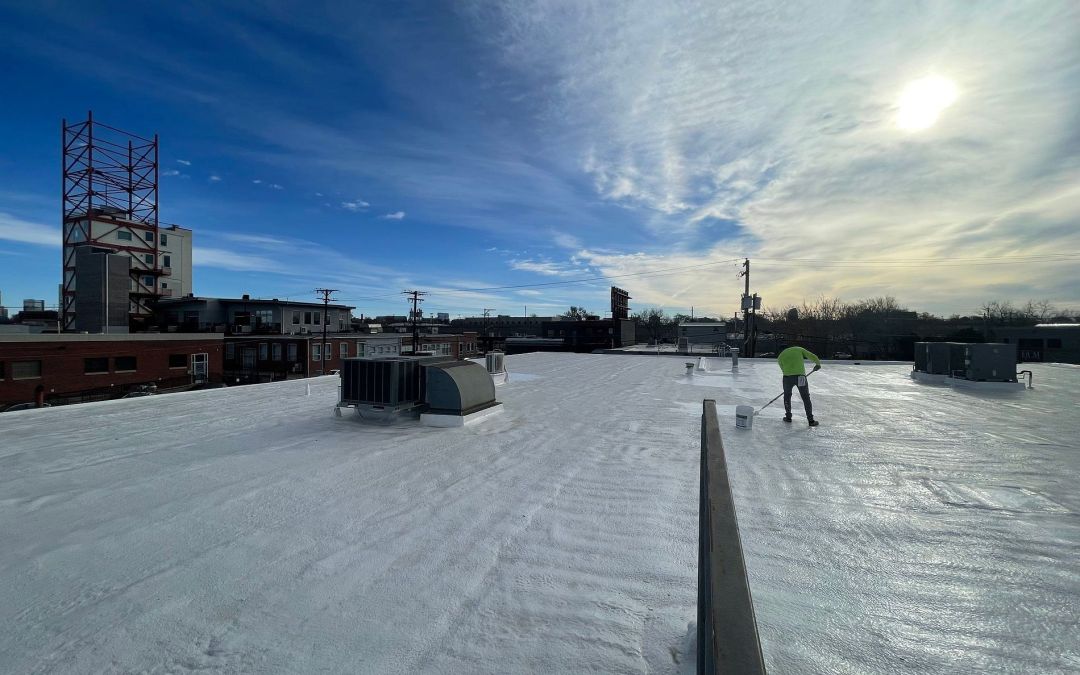
Planning a roof recoat just before winter is all about timing, prep, and choosing the right weather windows. In Colorado’s Front Range—where freeze-thaw cycles, hail, and fast-moving storms are the norm—those choices determine how well your coating adheres and performs through snow season.
AC INC. Roofing (Advanced Consulting, Inc.) serves the Denver metro, the Front Range, and Cheyenne, WY with residential and commercial roofing, including fluid-applied coatings for low-slope roofs (TPO, EPDM, Modified Bitumen) and metal systems. Here’s how to schedule confidently around winter.
Why timing is everything
- Cure chemistry: Most coatings need stable temperatures and dry conditions to crosslink properly. Rushed timelines or surprise freezes can compromise adhesion and longevity.
- Freeze–thaw exposure: Early snow or overnight frost can trap moisture and cause blistering if a coating hasn’t cured.
- Shorter daylight: Fall days limit application windows and extend cure times.
- Occupied buildings: Tenant/operations coordination takes longer during holiday and peak heating seasons.
Best seasonal windows on the Front Range
- Early fall (often late August through October): Generally the most reliable balance of warm days, cool nights, and lower storm frequency. Plan ahead—schedules fill quickly after late-summer hail events.
- Late spring (often late April through June): A strong alternative once consistent freezing risk passes. Watch the forecast—spring can still bring quick-hitting rain/snow.
Tip: Reserve your project 4–8 weeks in advance to secure materials, line up crews, and allow for weather flexibility.
Weather thresholds to watch
Every manufacturer has specific instructions—these are common best practices:
– Temperature: Many acrylics prefer 50°F+ and rising; silicones/urethanes may allow cooler applications. Always check substrate temperature, not just air temp.
– Dew point: Aim for surface temps at least ~5°F above dew point to avoid condensation.
– Precipitation: You’ll want a dry forecast and enough time for each coat to cure (often 24–48 hours, longer in cool/humid conditions).
– Wind: High winds can affect spray patterns, overspray risk, and worker safety.
– Daylight: Plan application start/stop times to avoid finishing into dusk when temps drop and humidity rises.
Smart prep steps before it gets cold
- Start with a professional inspection: AC INC. Roofing offers free roof inspections by HAAG-certified inspectors. We document issues and, if storm damage is present, provide insurance claims support.
- Fix what the coating can’t: Repair wet insulation, split seams, loose flashings, and damaged penetrations. Coatings are not a cure-all for active leaks without proper prep.
- Moisture checks: Identify and address trapped moisture to prevent blisters under the new membrane.
- Cleaning and adhesion testing: Power-wash/prime per manufacturer guidance; perform adhesion pulls—especially on aged TPO/EPDM or granulated modified bitumen.
- Detail work first: Reinforce seams, terminations, penetrations, and transitions before field coating.
Coordinating around occupants and operations
- Communication plan: Notify tenants and staff about dates, access points, and any rooftop odor/sound considerations.
- HVAC and intakes: Temporarily protect or schedule around air intakes to prevent overspray or odors entering the building.
- Access and safety: Confirm ladder or hatch access, staging areas, and safety perimeters ahead of time.
- Materials logistics: Cold weather can affect material viscosity—store/condition drums to manufacturer specs.
Snow-season contingencies
- Build a weather buffer: Schedule with a few “float” days to accommodate pop-up storms or unexpected frosts.
- Protect in-progress sections: End each day with watertight tie-ins and keep materials covered.
- Post-storm checks: After early snowfall, ensure surfaces are dry and free of ice before resuming work; never coat over frost or damp substrates.
Aftercare heading into winter
- Final walkthrough: Verify coating mil thickness, detail areas, and drainage paths.
- Keep drains and scuppers clear: Good drainage reduces ponding and ice load.
- Gutters and downspouts: As snowmelt starts, functioning gutters matter—AC INC. Roofing installs gutters and can evaluate their condition during your project.
Why partner with AC INC. Roofing
- Master HAAG Certified: Colorado’s first company to reach Master level—precise storm-damage evaluation and documentation.
- Atlas Pro+ Platinum and GAF Certified contractor: Access to premium shingle systems and System Plus warranties where applicable for steep-slope assets on your property portfolio.
- Directorii-certified: Backed by up to a $20,000 customer guarantee.
- Fortified Roofing Solutions certified: Knowledge of assemblies built to withstand high winds and severe weather.
- Local, licensed, and insured: 5.0-star rated on Google, trusted across Denver, the Front Range, and Cheyenne.
Quick scheduling checklist
- Get a HAAG-certified inspection and scope 6–8 weeks before target date.
- Choose your seasonal window (early fall or late spring) and hold weather buffer days.
- Confirm substrate-specific prep: cleaning, repairs, moisture mitigation, and adhesion tests.
- Align on manufacturer application temps, dew point, and cure times for each coat.
- Coordinate tenant notices, access, and HVAC intake protection.
- Plan final QC and drainage checks before consistent freezing sets in.
Ready to secure a weather-smart recoating plan before snow season? AC INC. Roofing is here to help from inspection to final walkthrough.